

The Wonder of Woodwork
To continue reading, you will need to choose a subscription plan.
Montessori Town Hall Meeting – Friday, September 11, 2020
To continue reading, you will need to choose a subscription plan.
Montessori Town Hall Our Role in Ending Systemic Racism July 31, 2020
To continue reading, you will need to choose a subscription plan.
Montessori Education in a Time of Physical Distancing: Is the Use of Digital Technology Appropriate in the Context of Montessori Philosophy?
Maria Montessori, in an address in 1936 entitled “For Peace,” (2007) discussed how the technologies of her day had brought humankind together and had created a single “great nation” (pp. 24-26):
By becoming a single nation, we have finally realized the unconscious spiritual and religious aspiration of the human soul, and this we can proclaim to every corner of the earth. ‘Humanity as an organism’ has been born; the super-construction that has absorbed all man’s efforts from the beginning of history has now been completed. We are living this reality. We have proof of it in the almost miraculous powers that today are enabling man to rise above his natural condition. Man now flies higher and more confidently through the heavens than the eagle; he has mastered the invisible secrets of the energy of the universe; he can look up into the skies and the infinite; his voice can cross the world’s seas; he can hear the echoes of all the world’s music; he now possesses the secret powers of transforming matter. In a word, contemporary man has citizenship in the great nation of humanity.
While we contemplate how our physical interconnectedness and the technology that made that possible, we have also spread one of the most frightening challenges we have ever known. We also know that only our interconnectedness and our shared technology can help us to survive. We cannot simply submit to technological solutions, however, without heeding the wisdom of history, without also looking to the needs of our humanity. It seems that this global crisis is bringing out both the worst and the best in people. Kindness and true altruism are shining out in the most unexpected places. Compassion abounds, even as the hackers who undermine our trust (along with spreaders of false news) try to dominate our world. Human needs and tendencies, at the core of the Montessori approach to what makes us human, are the defining features of the great nation of humanity. Any true education of the children of humanity depends on a full recognition of what makes us human.
So, while we grapple with the questions of how to deal with the unknown; how to work from home while trying to educate our children; how to keep our schools going when we cannot possibly adhere to fundamental tenets that distinguish Montessori education from conventional schooling; when parents cannot pay their fees because they have lost their jobs; when we don’t know if we will be able to return to our physical environments; and, all the while, trying to keep our own lives together, perhaps we should pause … because we do have time to pause … and ask some important questions: questions we have been able to ignore or gloss over in the past, because we knew that we could trust in our prepared environments. Why change something that works well as it is? All of a sudden, we are faced with a situation that demands that we operate in an environment that we have avoided and even renounced: a digital environment that seems to be the antithesis of our concrete, prepared environment.
The attitude of Montessori schools and Montessori guides towards technology in the classrooms has traditionally been an area of disagreement and mixed messages. While many Montessori environments eschew “technology” (in reality this is taken to mean digital devices and media), others tolerate limited use. A small group of schools have embraced digital technology and incorporated it into their programs. This might include issuing children iPads™ with which to assign and track work or allowing computers in the classroom. The use to which the devices are put can vary from resources that differ little from print material: tightly controlled usage (such as typing tutor software, off-line encyclopedias, etc) to varying degrees of free access to the internet and various applications, such as word processing and presentation software. The message from the Montessori community to the general public has, however, been largely united on limiting the use of digital devices, media, and television viewing.
School closures due to COVID-19 have prompted a drastic revision of this policy, and schools are challenged to not only justify the use of digital technology to continue functioning but also to find ways that do not conflict with basic Montessori principles or undermine the pedagogical approaches that differentiate Montessori education from everything else that is available on the internet.
As with any material or method introduced into the conventional Montessori environment, it is best to begin with asking whether Montessori herself has any guidelines on the matter. Recently, AMI published a short article written by Maria Montessori herself on the issue of what she called “mechanical aids.” The context was somewhat different from ours. It appears that Montessori was introducing an article by another unnamed author, who was advocating the use of film and other aids as support for children in India. Probably written during her stay in India (1940–1947), it was suggested that the use of such supports would both facilitate the preparation of teachers and make “culture” more accessible to more children (Montessori, 2015, pp. 235-238). Further, insight into Montessori’s view of the use of technology can be gleaned from an earlier piece where she considered the use of film within her system, quoting extensively from Carl Renner (Renner, 1932, pp. 235-238).
In the interests of clarity, it is probably best to begin with some etymology:
Technology is as old as the world, at least one inhabited by human beings, certainly when we lean towards the definition of the word when it was originally used; the Oxford Dictionary gives as its etymology from Greek tekhnologia ‘systematic treatment’, from tekhnè, ‘art, craft’ + logia’, dating back to the 17th century.
Montessori certainly understood technology in this light. She was fascinated by technology and the way in which human beings have used technology to meet needs. Some animals use tools, e.g., apes use sticks to dig in termite mounds. But of all the animals, only humans utilize technology. Technology requires the use of the hand and of the brain. The very earliest tools of stone and bone are evidence of technology. It could be claimed that it was the use of technology that saved humankind from extinction 70,000 years ago. Technology is a feature of human culture and an integral component of what Maria Montessori called supranature. Technology and culture place humans above nature. Technology has always been a part of Montessori education to the extent that the Montessori materials are, in and of themselves, technological artifacts.
For the purposes of this article we understand technology in this sense. When referring specifically to computers, iPads, mobile phones and their related media we refer to “digital technology.”
A reading of the two brief articles make it very clear that Montessori did not discount the use of technology in her classrooms. What we cannot say without reservation is that she saw a place for digital technology in the education of young children (or even older children and adolescents), as this was not something she knew about. She supported the use of media that allowed the children to access knowledge beyond that which was presented in the classroom in print, which was presented directly by the adult in the room, and this would necessitate the presence of mechanical aids: machines that the children would be shown how to use and to which they would have free access. It also included means to access experts outside the classroom, such as radio broadcasts.
The opponents of the use of digital technology are able to cite research that point to its pitfalls and dangers. While the benefits have long been recognized by educators looking for ways to reach children beyond the classroom, Montessorians have generally avoided the exploration of the internet as a means to help children access information or, indeed, to give children independence from the guidance of the teacher. Now we find ourselves in a situation where students are at home, physically distanced from both the prepared adult and the prepared environment. In order to support children in a way that is in line with Montessori philosophy and Montessori’s educational aims, we should first examine Montessori’s own views and explore how those are applicable in our current context.
Although Some Observations on Technology was written for a different time and context, the ideas that Montessori expresses could have been typed on a Facebook™ post this morning, only to refer to digital as opposed to mechanical aids: “to promote the acquisition of culture by means of mechanical aids is most opportune at the present moment, when we can almost speak of an emergency.”
This article explores how, in this current emergency, we can remain true to Montessori’s intentions, while maintaining physical distance. It is also concerned with how what we learn now can impact, and even transform, education as distancing requirements are eased.
Montessori reminds us that many children going into elementary classes from Montessori preschools can already read and write and “possess many cultural notions;”
When, therefore, our children enter what is commonly called the elementary school, where compulsory education comes into force, the intelligence requires a much vaster culture than is ordinarily given in those schools.
In the early stages of the development of the program for the second plane of development, Montessori was acutely aware of the needs of the 6–12 year-old child for access to an expanded field of knowledge. Conventionally trained teachers were, in Montessori’s view, ill prepared to meet the needs of the child. Even teachers with subject specializations lack the general breadth of knowledge across disciplines to fully support a child in the second plane:
As with any material or method introduced into the conventional Montessori environment, it is best to begin with asking whether Montessori herself has any guidelines on the matter.
This awareness of the needs of the child and the limitations of the teacher, coupled with her passion for research and a fascination and admiration for technological development, opened to her the possibility of using various means for putting a vast array of content available to the child. The “mechanical aids” to which she refers are those which were commonly available in her day: gramophone records, lantern slides, film and wireless, She includes these in the aids that could be used in the service of the second plane child. Television was only beginning to find its way into the average household, and the personal computer was a long way off. The internet as a replacement for “wireless” (radio) was not even yet in the realm of fiction. Today’s equivalents would be audio recordings and video, which are available on the internet. Much excellent quality material is freely available, as is a plethora of material of dubious quality and provenance. Just as Montessori argued for the use of the technology of her day so, too, we could support the use of digital technologies with certain reservations:
There is no doubt that the schools applying my method, where the cultural development of the children is highly intensified, not on account of any pressure exercised by the teacher, but as a natural consequence of the opportunities given to their individual and social spontaneous activities, will have to avail themselves of these new aids.
Maria Montessori was able to envisage the potential of “material, discourses and visual representations … prepared by fascinating speakers and persons of a culture superior to that of the ordinary teacher.” Montessori foresaw many benefits accruing from this approach: firstly, that fewer teachers would be required and secondly, that materials could prepare for a “higher universal culture.” The preparation of materials would require a team of specialists to prepare and present materials.
If our approach is merely to find experts to prepare online content, or to prepare such resources ourselves, then we are late-comers to a party initiated and perfected by others. Kahn Academy was an earlier pioneer in the field, which offers excellent materials for free on the internet for different levels of learning on a myriad of topics. Many students know and use Kahn Academy already, including students in some Montessori schools. The website offers materials and tutorials for various subjects aimed at children from age four through to AP level. With over a decade of experience (and continuous improvement), this is a valuable resource for learning—particularly those subject areas where “mastery” learning is regarded as particularly valuable. There are many other resources, including YouTube™ channels, which offer sequential lessons of a high standard.
What would differentiate a lesson given by a Montessori trained guide, making it more effective than those offered by online teachers with at least a decade’s head start and accumulated experience in a medium to which we are mostly newcomers? How would we justify creating new materials and justifying their use in place of twelve years of accumulated content? What will make what we have to offer quintessentially Montessori? Do we have to reinvent the wheel to support Montessori students? Maria Montessori gives some direct guidance.
Referring to Renner (1932), Maria Montessori discussed “educational films” of her day, lamenting that they seemed confined to “the world of nature and the world of machines” and looked forward to a time when films dealing with “social and historical problems and the essential problems of culture” would be available. While she envisaged a place for varied visual and audio materials in her scheme of education, she regarded the quality as insufficient to meet the needs of children.
However, I don’t believe there is satisfaction of the real interest created by these films and their success. I believe instead that the little interest they offer to the viewer is due to their fragmented, incoherent character that rather makes them an entertainment show than a truly educational film. Film series coherently connected in a way to create a complete course covering a specific subject, would create a much livelier interest and would have, from an educational standpoint, a more rewarding result.
This deficit in coverage of disciplines has since been remedied, and digital resources offer both expert tuition and visually appealing experiences that cover all the disciplines.
Even well-constructed recent materials may reflect the shortfalls Montessori identified in the films of her day. The brief citation mentioned above, points to two areas that need to be considered. The first issue is that they do not satisfy “the real interest” that they provoke. Put another way—the films can and do create interest, but they do not satisfy the need of the child. They are entertaining rather than educational. This is because they lack the structure, or the inter-relatedness of the curriculum which she envisaged. Some resources, such as The Big History Project are structured in a way that matches the structure of the Montessori elementary curriculum, with many overlapping themes. The way the material is presented conforms to much of what Montessori hoped for in the presentation of the materials. Despite the high quality, logical structure, and interesting content, The Big History Project, and other similar programs, do not constitute Cosmic Education.
A reading of the two brief articles makes it very clear that Montessori did not discount the use of technology in her classrooms.
To properly unpack the thoughtful and planned design of curriculum and methodology that typifies the Montessori approach it is necessary to consider certain philosophical tenets of Montessori—that is the very nature of the educative proposition that is Cosmic Education, and the role of the child as the agent of his or her own education. It requires that we shift our orientation as regards discipline content (which can arguably be more effectively transferred by digital rather than print media) from content for its own sake (i.e., the child as recipient) towards content being the fuel for the child’s self-construction.
To make digital materials useful to children, it is necessary to look at what we know about the development of the child. In Cinema Educativo, Montessori discusses how verbal explanations might be suitable for adults, but that young children require a more concrete experience. She commented that films give “significant advantages.” Because teachers can produce films themselves, these could be geared to the needs of children.
What is needed, in Montessori’s view, is “a guide of a kind of syllabus directing their distribution” (Montessori, 2015, p. 5). The “syllabus” to which she refers had not yet been fully developed, but its guiding principles were already being incorporated in her lectures and eventually became known as the Cosmic Curriculum implemented in Montessori prepared environments for the second plane.
It is clear that Maria Montessori did not oppose the use of film (or in our modern terminology—video) as a means to deliver content to children. She proposed the development of centers for the production of such materials. If the appropriate technology were used, the production of Montessori-compliant media, potentially, has a far greater reach, and could truly transform the way education is understood in the post-COVID world:
These centers would gradually become the means to unify the cultural development of the children all over the world … They would be institutions in the world of the child comparable to the institutes of scientific research in the world of the adult and, as the latter, they would be not only of national, but of universal advantage (Montessori, 2015, p. 6).
There is, however, a critical aspect that requires further deliberation. This relates to how these materials are to be used by the children. I have already alluded to the centrality of the agency of the child as opposed to the centrality of content. Montessori ends her brief introduction:
I would like to point out that these mechanical aids are insufficient to bring about the totality of education. Children to do not learn and do not develop their character by merely listening and looking on.
The technological aids are “only partial aids.” She concludes:
The child learns by means of his own activity and if given an opportunity to learn actively he develops his character and personality too. The child perfects himself even more by means of his hand than by means of the senses. He can develop himself and the personal talents of his nature when given the opportunity and guidance to produce and to discover by himself. Modern methods of education, in fact, are not only visual, but above all active. (Montessori, 2015, p. 7).
A goal of Montessori education is that children are prepared to fully participate in their time and place. There is no doubt, just a few short months into the global crisis that our world is going to change, and that to function in this world one will have to be comfortable with new technology. Adaptability is human trait that has ensured our survival umpteen times in the past and will be key in the coming months and years. Montessori commented on schools that based their learning solely on mechanical devices, and compared these to schools that had a strictly academic focus:
Wherever possible mechanical contrivances are introduced for every detail of practical life, so that our children may be fitted to take part in a civilization which is entirely based on machines.
In their adoption of this part of our method, some modern schools, especially in the United States, have gone too far, so that children in this intellectual stage of growth are made to occupy themselves solely with these machines, devised as they are for developing intelligence. In such schools freedom too has entered with the machines, children being allowed to choose their work, which is good so far as it goes. But whatever cannot be learned in this way is barred out, as insignificant and negligible: mathematics and other abstract subjects are considered as beyond the child’s comprehension by free and spontaneous activity. These schools based on practical work are opposed to the so-called ‘old-fashioned’ schools where mainly abstract subjects are taught and facts memorized; but we oppose both alike (Montessori, 1989, p. 8).
It is clear that Maria Montessori had no aversion to the use of technological aids, that she envisaged the use of visual and audio technology to enrich the child’s experience of knowledge content. She insisted, however, the visual and audio materials must be structured to meet the developmental needs of the children for whom they are intended. Furthermore, adults prepared in the Montessori approach were the best people to plan and prepare such materials. These materials would be part of “the totality of education” that requires that all aspects of Montessori pedagogy are understood and applied.
This article has not touched on many critical components of the Prepared Environment and the role of the adult, including the place of the concrete materials and the potential use of the digital environment to facilitate social interaction while maintaining physical distance, and how to meet the needs of “Going Out” when going out is no longer safe (or indeed even in a post-COVID world, where the rich opportunities available in first-world cities are not accessible to children). We need to remember that our children may know this technology better than we do, but in many cases (such as the impoverished townships of South Africa), children do not have full access to the digital world, just as they do not have access to a truly educative concrete one. How do we deal with this? How do we understand the real child outside of our carefully prepared rooms? There is work that has been done on this. Looking at how children learn when given free access to digital technology (See for example the work of Sugata Mitra – https://www.ted.com/speakers/sugata_mitra) there is immense potential to reach children hitherto denied such access, but Montessori would require that we utilize Montessori methodologies to extend such experiences into a total education. Using digital technology to simply transmit teacher-talk and digitized worksheets and text books is not Montessori education. We are required to observe children and respond to what they reveal to us. How do we observe children in a digital environment?
As Montessori taught us—global human interconnectedness is immense and just possibly we have the provocation necessary to fully explore the potential of our digital technology to fully realize Cosmic Education and transform how the world sees education. If we want to get the right answers we have to start asking the right questions.
Sources:
Montessori, M. (1932). Cinema Educativo. Rivista Bimestrale Dell’Opera, pp. 235-238.
Montessori, M. (1989). To educate the human potential, ABC: CLIO
Montessori, M. (1989). Education and peace, ABC: CLIO
Montessori, M., Pierson (2007). Address European Congress for Peace in Brussels 1936
Montessori Town Hall Our Role in Ending Systemic Racism July 17, 2020
To continue reading, you will need to choose a subscription plan.
Montessori Town Hall Our Role in Ending Systemic Racism July 3, 2020
To continue reading, you will need to choose a subscription plan.
“Communication in a Time of Crisis”
To continue reading, you will need to choose a subscription plan.
Parenting Toward Emotionally Healthy Families
To continue reading, you will need to choose a subscription plan.
Helping Parents Help Themselves
The Montessori Foundation, in cooperation with a collaborative set up in mid-March, of this year, is striving to help parents figure out ways to deal with the new reality of Covid 19.
For many, you are working from home for the first time. How do you manage your time and energy when the children are home and they, too, are trying to do school work in a remote way you all never imagined would become the rule of the day? Not to mention that you may be competing with your children for internet access!
Jonathan Wolff, Montessori Foundation Senior Consultant, was the presenter at a parent zoom meeting. His topic was, “Sharing Words of Love, Empathy, and Encouragement with Children in Unsettling Times.” Along with Lorna McGrath (Director of the Montessori Family Alliance) and Christine Lowry (Special Education Specialist and another of the Foundation’s Senior Consultants), they shared an array of coping strategies.
For those who did not participate, we have a recap of the suggestions we hope you will find helpful.
1. Get in Touch with your own feelings. If you’ve ever flown on a plane, the famous line the crew gives to you when demonstrating the proper steps to using those oxygen masks should be popping into your head about now. Place your own mask on first, and then you can help others. It’s not being selfish, it’s being proactive. In a way, we are all grieving. We are grieving for the loss of the lives we aren’t getting to live right now and we are, perhaps, grieving for a loved one struck down by this virus. Some of us have lost jobs and income and we are grieving that loss. These are all real and valid feelings to acknowledge and should not be diminished or thought of as being selfish. Right now, you need to make sure that your physical, emotional, and spiritual needs are being met if even on a small level.
2. Check in with your children regarding their thoughts and feelings before you see any behavioral issues manifesting. By observing any changes in their behavior or attitudes, you can greatly aid in keeping them calm and feeling safe. Depending on the age of the child(ren), you might notice they have reverted to bed wetting or having accidents during the day, acting out, having nightmares, not eating, or generally being clingy. Try to manage this before you are in the ‘reacting’ phase of handling it.
3. Respond with empathy and no judgement before offering a solution. “How are you feeling about …?” “What do you think about the online learning you have to be doing now?” Probe them gently, but respect the boundary if they don’t feel like sharing when you are asking. Let them know you are there for them if and when they are ready.
The last thing you want an already anxious child to experience is a freaked-out mom or dad. That’s a lot for a child to process. Sometimes less is more with very young children.
4. Sharing your fears. You can be honest with your child; however, children have an uncanny ability to pick up on parental fears. The last thing you want an already anxious child to experience is a freaked-out mom or dad. That’s a lot for a child to process. Sometimes less is more with very young children. Regardless of children’s age or emotional maturity, children need to feel loved and reassured that you are going to keep them safe. You might explain that we are all in this together, and it’s OK that we feel this way.
5. What if you just end up losing it yourself in front of them? Jon recommends you “reboot” yourself as soon as you possibly can, assure them they are loved by you, and you are feeling better now. This is nothing they have done and you aren’t angry with them. One parent gave us a wonderful suggestion, and we’ve all decided to adopt it as well. Tell your child(ren) you need a TIME IN. Time out can really sound and be a negative if it’s not practiced in a very careful way; so when you say, “I need a time in to just give myself a few moments,” the children in your home will be more empathetic back to you.
6. Make certain that if you have a partner who shares the responsibility of the child(ren) that you speak with one voice. Discuss privately and before talking to the children, how you will handle certain situations. You need to provide a unified front when they might be trying to pit you against each other.
7. Do not be afraid to seek outside professional help, if you feel that you are all operating in crisis mode. With remote telemedical delivery available in many states, you may be able to get the counseling you and your partner need. It’s been speculated that the divorce rate in China has skyrocketed by spouses who could not get along during the weeks of isolation. Know that there will be pitfalls, highs and lows, patience wearing thinner as the period of stay in or stay-home-orders get longer than we might have been prepared to accept at the beginning of all of this.
8. PLEASE, limit the amount of media you view during the day when they could be listening in. While it’s important you keep yourselves well informed, it can really impact young children. Set periodic updates on your devices from trusted news sources if you can. Then watch after they are in bed for the night.
9. Limit online games that are based on ‘the zombie apocalypse’ or are very isolating. This will serve no good purpose. Involve the children in family time. Use this time to really connect with your children. It will make you all appreciate each other more and that’s a good outcome for all.
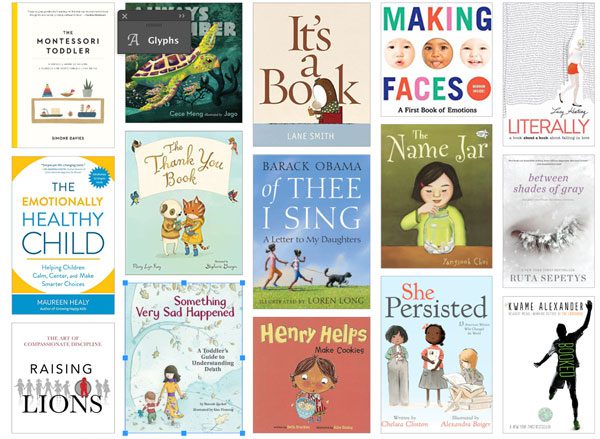
Favorite Books for All Ages
To continue reading, you will need to choose a subscription plan.
MEANINGFUL WORK: HOMESTYLE
To continue reading, you will need to choose a subscription plan.
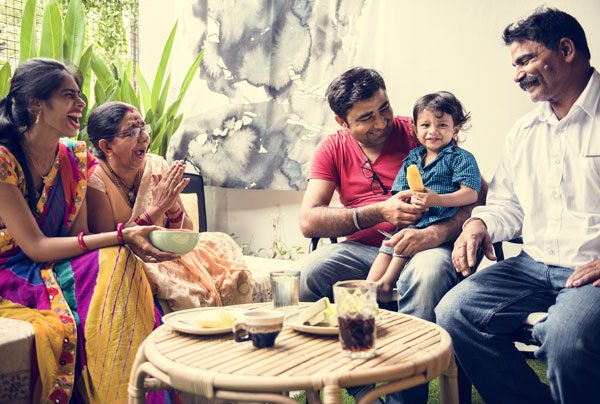
Pandemic Strategies: Family Meetings
During the first weeks of the pandemic, The Montessori Foundation began to hold free zoom meetings for parents struggling with a variety of issues.Here is a short review of the Montessori Parent Gathering from April 4, 2020. The presenter was Lorna McGrath, Director of The Montessori Family Alliance.
- Family meetings fulfill many needs for parents, children and anyone else living under the same roof such as:
- showing commitment to the family unit by all;
- being a vehicle for problem-solving issues within the family;
- brain-storming ideas or solutions to issues impacting the family,
- giving everyone an equal voice;
- showing respect for everyone in the family;
- showing appreciation for everyone in the family; and
- creating a special time that is just for family.
Now, add in the stress of a pandemic, children being cooped up week after week, parents trying to figure out how to work at home and help their children do their homework and you have the perfect conditions for some tense scenes. In her Parenting Puzzle online course for parents, Lorna highly encourages weekly family meetings. Should you not already be doing this, try doing it now so you can help all through this period of time. By the time it’s over a routine will be in place and you will understand why you should keep it going for a long, long time.
Here are some suggestions as to how to institute and structure the meetings:
- discuss with your parenting partner first (make certain you are both clear as to why you are doing this);
- try to speak with a unified voice. There’s plenty of opportunity to express different points of view, but for the sake of establishing the idea of the meetings, it better that you are both coming from a common place; and decide who will run the first meeting.
For your first meeting:
- review the purpose;
- set aside a set time and day of week ahead of other things;
- have a very short agenda; and
- review the process of a facilitator.
The meetings themselves:
- should not be long (10 to 15 minutes);
- need to be a safe space for all;
- include all family members. Even a babe in arms can be held during the meeting. Baby’s create rhythms of their own and will grow up with the meeting being a normal part of family life.
Once you have the family gathered:
- take turns (you all get to decide how you want to structure that) being the facilitator. The facilitator keeps you on track with the agenda;
- everyone agrees to have his or her devices out of earshot;
- agree on a day and time when you stop adding items to the agenda. You may not get to all items, so if it can wait, move it to the next week. If it’s an emergency, you might have to figure out something that works for the situation; and
- when the meeting concludes, the facilitator gets to choose a short activity for all to do and all participate. (Lorna recommends not having meeting over meals so you keep the structure intact.)
Use this opportunity to really create a stronger family environment with your children. Not that we would wish this situation on anyone, but if you must be sequestered in place, we think this could create one of those silver lining moments for you and your family.
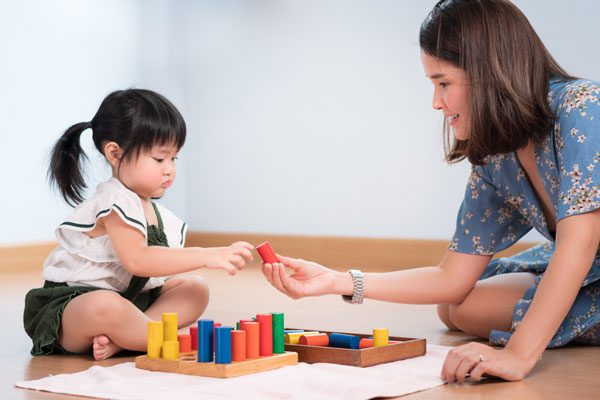
Strategies for Montessori Home Learning
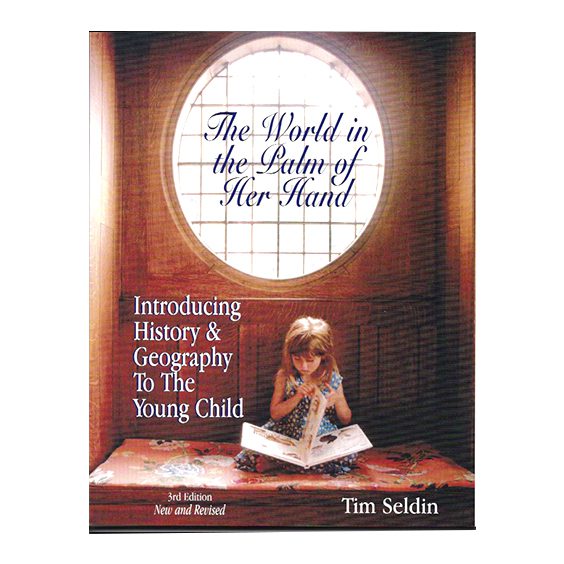
Review:
The World in the Palm of Her Hand
By Tim Seldin
click to purchase
For parents who want some actual scripting on working with their children at home, we recommend this book. I used it on many occasions with my four granddaughters and they enjoyed the activities immensely. You do not need to be in a classroom to have these kinds of conversations about the world in which they live. The book actually contains the introductory lessons for young learners in the areas of Geography and History but our intent is show you that it is possible to have great conversations with your Montessori child in a Montessori way (incidentally, that is the name of another amazing book!).
The carefully constructed lessons your child’s guide delivers is done in what they call the Three-Part Lesson format.
The carefully constructed lessons your child’s guide delivers is done in what they call the Three-Part Lesson format. I’m going to share from the book so you can see how you can do this as well. And again, we don’t expect you to become a Montessori guide nor have the specific materials in your home; our purpose is to help you understand some ways you can engage your children and just follow the format, so that the message is delivered in a verbal way that children are used to hearing from their guide.
LESSON: COLOR IDENTIFICATION:
For the youngest children, who are just learning to master their ability to identify colors.
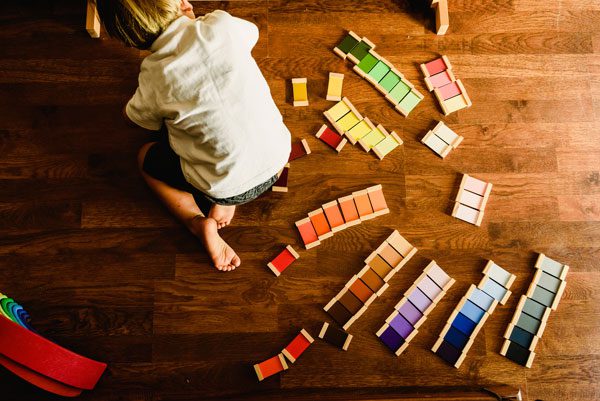 To illustrate how you could do this at home, you could use a variety of ways to demonstrate colors if you don’t have a set of color tiles: index cards (or color swatches for paint that you can get from hardware stores) already made up with first the primary colors of red, yellow and blue. When your children have mastered the primary colors, you can move on to secondary colors: green, purple and orange. You can always use real objects you have in the house, such as fruits and veggies of different colors. Keep it simple and keep it to just a few colors.
Have all your materials set up before you ‘invite’ the child to the work. You might say, “Would you like to do some work with colors right now?” Starting your sentence with “would you” makes it clearer that this isn’t some kind of test with consequences.
First Period
Name the color, “This is red.” Show the child the object.
“This is blue.” Show the child the object.
“This is yellow.” Show the child the object.
Remember to sound really enthusiastic.
Second period
This will help the child link the language and her own experience.
Say, “Would you show me the red (object)?”
“Would you show me the yellow?”
“Would you show me the blue?”
The second period actually does involve some deep learning, so you may need to go back to saying it the first way a few times. Try to sound positive as you restate the names of the colors while showing them each respectively.
Third period
Now you get to ask the child, while pointing to one of the objects, “Which one is red?” and so forth. If the child is unable to make the connection you may need to start at the beginning.
This is just a simple example, but might be useful in understanding that each child learns these skills at their own pace. Should you have an older child, you can use this delivery for more building vocabulary. Call objects by their correct names. For instance, if you are working on naming animals, call a cat a cat and not a kitty; a dog is a dog, and not a doggie. If the child is even older and you have, for instance, a German Shepherd, refer to the breed.
In the Montessori class, lessons are initiated in three ways:
- The teacher senses children’s readiness and invites them to join her/him for a lesson.
- Children become interested spontaneously and ask for a lesson.
- The teacher notices when children choose materials for which they have not yet been given a lesson and comes over to present the lesson.
Presenting the Fundamental Lesson: The fundamental lesson is the basic presentation given by Montessori teachers to introduce children to a new material or activity. If it is to have the enticing quality previously described, teachers must prepare themselves carefully.
- Teachers must be sure that they are completely familiar with the material and its correct use in order to prevent confusing children with their own uncertainty.
- The lesson must be simple and concise enough that the children will be certain to understand.
- The fundamental lesson usually includes only a few words of explanation followed by a demonstration of the typical cycle of work with this material.
- To avoid unnecessary distraction, spoken language is limited when presenting the lesson to younger children; nonverbal communication seems to lead to less confusion.
- Be sure that all the pieces are present for the lesson/material you are presenting. Nothing is more disruptive to the child’s interest and concentration than discovering that something is missing.
- Prepare your work area in advance, allowing for enough space.
- Remember the aims of the lesson.
- Make your presentation quietly dramatic, emphasizing the key points referred to in the lessons under the heading Points of Emphasis.
- When your lesson is finished, either put the materials away with the children’s help, or withdraw to let them work on their own, making sure that they return all the materials when they are done.
Table Washing: Why do Montessori Students Spend So Much Time Washing Tables?
To continue reading, you will need to choose a subscription plan.
Help! Too Much Information: How Do I Know What to Trust?
To continue reading, you will need to choose a subscription plan.

Spotlight on School Accreditation Commissioners
To continue reading, you will need to choose a subscription plan.
Education Needs a Radical Change
To continue reading, you will need to choose a subscription plan.
Featured
-
 Montessori Family Alliance School Group Membership (Print & Digital 2026 1/2 year pricing)
Original price was: $30.00.$15.00Current price is: $15.00.
Montessori Family Alliance School Group Membership (Print & Digital 2026 1/2 year pricing)
Original price was: $30.00.$15.00Current price is: $15.00.
-
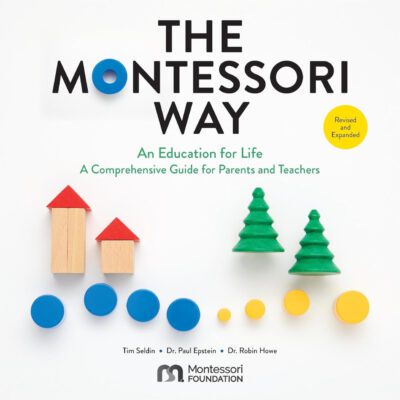
The Montessori Way, Revised and Expanded: An Education for Life; A Comprehensive Guide for Parents and Teachers
$25.00
-
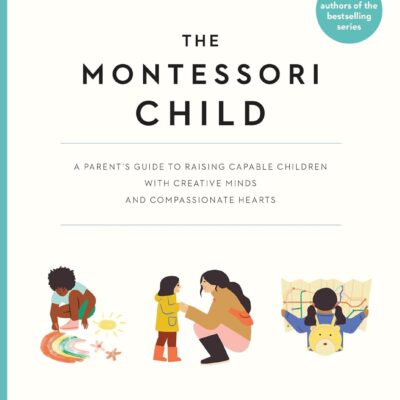
The Montessori Child: A Parent's Guide to Raising Capable Children with Creative Minds and Compassionate Hearts (The Parents' Guide to Montessori)
$20.00
-
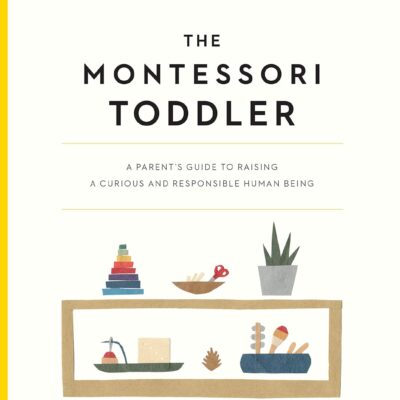
The Montessori Toddler: A Parent's Guide to Raising a Curious and Responsible Human Being (The Parents' Guide to Montessori)
$20.00
-
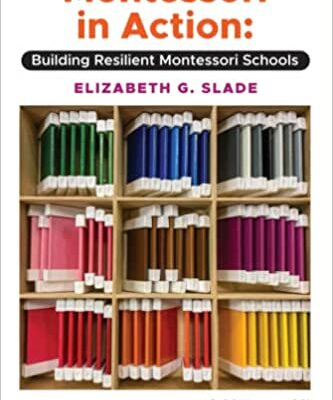
Montessori in Action: Building Resilient Montessori Schools 1st Edition
$29.95