


Tips to Handle Your Child’s “No” Gracefully
To continue reading, you will need to choose a subscription plan.

Neediness during Covid
To continue reading, you will need to choose a subscription plan.
A Montessori inspired Home, Life Based on Montessori Principles 1
To continue reading, you will need to choose a subscription plan.
Recipe: Preserving Children
To continue reading, you will need to choose a subscription plan.
Five Crucial Reasons Why Schools Should Teach Entrepreneurship
To continue reading, you will need to choose a subscription plan.

How to Explain the Covid-19 Vaccine as a Story
To continue reading, you will need to choose a subscription plan.

Bedtime Routines for Younger Children
To continue reading, you will need to choose a subscription plan.

Spending Cleanse
To continue reading, you will need to choose a subscription plan.

The Magic of Montessori: Tidy-Up Tips That Will Change Your Life
To continue reading, you will need to choose a subscription plan.

Parenting with Intention
To continue reading, you will need to choose a subscription plan.

Wishing you had a Parenting Instructor at your School
To continue reading, you will need to choose a subscription plan.
Virtual Relationship Building
To continue reading, you will need to choose a subscription plan.

Seeing the World Through Your Child’s Eyes
One of the keys to creating a calm and peaceful home is to learn how to see the world from your child’s perspective. Maria Montessori challenged us to ‘follow the child’. To do this, first we must have a sense of how your children think, feel, and react.
For example, take this child. He is looking up and you can tell that he is looking at someone or something really tall. He is probably looking up at an adult that he loves. Imagine how the world looks to him at two or three feet tall. It looks a lot different than it does to us. Let’s try to put ourselves into our children’s shoes and understand what it’s like to be so small. From this perspective adults seem to be giants. Because of their size and strength, they seem to be all powerful.
We invite you to do a little exercise. When your children are asleep, with your parenting partner, get down on the floor and use your smartphone to take a video of what the house looks like from your child’s height. This is particularly dramatic if your child is very young. You will notice how different the furniture, the stove and the kitchen cabinets look. It probably feels like living in a giant’s house? When children are small, they can feel overwhelmed, powerless, and without a voice.
As parents, you are not only taller and stronger than young children, you are the ones who meet their needs. You say yes or no. You pay attention or ignore them. As adults, we don’t always understand what our children are trying to tell us, and our children find ways to get our attention and communicate their desires by trial and error.
When they are young, children learn to recognize the needs of others as well as their own, to communicate with words, and gain skills that foster independence. In the beginning they don’t have words so they cry, smile, or coo. They don’t even truly recognize that they are separate beings from their primary caregivers.
When they are young, children learn to recognize the needs of others as well as their own, to communicate with words, and gain skills that foster independence. In the beginning they don’t have words so they cry, smile, or coo. They don’t even truly recognize that they are separate beings from their primary caregivers. As they grow, in addition to words, most young children communicate their needs with the adults in their lives through tears, smiles that make our hearts melt, tantrums, pouting, and other ways to make themselves heard. They begin to realize that they have their own unique voice. They are working to develop respectful communication, independence, and the ability to do things for themselves.
As children grow, during the elementary years, they become even better at communicating. They are increasingly interested in their peers and their relationships. They are all about rules and fairness. They want to make up their own rules and try them out. They are beginning to feel their own independence and autonomy. As parents we start to feel more comfortable and confident in their ability to make decisions and handle certain situations on their own or with a little help from adults.
Adolescence is the middle ground between childhood and the world of adults. Teenagers are neither children nor adults. One minute they are one, next the other. Their bodies are growing and changing rapidly overnight. They want to know what their place is in the world and how they can make a difference. They become interested in sexuality—their own and others. They want to try out different ideas to discover their values and beliefs which may or may not be the same as their parents.
Every child is unique. No matter what age they are, some children seem to easily accept their parent’s guidance while others seem to test everything their parents say or do. Throughout their childhood it is their parents’ job to lift them up, listen and try to understand, help them gain confidence, and find their own identity.
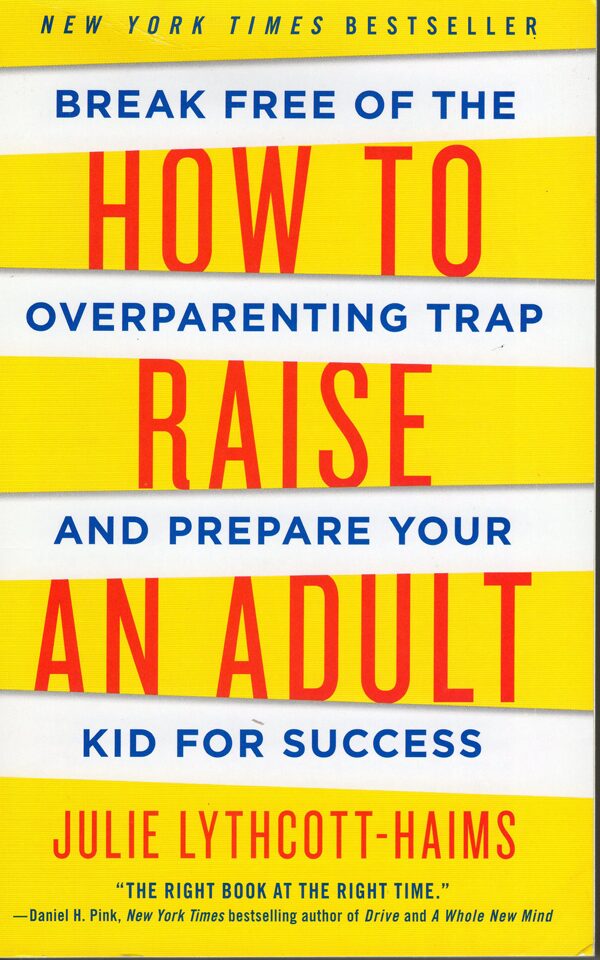
Book Review | How to Raise An Adult: Break Free of the Overparenting Trap and Prepare Your Kid for Success
To continue reading, you will need to choose a subscription plan.
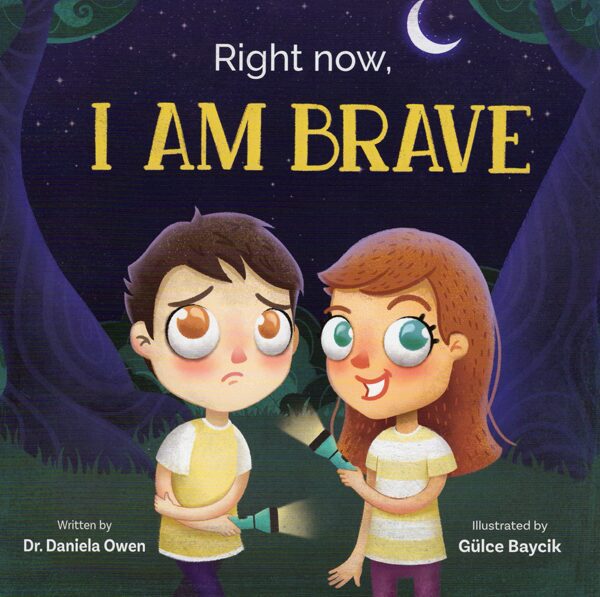
Book Review | Right now, I Am Brave
by Dr. Daniela Owen
Illustrated by Gülce Baycik
Illustrated by Gülce Baycik
Here’s another good one from Dr. Owen. The first lesson—when things that we find scary are not actually dangerous, it’s time to be brave. She goes on to define what it means to be brave. She explains how our brains are not always right about what is truly scary. Being brave can be tough for grown ups as well as kids.
So trying new things, doing the right thing, or doing something hard are all sometimes scary. She goes on to give children ideas about how to encourage themselves and push forward when facing scary things.
As always in this series, the illustrations are colorful, inclusive, and full of emotion. It is definitely a good addition to your home library or for your school.

Parenting toward Antiracism | Montessori Family Life Webinar
Dr. Valaida Wise was recently a guest on the Montessori Family Life Webinar series when she shared some of her ideas about how to raise children to be anti-racist. I will summarize a small part of that webinar here. If you would like to view the entire broadcast or any of our hundreds of weekly broadcasts, you can join the Montessori Family Alliance at montessori.org/mfa.
Or if you are already a member, you can view the webinar by clicking here.
So many parents and teachers believe in this myth of racial innocence. They don’t want to burden their children with this rather adult idea of racism. They believe that children are born kind and innocent to race and that they don’t need this information. So they would rather raise them to be what we call ‘color blind.’ Many researchers would submit that, actually, the worst conversation to have with a child is no conversation at all about race. What is known is that, in reality, young children (as early as three months old) understand bias and difference based on research by Dr. Karen Wynn, Director of the Infant Cognition Center, and Dr. Bloomington, both at Yale University.
“Children become
like the things they love.”
–Dr. Maria Montessori
What researchers are thinking now is that humans may be born with this kind of bias. We have a bias towards something that looks scary or different. Research shows that these biases are not just ‘learned’ behaviors. They are actually inbred, instinctual behaviors that worked for our protection at one point. Left unchecked, without a parent’s guidance, the child cannot help but develop a bias.
Children see bias as early as 3-6 months old. So let’s scan forward. What happens in a family if the parent says, “Well, I don’t want to talk about race because my child is too young?” or “I want them to remain innocent from all of this.” Then the child will be raised in a color-blind mindset and, as research bears out, the child is less likely to point out or understand when discrimination happens.
This could happen very subtly. Let’s say you’re at a playground with your child. You see another child point to a child of color and you hear the pointing child say, “That child looks dirty. Why is that child dirty? Does it come off?” The parent of the pointing child cringes, turns, and walks away, shushing the child. The child’s interpretation is that this is not a good topic; they should not talk about this.
To conclude this summary of just a small segment of Dr. Wise’s broadcast, let’s remember that when we allow our biases (or our embarrassment) in situations stop us from guiding our children toward antiracism (especially the youngest children), they absorb it right away. Children are mirrors. They mirror us. It’s so very important that we check ourselves to see what our children are sensing in our attitudes, in our language, and in our thinking because they are taking it all in.

Dialectical Behavior Therapy (DBT) And How You Can Use It to Make Life Better at Home, School, and in the Workplace
To continue reading, you will need to choose a subscription plan.
Featured
-
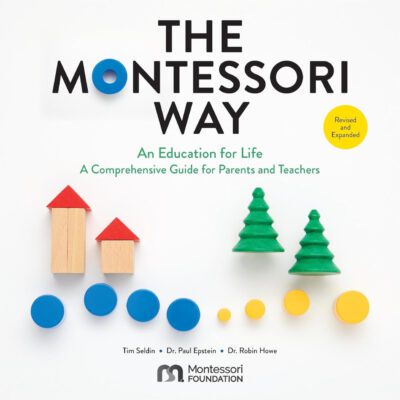
 The Montessori Way, Revised and Expanded: An Education for Life; A Comprehensive Guide for Parents and Teachers
$25.00
The Montessori Way, Revised and Expanded: An Education for Life; A Comprehensive Guide for Parents and Teachers
$25.00
-
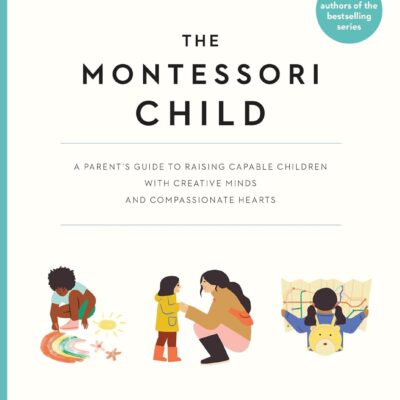
The Montessori Child: A Parent's Guide to Raising Capable Children with Creative Minds and Compassionate Hearts (The Parents' Guide to Montessori)
$20.00
-
The Montessori Toddler: A Parent's Guide to Raising a Curious and Responsible Human Being (The Parents' Guide to Montessori)
$20.00
-
Montessori in Action: Building Resilient Montessori Schools 1st Edition
$29.95
-
Bulk Order, 30 Copies of Montessori for Every Family: A Practical Parenting Guide To Living, Loving, And Learning
Original price was: $600.00.$510.00Current price is: $510.00.

Products
-
The Montessori Way, Revised and Expanded: An Education for Life; A Comprehensive Guide for Parents and Teachers
$25.00
-
The Montessori Child: A Parent's Guide to Raising Capable Children with Creative Minds and Compassionate Hearts (The Parents' Guide to Montessori)
$20.00
-
The Montessori Toddler: A Parent's Guide to Raising a Curious and Responsible Human Being (The Parents' Guide to Montessori)
$20.00
-
Montessori in Action: Building Resilient Montessori Schools 1st Edition
$29.95
-
Bulk Order, 30 Copies of Montessori for Every Family: A Practical Parenting Guide To Living, Loving, And Learning
Original price was: $600.00.$510.00Current price is: $510.00.