
Webcast: The Three most Common Enrollment Marketing Mistakes Made By Most Schools Today
To continue reading, you will need to choose a subscription plan.
Webcast: Montessori and Higher Education
To continue reading, you will need to choose a subscription plan.
Webcast Developing Social Emotional Skills with Diverse Learners
To continue reading, you will need to choose a subscription plan.

Educate And Inspire With Maria Montessori The Musical
To continue reading, you will need to choose a subscription plan.

Spotlight on IMC School Accreditation Co- Hillary Drinkell
To continue reading, you will need to choose a subscription plan.
IMC Teacher Education: Community, Flexibility, Quality, And Innovation
The original mission of the International Montessori Council (IMC) did not include teacher education. In fact, IMC existed for many years without any affiliated teacher education programs. The IMC’s main focus in those early years, and still today, is creating an open-minded and open-hearted Montessori organization.
Eleven years ago, that mission expanded with the approval of the first IMC affiliated Montessori Teacher Education Program, The Center for Guided Montessori Studies (CGMS). Forging this new path was not done casually. The IMC Board had the wisdom to recognize the need for Montessori teacher education to adapt to the technological and educational trends budding in the 21st century. As a result, IMC and CGMS have paved a path for hybrid Montessori teacher training that blends online with short residential/ face-to-face training; a trend that is now finding acceptance in other Montessori organizations.
Continuing in the direction of innovation, the IMC Teacher Education Standards have been designed to encourage programs to find creative ways to meet the needs of learners without sacrificing the quality of course content. The academic hours, for example, are significantly higher than required by the Montessori Council for Teacher Education (MACTE) or other organizations, but there is much more flexibility for course delivery format. This means that the required hours can be met through a variety of meaningful learning activities, with a balance of on-campus, online, and independent study projects.
Montessori is about so much more than materials. For this reason, IMC requires all programs to have a plan for ongoing reflection and discussion of course topics. These discussions are part of the academic hours and can take place in person or virtually. Helping adult learners grasp the significance of Montessori philosophy and how to support the development of children requires deep study. We can’t just leave this to chance. We need to guide adult learners through a process of discovery, and this requires time to read, reflect, and share. Modern technology provides many opportunities for ongoing contact, support, and meaningful dialog, through online discussion groups and video conferencing. These kinds of activities enrich the teacher education program and provide a higher level of support for the learner as they travel their Montessori path. IMC is ready to support teacher education programs in developing these strategies to better serve their learners and better prepare the next generation of Montessori teachers.
Whether a teacher education program is in its infancy and early development stages, or is an established independent program, or even affiliated with another organization, we hope you will look at what the IMC has to offer. The IMC is more than just another Montessori organization, we are a community with a network of passionate Montessorians always ready to offer friendship, coaching, and support.
As an international organization, IMC can offer teacher education affiliates global recognition. Programs will be able to submit news and feature articles for Montessori Leadership magazine. The newly developing teacher education section of the IMC website will list all affiliate teacher education programs with links to the TEP website. Every affiliate program will get a seat on the IMC Teacher Education Committee, where everyone’s input is welcome.
IMC is a strong supporter of MACTE. As such, all IMC teacher education affiliates must obtain MACTE accreditation. The process of adding IMC as your affiliating organization is fairly simple. IMC standards match up closely with MACTE guidelines with only a few requirements needing special attention such as the additional academic hours, and additional years of experience required for instructors. We have also kept the IMC affiliation and adult learner fees low so that programs can afford to have an organization on their side.
Recognizing the increasing demand for well-prepared Montessori teachers worldwide, IMC is committed to supporting new and existing teacher education programs expand their reach. As we grow with more teacher education affiliates, IMC plans to offer professional development instructor training opportunities for teacher educators. We look forward to growing and learning as a united Montessori community. We all get stronger when we work together. ′
For more information and a copy of the IMC TEP Standards and Guidelines for Affiliation, email Kitty Bravo, IMC Teacher Education Chair at kbravo@guidedstudies.com.
ML/ August 2019 / Pg 41
The Curve Of Work: First Year Primary
To continue reading, you will need to choose a subscription plan.

The Normalization Of New Teachers
To continue reading, you will need to choose a subscription plan.
Beyond The Numbers Sustaining Equity In Montessori Schools
To continue reading, you will need to choose a subscription plan.
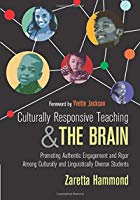
Book Review: Culturally Responsive Teaching The Brain
The book, Culturally Responsive Teaching and The Brain, written by Zaretta Hammond, examines the philosophy and implementation of culturally responsive teaching in the context of current research and knowledge of neuropsychology and its impact on student behavior and response.
The book seeks to connect current brain research and culturally responsive teaching with the question “what is needed to activate that wiring for optimal connectivity for students of color?” Understanding the classroom practices that can serve as triggers for engagement of various regions of the brain can help educators adapt their practices in a culturally relevant way that supports students of color.
The book explores this premise in three parts. Part One: Building Awareness and Knowledge; Part Two: Building Learning Partnerships; and Part Three: Building Intellective Capacity. Each section brings together the information of neuropsychology with a study of cultures with the goal of educating teachers to become culturally sensitive and responsive to their students. With practical, concrete examples of teaching strategies and self-reflections, Ms. Hammond leads the reader through the process of developing the skills and understanding needed to offer a culturally responsive classroom environment to all students.
As culturally responsive teaching is more a philosophy, or mindset, rather than a method, Part One: Building Awareness and Knowledge begins to explore the goal of guiding “dependent learners” to become independent thinkers, who are self-motivated and confident in their abilities. With the premise that educators can change the “habits of mind” of the dependent learner, Hammond explores the importance of relationship, creating a classroom that helps students reach their zone of proximal development with just the right challenges and the tools that teachers can use to implement culturally responsive teaching.
The Ready for Rigor Framework includes the components of Awareness, Learning Partnerships, Information Processing, and Community of Learners and Learning Environment. Educators must first understand the role that culture plays in learning and understand the sociopolitical and economic conditions that are the root of the inequities that contribute to the achievement gap for students in marginalized groups. Educators are encouraged to reflect on their own biases, values, and beliefs by looking at layers of culture from the surface to those cultural archetypes that can lead to an understanding of one’s implicit bias.
Increasing knowledge of the regions of the brain and the role each plays in one’s behavior becomes the backdrop for further understanding of those “triggers” that result in certain student behaviors that further reinforce their dependence as learners. practical advice that teachers can use in the classroom to avoid these triggers leads to Part Two: Building Learner Partnerships.
Building partnerships based on affirmations, mutual respect, and validation enables students to develop trust and a sense of safety to take risks in their learning. Starting with rapport, or connection, and developing an alliance leads to the cognitive insights and higher-order thinking skills of independent learners. Ms. Hammond encourages educators to reflect, observe, and collect data on their behaviors and mindset that contributes to a positive alliance with each student. This alliance means becoming a student’s ally by agreeing on a goal, setting high expectations, acknowledging ability, and providing feedback that gives specific information about successes and next steps. With increased motivation and an academic mindset, the student begins to believe in his ability and understand that it is sociopolitical impacts, rather than personal ability, that are the cause of inequity.
Part Three: Building Intellective Capacity provides many concrete teaching techniques to support students of color. Dr. Hammond discusses four components of learning: Ignite, capturing the student’s attention; Chunk, providing specific amounts of information in segments; Chew, giving opportunities to process that information in active ways; and Review, the projects to apply this new information and connect it to previous learning. The techniques shared are in the context of culturally responsive teaching and the brain science presented in parts one and two.
The final strategy for building intellective capacity is preparing a classroom environment for all students to feel a connection and sense of a community that is socially and intellectually safe.
This includes examining the visual look of the classroom, the routines, and rituals—but beyond that, ways to provide each student with meaningful learning in a community of peers.
Ms. Hammond reminds teachers that “embracing conscious incompetence” is an important aspect of growth and development. Being willing to reflect, change behavior, and try new techniques takes time and effort. The goal of equity for all students is worth the struggle.
This book provides a framework for thinking about and acting in a more culturally responsive manner. Developing the knowledge and understanding of the impact of culture on learning enriches our role as a teacher of children and adults. Valuing equity in education is a goal that, on the surface, is easily shared. The format of this book encourages a deeper look at that goal with knowledge, information, and specific tools and techniques for actual practice as a culturally sensitive and responsive educator.
Cultivating an attitude, a culturally responsive mindset, to view a school should be implemented in practice by leaders and teachers in a way that is specific to their school culture. Forming an alliance with each other, with our students and with their families, begins with respect, rapport, and engagement that is specific to each culture.
As Montessori educators, we need to create classrooms and schools that support all marginalized groups. The concepts and ideas presented in this work can be a starting point as we begin to explore a supportive framework for all diverse learners—cultural, racial, ethnic, and those who learn in a unique way. As we develop classrooms of inclusion for all students, we must become more aware of the impact of the relationship, learning techniques, and the classroom community on every student in our classrooms. ′
REFERENCES
Hammond, Z. (2015). Culturally responsive teaching and the brain.Thousand Oaks, CA: Corwin.
ML/ August 2019/ Pg 20

Montessori A Model For Inclusive Education?
To continue reading, you will need to choose a subscription plan.
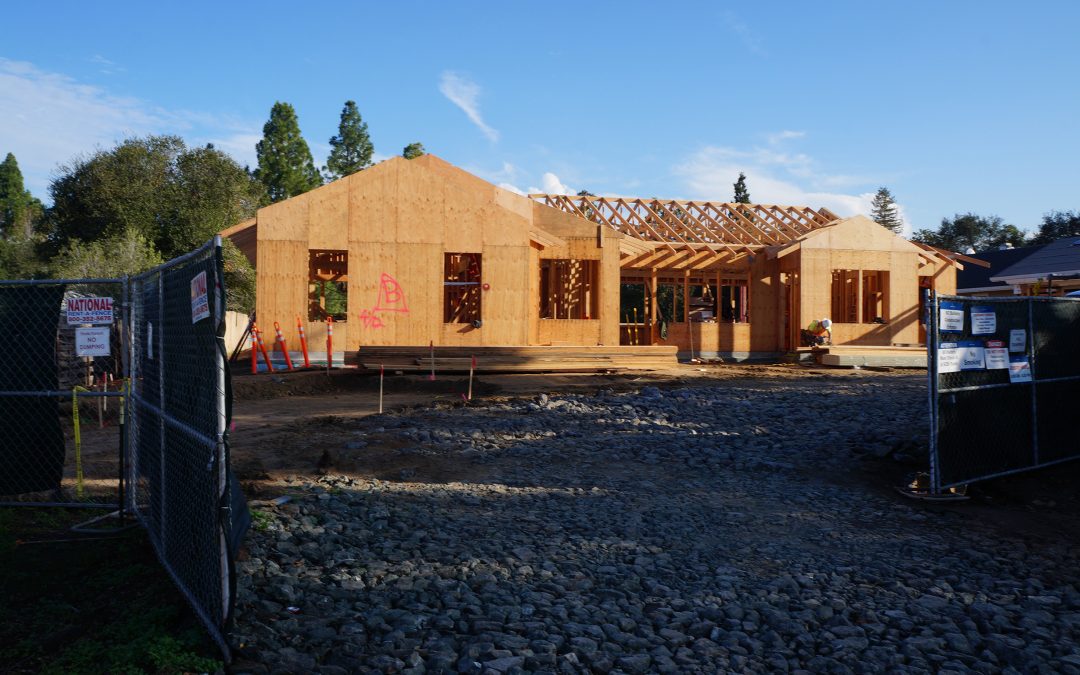
The Bowman Expansion Project
To continue reading, you will need to choose a subscription plan.

Montessori Teacher Supports For Children With Exceptionalities
To continue reading, you will need to choose a subscription plan.

Letter From The Executive Director
To continue reading, you will need to choose a subscription plan.
Webcast: Professional Development Plans For The School Year
To continue reading, you will need to choose a subscription plan.
Classified: Infant/Toddler Teacher Posting
To continue reading, you will need to choose a subscription plan.
Mom, I Made My Own Lunch!
To continue reading, you will need to choose a subscription plan.
Featured
-
 Montessori Family Alliance School Group Membership (Print & Digital 2026 1/2 year pricing)
Original price was: $30.00.$15.00Current price is: $15.00.
Montessori Family Alliance School Group Membership (Print & Digital 2026 1/2 year pricing)
Original price was: $30.00.$15.00Current price is: $15.00.
-
The Montessori Way, Revised and Expanded: An Education for Life; A Comprehensive Guide for Parents and Teachers
$25.00
-
The Montessori Child: A Parent's Guide to Raising Capable Children with Creative Minds and Compassionate Hearts (The Parents' Guide to Montessori)
$20.00
-
The Montessori Toddler: A Parent's Guide to Raising a Curious and Responsible Human Being (The Parents' Guide to Montessori)
$20.00
-
Montessori in Action: Building Resilient Montessori Schools 1st Edition
$29.95