
Talking to Smart Speakers
To continue reading, you will need to choose a subscription plan.
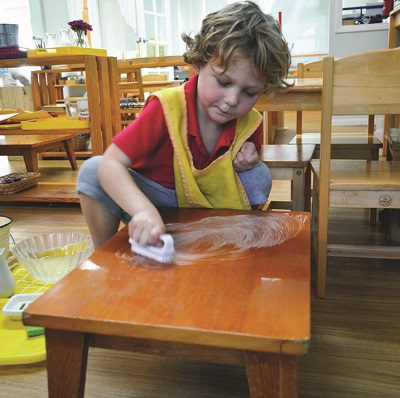
Table Washing: Why Do Montessori Students Spend So Much Time Washing Tables?
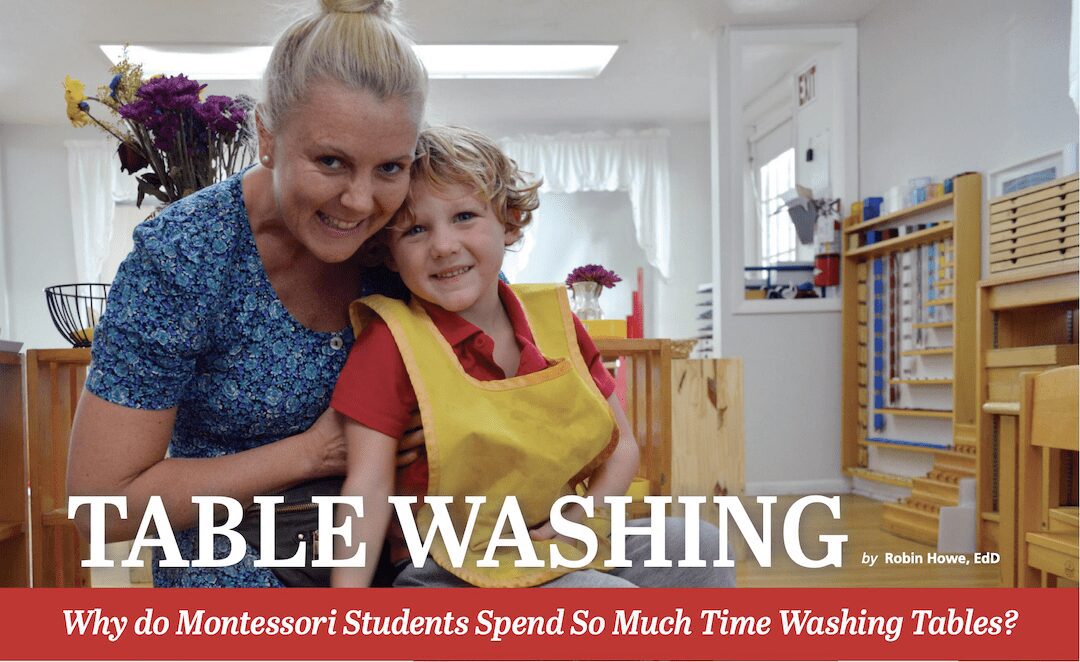
by Robin Howe, EdD
Editor’s Note: If we had a dollar for every time a skeptical parent has questioned the amount of time their young Montessori child spends washing tables …
ANATOMY OF A LESSON
Ironically, I missed the session of my Montessori teacher training when we were given the lesson on how to wash tables. I remember doing it as a Montessori child. How hard could it be? I was just getting out of my first career in the restaurant business, and someone was going to teach me how to wash a table? I had washed and set tables for the rich and famous. I had cleaned more tables than everyone in that class combined. I was, in fact, relieved to miss that day of instruction. The summer training session ended, with my teacher trainer reminding me that I still needed to have a lesson on table washing.
A month later, about three weeks into the school year, where I was doing my internship, my lead teacher, a wonderful, experienced Montessorian, invited me to join her while she gave a review lesson to one of the returning students on table washing. Great, I thought! This was my opportunity to receive the lesson, seemingly without missing a beat. About twenty minutes later, I found myself sitting there observing a four-year-old finish up his work, while I, the ‘non-lesson-needing ‘expert’ watched dumbfounded.
I once thought that table washing was one of the most remedial tasks that a Montessori student would ever have to learn. As a result of watching this lesson, and essentially being humbled by a four-year-old (also an experience that has since occurred on many occasions), I have come to realize how important and difficult this work is for children.
I have now learned how to give this lesson, and it never ceases to amaze me that it is so complicated. More amazing is the way that my students seem to pick it up so quickly and how I still, after many lessons, have to focus in order to perform it correctly. For these reasons, I would like to share the lesson, as well as some observations, on how children respond to this exercise. It is my hope that others will gain a better appreciation for the complexity of this lesson and will, as a result, appreciate its importance and contribution as a part of the Montessori curriculum.
When working with any water exercise, the first step is to have the child put on an apron. Students are already familiar with where aprons are kept in the classroom, as well as how to put one on. Next, the teacher asks the student to go together to where the table-washing kit is located on the shelf. The child is either shown or asked to identify the table-washing kit and is then asked to take it to the side of the table that will be washed, placing the kit on the floor next to the table. Included in the table-washing kit are the following: soap in the soap dish; a soap brush; a pitcher for gathering the water; a bucket for dirty water; a basin (or bowl); a sponge; a drying cloth; and a hand towel that will serve as a mat for the materials. Generally, the materials are kept in the basin that will be used for the water. With the hand towel in place on the floor, the materials are arranged along the top of the hand towel in this order: sponge, soap, brush, drying towel (from left to right), and the water pitcher. And basin along the bottom. Note: This lesson may vary depending on the classroom and teacher.
After all the materials are placed on the towel, water is brought to the table using the water pitcher. Children have to fetch the water, which exercises body control as they navigate through the classroom, returning carefully with a pitcher filled with water (about two-thirds full). Then, the water is poured from the pitcher to the basin. The pouring of water from a pitcher is an extension of work that the student has already mastered in earlier Practical Life lessons.
Next, the brush is wet and run across the soap until it is foamy. Using the wet, soapy brush, the table is methodically scrubbed in a circular motion. There should be small, but visible, suds on the surface of the table.
The brush is then rinsed and returned to its place on the mat. The dirty water is poured from the basin to the bucket, and the child carefully walks the dirty water to the sink to empty it. He will return it to the mat and fetch the pitcher so that he may again fill it with clean water to pour into the basin.
Now, the child wets the sponge and wrings out the excess water. Both the wetting of the sponge, as well as the squeezing of the sponge, are skills the child already possesses as a result of previous lessons in Practical Life. Starting at the bottom of the table, moving in horizontal motions, the child begins to rinse the soap from the table.
The sponge is wet once again. As an extension of this Practical Life exercise, the student might be asked to count how many compresses the sponge gets and then count the number of squeezes in order to expel excess water.
The child rinses the sponge, and picks up the towel to begin carefully drying the table top. After the surface is completely clear, the child checks the edge for suds and wipes it accordingly.

Step 1: Apron

Step 2: Collecting Materials for the Lesson

Step 3: Preparing the Materials

Step 4: Getting Water

Step 5: Pouring Water

Step 6: Wet the Brush

Step 7: Soap the brush

Step 8: Scrub the Table

Step 9: Dump the Dirty Water

Step 10: Fill the Pitcher with More Clean Water

Step 11: Pour the Clean Water into the Bowl

Step 12: Wet and Wring the Sponge

Step 13: Wipe the Table with the Sponge

Step 14: Dry Table with Cloth

Step 15: Dump Dirty Water into Bucket

Step 16: Dump Dirty Water

Step 17: Clean Up Any Spills

Step 18: Roll Up a Clean Towel

Step 19: Fold the Mat

Step 20: Return the Materials to the Tray
At this point, the table is now clean and dry, and the basin is filled with soapy water. The student then pours the water in the basin into the bucket and disposes of the soapy water. The process of disposing of the water is also a very important part of the lesson. The child, again, has to navigate through the classroom, focusing on his movement and the balance of the bucket so as to not spill the water. This is great practice for walking slowly and being patient.
Once the water is dumped, the child uses the towel to make sure the work area is clean and dry. The dirty towel is placed in the laundry hamper, and a fresh towel is carefully rolled, and placed in the pitcher. Next, the mat is carefully folded and all materials are returned to the tray as they were found.
This lesson is important for many reasons. As mentioned during the lesson description, the child has to practice patience, while exercising fine-motor skills and balance. The student’s ability to sequence is challenged, as the proper completion of the work is dependent upon the ability to follow the proper steps. Another important aspect of this lesson, perhaps overlooked much of the time, is the time that the student spends working with the teacher. This is one of the longest lessons and can often take up to fifteen minutes.
During this process, children must listen carefully and ask questions, which helps them develop important language skills.
I hope that my description of this exercise offers some insight into the Montessori classroom and instills a sense of respect and feeling of awe for the children. Similar to the mistake I made, many people assume that these lessons with simple names must be simple, causing us to wonder how they could be so important. Indeed, I have come to realize that they are important, not only as a part of children’s Montessori academic curriculum but also their development as people. •
Daniel Robinson (Robin) Howe, III was a Montessori student from age two through the eighth grade. He worked his way through multiple levels of certification, spent many years in the classroom, managed a number of Montessori schools, and then earned his EdD. Formerly, co-head of the NewGate School, Robin is a senior consultant with the Montessori Foundation.
TOMORROW’S CHILD © • NOVEMBER 2019 • WWW.MONTESSORI.ORG

Dealing With Tantrums
I’m going to dive right in to discuss a very tricky area for parents and children alike: tantrums.
I hope you find this article useful so you can start applying Montessori principles in your home too.
Dealing with Tantrums
Tantrums are a pretty normal part of life with children from around one to five years old. Maybe they’ll start a little later than one year and will end earlier, but anything in this range is fairly normal. Your child is learning that things don’t always go their way. And, as parents, we are helping them learn how to deal with these emotions and to make amends.
It can be upsetting for a parent. It’s hard to realize that your child is actually asking for your help. They are overwhelmed by the situation and need your support to calm down. It’s not the time to take it personally.
How to Avoid Tantrums
It can be possible to avoid tantrums before your child loses control. Here are some ideas to ward off tantrums when you see the first signs of your child losing control.
1. Be prepared: take a small bag with some simple games and some favorite snacks if you expect your child to wait patiently in a doctor’s office or a cafe.
2. Label their feelings: “Boy, you really wish you could stay longer”; “You really wanted some orange juice right now!”
3. Redirect them: “I can’t let you hit your brother, but you can hit this drum/pillow.”
4. Get down to their level: “You sound frustrated. Can you tell me why?”
5. If they are struggling, ask them if they would like some help: give them just as much help as they need and then step back.
6. Give them a choice: “Would you like to put on your shoes or your scarf first?”
7. Establish routines: “… and after lunch, we’ll go to the toilet, read a book, and tuck in for a rest.”
8. Let them show their anger creatively, “Show me how angry you are. Here is some paper and a pencil. Wow. They are big circles. You are really mad!”
Triggers
Events can often escalate to a full-blown tantrum. Sometimes it’s from your child’s frustration; other times their anger or rage; sometimes because they want to be in control; their communication may still be limited; or because they are tired, hungry, or overstimulated. They can throw themselves on the floor, push us away, try to hit us, a sibling, another child, or even break something.
It can be useful to note things that cause tantrums in your child: over-scheduling can be common; a new baby; moving to a new house; or certain children may trigger them.
Sometimes the tantrum is even caused by us as we deliver the news that it is time to leave the park, or we serve some food they don’t like for dinner, or that we would like them to get dressed to leave the house.
It’s OK for your child to have a tantrum. You can acknowledge their displeasure at what is going on. You can help them to do the thing that they don’t like. However, when we back down and give in to them, you will find they shout even louder next time.
It’s difficult to be the parent and stay strong. But your hard work will pay off in the long term. They will learn that when you say no, you mean no; and when you say yes, you mean it too.
I like the advice from Positive Discipline for Preschoolers (by Nelsen EdD, Jane, Erwin M.A., Cheryl, et al. Jul 9, 2019). “If you say it, mean it; and if you mean it, follow through with kind and firm action.”
Action may be, for example, leaving the park with a sad toddler, acknowledging that they really wish they could stay longer.
Alternatives to Time Out: How to Help Your Child Calm Down
When your child is having a tantrum, some experts advise putting them into time out. I find this difficult as your child is asking for help to calm down, and you are removing your support and punishing them instead.
When we punish our children, they often get angry at us rather than being sorry for what they have done. Or they try to work out a way to get away with it next time without being caught.
Instead, I look for ways that I can support my child to calm down. I’m not saying that their behavior is OK, but when they are in the middle of the tantrum, it is not the time to teach them anything. They cannot hear you. They have lost control. So let’s help them calm down.
Some children will respond to a cuddle during a tantrum. You can rub their back, cuddle them, and sing to them as they go through all the range of emotions from anger, to intense frustration, to sadness, and sometimes regret. I once held my son for 40 minutes as he refused to get dressed. And I watched him go through all these emotions. In the end, he announced he was ready to get dressed. He told me he loved me. He wasn’t angry with me. He was grateful that I had just been there for him. I know sometimes you have to leave, but in this case, we just changed our plans.
Other children will push you away and don’t want to be touched. In this case, I make sure they are safe and cannot hurt themselves or others. I stand nearby and keep offering my help, “I’m here if you need some help to calm down. Or we can have a cuddle when you are ready.” After the tantrum, I like to offer a cuddle. “That was tough. And now you have calmed yourself down. Would you like a hug?”
If they are throwing toys at their sibling or trying to hit me, I would remove them so that everyone is safe. “I can’t let you hit me. My safety is important to me. Would you like to hit these pillows instead?” If your child is trying to hurt the baby, you can place yourself physically between them to keep the baby safe as you help your older child calm down.
For a child over three years old, you can set up a “calm place,” which they can use when they are upset. It may be a tent with some pillows and favorite things. It may be a corner with some trains. You can ask your child if she would like to go to her calm place.
This is different than ‘time out,’ as the older child is in control; she can come out when she feels calm. If she comes back still in a rage, I would gently tell her that she looks like she still needs to calm down and can come back when she is ready.
Making Amends
Maybe you are thinking that if I support my children while they calm down, I’m saying that their behavior is OK, and I’m encouraging them to get angry. When they are upset, indeed, my objective is to help them calm down.
Once they are calm, I then help them to make amends. If they drew on the walls, I would get them to help me clean up. If they broke their brother’s toy, they can help to fix it. I’ve asked the kids to help scrub their sheets when they used marker pens in bed and made a mess.
In this way, they learn to take responsibility when things go wrong. And when it’s over, it’s over. The good thing about young children is that they can move quickly from deep anger and sadness back to their happy selves. We need to move on too and not let this upset the whole day by referring back to it or keeping on about it. Once they have made amends, it’s OK for everyone to move on. •
TANTRUM FAQs
Shouldn’t we just ignore their tantrum?
I don’t like to ignore children when they are having a tantrum. They may not let me touch them, but I keep offering support and letting them know I am available when they need me. If you were super upset and your partner just left the room for you to get over it, you would likely find them unsupportive. We are showing our kids that, good or bad, we will be there for them.
What do I do if we are out in public when they have a tantrum?
There are basically two options:
First: Go home—if you find it difficult to have people watching you, it’s best to just leave. This may mean parking a full shopping cart and following the above ideas once you are home.
Second: Stay and support them—my preferred option is to hang in there and do what you would do even though you are out of the house. If you have more than one child with you, make sure they are safe. And then offer as much help as you can to help your child calm down. People watching will more likely think about what a lovely, patient parent you are, rather than what a horrible noise your child is making.
I find it difficult to stay calm myself. What can I do?
If your child has triggered you, it is indeed difficult to help them calm down.
• If your partner is available, it can be easiest to get them to step in instead.
• You may want to make sure the kids are safe and go to the bathroom to catch your breath.
• Find a mantra that you can repeat, “I breathe in calm, I breathe out anger.”
• Remember not to take it personally. Perhaps visualize putting on a bullet-proof suit that will resist everything (including words) that your child throws at you.
These tips should help you remain calm and give your child the support they need to regain control.
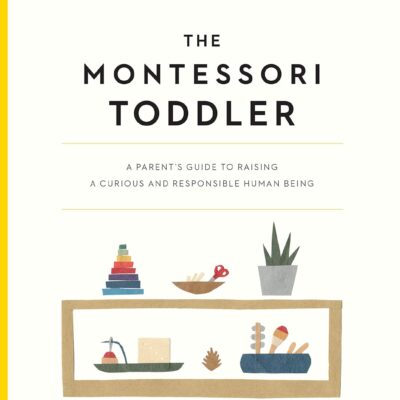
Learn from Simone Davies, an AMI Montessori teacher with15+ years’ experience working with 0-3-year olds, owner of Jacaranda TreeMontessori in Amsterdam since 2008, mother of two teenagers, and author of the book The Montessori Toddler. Visit her blog at themontessorinotebook.com
This article is from the November 2019 issue of Tomorrow’s Child magazine. Reprinted with the author’s permission.

What Did You Do at School Today?
To continue reading, you will need to choose a subscription plan.
The Power of Choice
To continue reading, you will need to choose a subscription plan.
Dear Cathie: An Excited Second Year Parent
To continue reading, you will need to choose a subscription plan.
Book Review: Maybe I Can Love my Neighbor Too
Written by Jennifer Grant
Illustrated by Benjamin Schipper
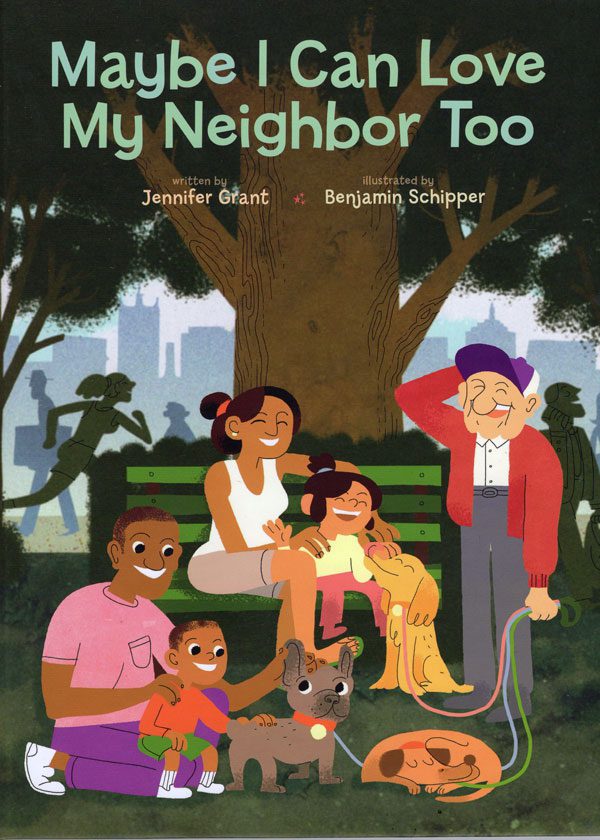
In this story, a young girl, who lives in the city, is wondering about a large apartment building that is being constructed across the street and she asks her mother, “Will all the new people be our neighbors, too?” Her mother’s response is that all people, near or far are neighbors. The girl knows that she is supposed to love her neighbors but doesn’t know how she could love so many people. As she and her mother go through their day, she notices many examples of how people can be loving to each other: helping an elderly man retrieve his dog; sharing toys with other children in the park; making a loaf of bread and giving it to a neighbor; helping someone carry their groceries; and more. By the end of the book, the girl feels confident that there are so many ways to show love to all her neighbors around the world. The illustrations have a colorful, sort of cartoon style. They depict people from many different backgrounds, ages, and ethnicities. This would be a good book for children three years old through the elementary grades.
Introducing a Second Language to 3-6 Year Olds in Montessori
To continue reading, you will need to choose a subscription plan.
Teaching Science and Math to Young Children
To continue reading, you will need to choose a subscription plan.
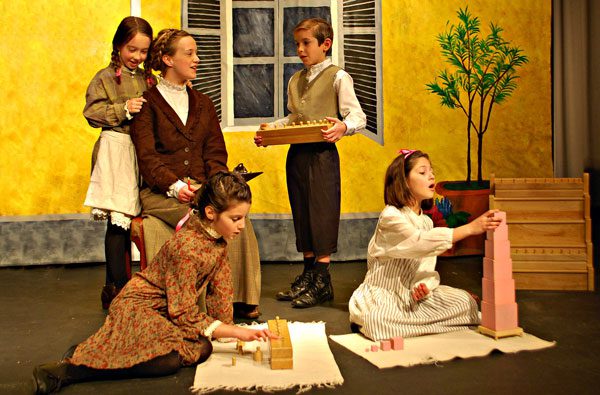
The Making of Maria Montessori: The Musical
To continue reading, you will need to choose a subscription plan.
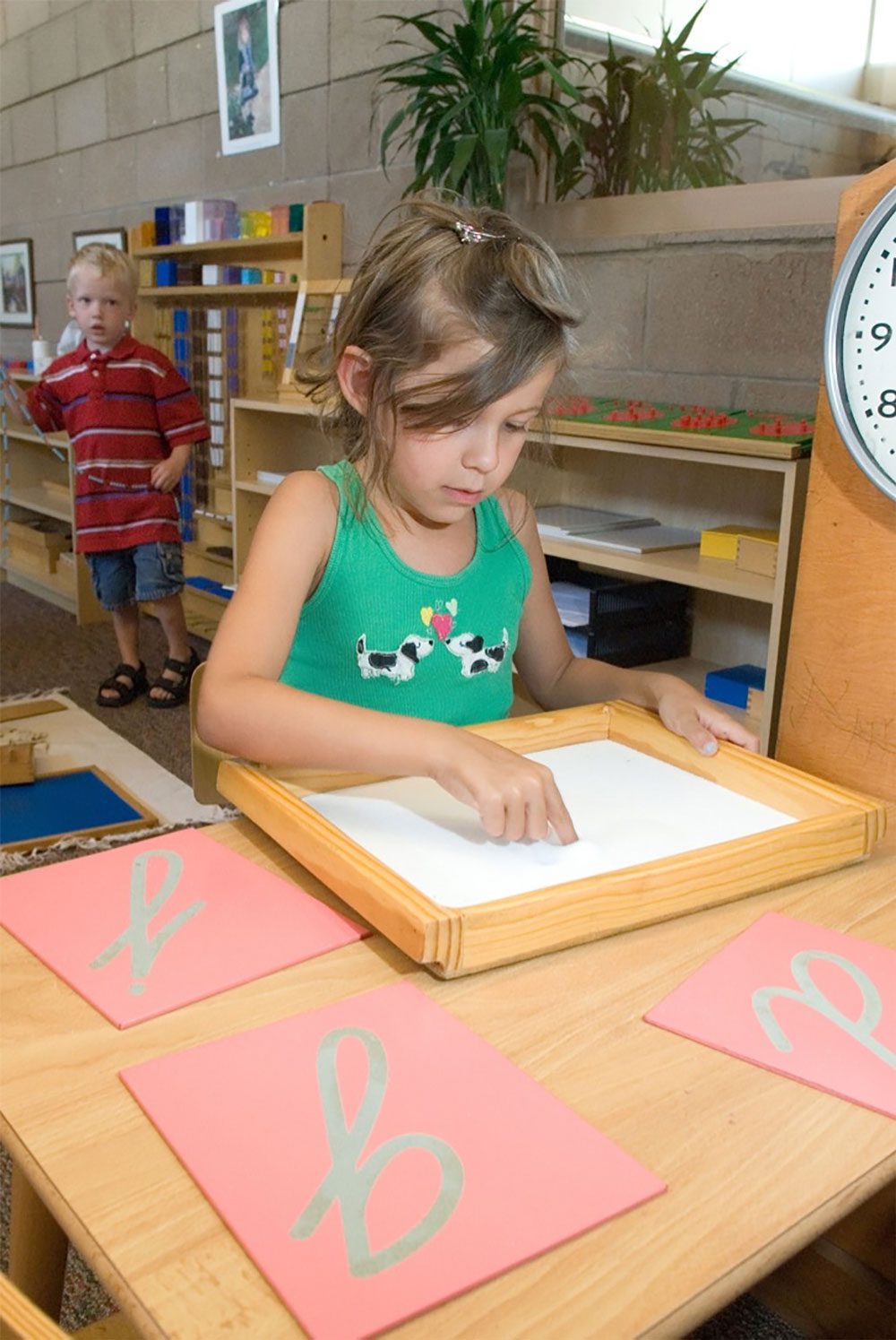
Writing with the Mind: Handwriting in the Montessori Early Childhood Classroom
To continue reading, you will need to choose a subscription plan.
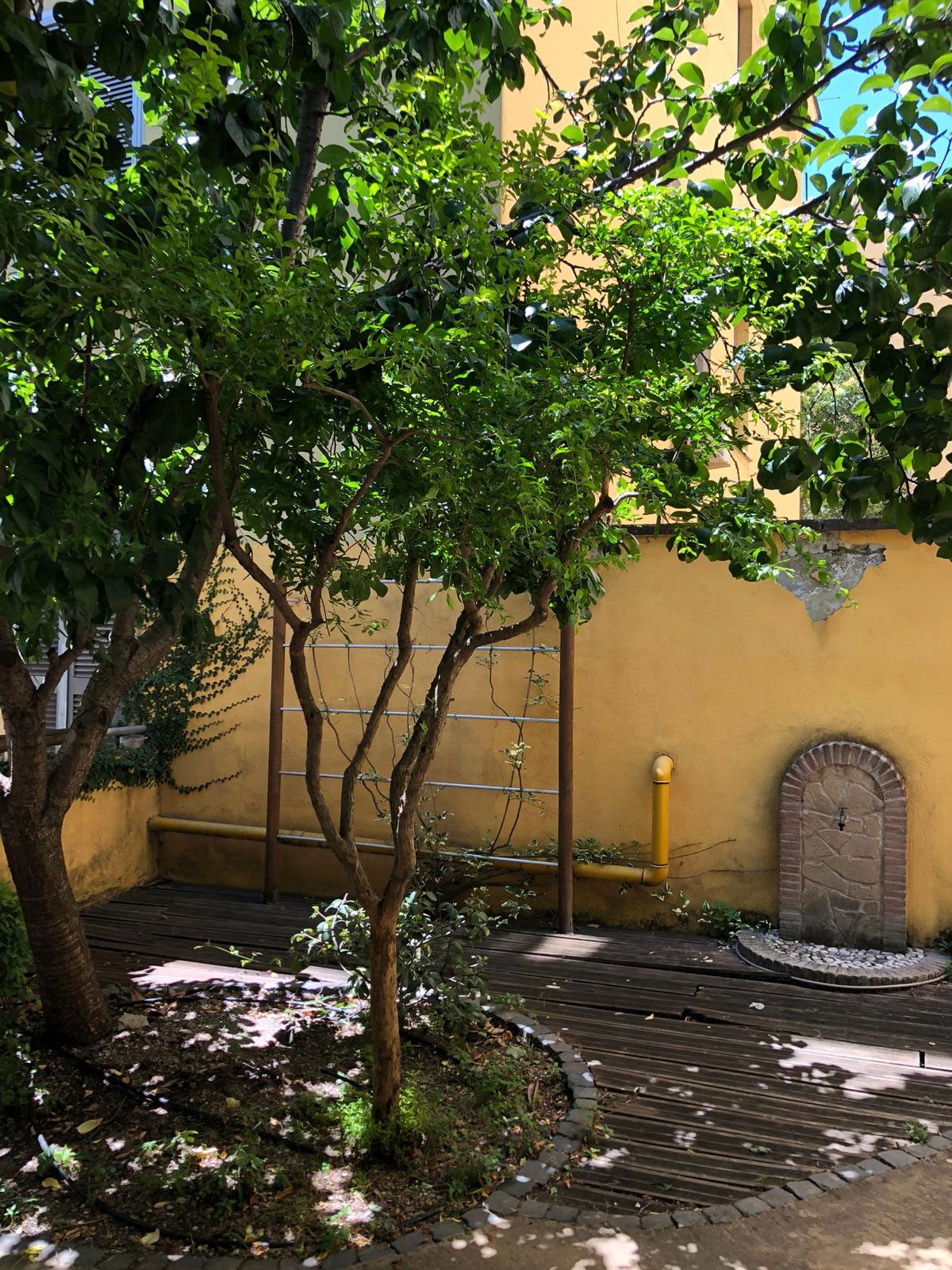
Let’s Get Them Outside
“Set the children free, let them have fair play, let them run out when it is raining, take off their shoes when they find pools of water, and when the grass of the meadows is damp with dew, let them run about with bare feet and trample on it; let them rest quietly when the tree invites them to sleep in its shade; let them shout and laugh when the tree invites them to sleep in its shade; let them shout and laugh when the sun wakes them up in the morning, as it wakes up every other living creature, which divides its day between waking and sleeping,” (Montessori, 1997, p. 71)
Children are inherently connected to nature and fascinated by living things. Due to a variety of factors, including increased academic pressures in schools, over-scheduling of extracurricular activities, increased reliance on technology for entertainment, and fear of children being left alone outdoors, children are spending more time indoors than ever before. Connection to nature, however, is an integral part of the Montessori philosophy and methodology. The Montessori Method stresses that immersion in nature is imperative for proper physical and psychological development. Today’s outdoor classrooms are not a new concept in Montessori schools. Maria Montessori wrote:
“In the first ‘Children’s House’ in Rome, we have a vast courtyard, cultivated as a garden, where the children are free to run in the open air…which is planted on one side with trees and a branching path in the middle, and on the opposite side, has broken ground for the cultivation of plants. This last, we have divided into so many portions, reserving one for each child…While the smaller children run freely up and down the path, or rest in the shade, the possessors of the earth (children from 4 years up) are sowing or hoeing, watering or examining the surface of the soil watching for the sprouting plants.”
Maria Montessori believed that the outdoors is a natural extension of the classroom and, hence, there should be harmony between the indoor and outdoor learning environments. She wrote:
“There must be provision for the child to have contact with nature; to understand and appreciate the order, the harmony, and the beauty in nature. It is also necessary for his psychical development to place the soul of the child in contact with creation, in order that he may lay up for himself treasure from the directly educating forces of living nature.” (1966)
She was a real advocate for the outdoor classroom and placed a great deal of emphasis on getting the children outdoors and connecting with nature.
There must be provision for the child to have contact with nature; to understand and appreciate the order, the harmony, and the beauty
in nature.” —Maria Montessori
I have fond memories of my own childhood growing up in nature. When I shut my eyes, I am easily transported back to that world. We had everything we needed and more! The river ran behind our home, and the banks provided us with rich clay for everything our imagination conjured up. Oh the mud pies we made and the tea parties we hosted underneath the gigantic, old trees. What fun! There was no lack of ideas to play, as we ran freely in the open, often in the rain, hiding behind trees, swinging from its branches, and digging to find the other end of the earth. It is no wonder then that, even now, it is to nature that I turn when I am in need of comfort and solace. I took my childhood for granted, thinking everyone had the same. It was only when I moved away that I realized how special it was and how privileged we were.
Maria Montessori once said, “The land is where our roots are. The children must be taught to feel and live in harmony with the earth.” (Gilder, 2009, p. 35) Today’s disconnection of the children from the natural world bothered me. My goal in opening an outdoor classroom at my school was to provide regular access to the outdoors, along with guided Montessori classroom work, in order to connect them back to nature. Richard Louv reminds us about the drastic need to bring children into contact with nature as he describes a haunting vision of children without access to nature suffering from nature-deficit disorder. He writes, “When children have regular contact with nature, in an unstructured way, they are more attentive, observant, creative, and self-content.” (Louv, 2008, p. 49)
In creating the prepared environment for the outdoor classroom, we followed the same meticulous principles as for the indoor classroom. The tenets of Montessori philosophy and methodology are the same:
- Child centered
- Well ordered and structured
- Beautiful
- Freedom within limits
- Intrinsic motivation
- Teacher as Guide and observer of the child
Young children thrive and their minds and bodies develop best when they have free access to stimulating outdoor environments for learning. Knowledgeable and enthusiastic adults are crucial to unlocking the potential of the outdoors. In creating the outdoor classroom, the intention is for the young child to learn the skills of social interaction, care for living things and the environment, curiosity, wonder, and joy.
The foundation of the Montessori environment is Practical Life, and this is easily done outdoors. Children learn to maintain their own place, just as they do indoors.
They take care of the plants and harvest vegetables and fruits. They learn to compost and to conserve water with the rain barrel. “Through outdoor education, children learn to take greater care of the environment, each other, and themselves. To gain self-confidence, children need to love nature and feel a sense of belonging in nature—a connection.” (Gilder, 2009, p.36)
Living things fascinate children. “It has been understood…that the best means of invigorating the child is to immerse him in nature” (The Montessori Method). Observing birds at the bird-feeding station teaches them so much about the natural environment. They take on the responsibility of filling the bird feeder and keeping the birdbath full of water. Binoculars come in handy as they look for birds in the trees. The curiosity regarding the birds they see can follow them into the classroom, where they learn the names of the birds as well as the parts of a bird. Similarly, butterfly observations can instill an interest in the life cycle of a butterfly, and they can watch the metamorphosis of a butterfly.
It is important to allow children to draw, record, or document their nature experiences or observations. Nature collages, leaf rubbings, and petal paintings make art come alive in the outdoor classroom. Given opportunities to discover nature, children not only experience the natural world to its fullest extent, they use those experiences to form important and lasting attitudes toward nature. Louv tells us that we can now assume that, just as children need good nutrition and adequate sleep, they may very well need contact with nature. “Healing the broken bond between our young and nature is in our self-interest…because our mental, physical, and spiritual health depends upon it” (Louv, p.3)
A Montessori primary environment is the perfect place to integrate nature exploration. The Montessori philosophy and Method emphasizes connecting to nature and inspiring wonder in children. Many of the classroom materials support nature discovery and research for connecting the outdoor and indoor environments, especially in the areas of natural history, geography, botany, and zoology. Maria Montessori stressed that immersion in nature is imperative for proper physical and psychological development and stated,
“When the child goes out, it is the world itself that offers itself to him. Let us take the child out to show him real things instead of making objects which represent ideas and closing them in cupboards…There is no description, no image in any book that is capable of replacing the sight of real trees and all the life to be found around them, in a real forest. Something emanates from those trees which speaks to the soul, something no book, no museum is capable of giving. The wood reveals that it is not only the trees that exist, but a whole, interrelated collection of lives. And this earth, this climate, this cosmic power are necessary for the development of these lives. The myriad of lives around the trees, the majesty, the variety are things one must hunt for, and which no one can bring into the school. How often is the soul of man—especially that of the child—deprived because one does not put him in contact with nature?”
The outdoor classroom provides children the opportunity to be outside, except on very cold days. The lessons build on what is learned in the indoor classroom—refinement of movement, sensory development, social skills, and care of the environment. They learn to become responsible citizens of our planet. These lessons lay the foundation for a lifetime love of nature, gardening, art, and science—and for me, most importantly, to be responsible global citizens. ¢
Bibliography
Gilder, S.A. (2009). Montessori by Nature. Montessori Life, 21 (4), 34-37.
Louv, R. (2008). Last child in the woods: saving our children from nature-deficit disorder. Chapel Hill, NC: Algonquin Books of Chapel Hill
Montessori, M. (1967). The discovery of the child. New York, NY: Ballantine. (Original work published 1948).
Montessori, M. (1994). From childhood to adolescence. Oxford, England: Clio Press.
Montessori, M. (1972). Peace and education. Madras: Kalakshetra Press.
Tomorrow’s Child / October 2019 / Pg 10
Webcast Power of Forgiveness
To continue reading, you will need to choose a subscription plan.
Linking Science at Home and Science at School
To continue reading, you will need to choose a subscription plan.
How Do You Get Your Child to Read Books?
To continue reading, you will need to choose a subscription plan.
Webcast: Got Challenges? How Do We Support All Of Today’s Learners In Our Montessori Classrooms
To continue reading, you will need to choose a subscription plan.

Webcast: Creating A Culture Of Self Mastery In The Classroom
To continue reading, you will need to choose a subscription plan.
Featured
-
 Montessori Family Alliance School Group Membership (Print & Digital 2026 1/2 year pricing)
Original price was: $30.00.$15.00Current price is: $15.00.
Montessori Family Alliance School Group Membership (Print & Digital 2026 1/2 year pricing)
Original price was: $30.00.$15.00Current price is: $15.00.
-
The Montessori Way, Revised and Expanded: An Education for Life; A Comprehensive Guide for Parents and Teachers
$25.00
-
The Montessori Child: A Parent's Guide to Raising Capable Children with Creative Minds and Compassionate Hearts (The Parents' Guide to Montessori)
$20.00
-
The Montessori Toddler: A Parent's Guide to Raising a Curious and Responsible Human Being (The Parents' Guide to Montessori)
$20.00
-
Montessori in Action: Building Resilient Montessori Schools 1st Edition
$29.95