


Rising Innovator: Inspiration, Education, Support
To continue reading, you will need to choose a subscription plan.

Why Montessori Schools Succeed in a Crisis
To continue reading, you will need to choose a subscription plan.

Bedtime Routines for Younger Children
To continue reading, you will need to choose a subscription plan.

Spending Cleanse
To continue reading, you will need to choose a subscription plan.

The Magic of Montessori: Tidy-Up Tips That Will Change Your Life
To continue reading, you will need to choose a subscription plan.

Book Review | The Yeti is Ready
To continue reading, you will need to choose a subscription plan.

Book Review | Peace, Love, Action
To continue reading, you will need to choose a subscription plan.

The Power of Love in the Learning Environment
To continue reading, you will need to choose a subscription plan.

Learning From Nature: A Real Life Testimonial
To continue reading, you will need to choose a subscription plan.

Montessori Town Hall Meeting, January 13th, 2021

Adjusting to Life in 2020 2021, Empowering and Encouraging Healthy Practices at Home and at School
To continue reading, you will need to choose a subscription plan.
An Overview of “Adjusting to Life in 2020-2021”
To continue reading, you will need to choose a subscription plan.
Parenting Toward Gender Equality
To continue reading, you will need to choose a subscription plan.
Parenting Toward Emotionally Healthy Families
To continue reading, you will need to choose a subscription plan.

Helping Parents Help Themselves
The Montessori Foundation, in cooperation with a collaborative set up in mid-March, of this year, is striving to help parents figure out ways to deal with the new reality of Covid 19.
For many, you are working from home for the first time. How do you manage your time and energy when the children are home and they, too, are trying to do school work in a remote way you all never imagined would become the rule of the day? Not to mention that you may be competing with your children for internet access!
Jonathan Wolff, Montessori Foundation Senior Consultant, was the presenter at a parent zoom meeting. His topic was, “Sharing Words of Love, Empathy, and Encouragement with Children in Unsettling Times.” Along with Lorna McGrath (Director of the Montessori Family Alliance) and Christine Lowry (Special Education Specialist and another of the Foundation’s Senior Consultants), they shared an array of coping strategies.
For those who did not participate, we have a recap of the suggestions we hope you will find helpful.
1. Get in Touch with your own feelings. If you’ve ever flown on a plane, the famous line the crew gives to you when demonstrating the proper steps to using those oxygen masks should be popping into your head about now. Place your own mask on first, and then you can help others. It’s not being selfish, it’s being proactive. In a way, we are all grieving. We are grieving for the loss of the lives we aren’t getting to live right now and we are, perhaps, grieving for a loved one struck down by this virus. Some of us have lost jobs and income and we are grieving that loss. These are all real and valid feelings to acknowledge and should not be diminished or thought of as being selfish. Right now, you need to make sure that your physical, emotional, and spiritual needs are being met if even on a small level.
2. Check in with your children regarding their thoughts and feelings before you see any behavioral issues manifesting. By observing any changes in their behavior or attitudes, you can greatly aid in keeping them calm and feeling safe. Depending on the age of the child(ren), you might notice they have reverted to bed wetting or having accidents during the day, acting out, having nightmares, not eating, or generally being clingy. Try to manage this before you are in the ‘reacting’ phase of handling it.
3. Respond with empathy and no judgement before offering a solution. “How are you feeling about …?” “What do you think about the online learning you have to be doing now?” Probe them gently, but respect the boundary if they don’t feel like sharing when you are asking. Let them know you are there for them if and when they are ready.
The last thing you want an already anxious child to experience is a freaked-out mom or dad. That’s a lot for a child to process. Sometimes less is more with very young children.
4. Sharing your fears. You can be honest with your child; however, children have an uncanny ability to pick up on parental fears. The last thing you want an already anxious child to experience is a freaked-out mom or dad. That’s a lot for a child to process. Sometimes less is more with very young children. Regardless of children’s age or emotional maturity, children need to feel loved and reassured that you are going to keep them safe. You might explain that we are all in this together, and it’s OK that we feel this way.
5. What if you just end up losing it yourself in front of them? Jon recommends you “reboot” yourself as soon as you possibly can, assure them they are loved by you, and you are feeling better now. This is nothing they have done and you aren’t angry with them. One parent gave us a wonderful suggestion, and we’ve all decided to adopt it as well. Tell your child(ren) you need a TIME IN. Time out can really sound and be a negative if it’s not practiced in a very careful way; so when you say, “I need a time in to just give myself a few moments,” the children in your home will be more empathetic back to you.
6. Make certain that if you have a partner who shares the responsibility of the child(ren) that you speak with one voice. Discuss privately and before talking to the children, how you will handle certain situations. You need to provide a unified front when they might be trying to pit you against each other.
7. Do not be afraid to seek outside professional help, if you feel that you are all operating in crisis mode. With remote telemedical delivery available in many states, you may be able to get the counseling you and your partner need. It’s been speculated that the divorce rate in China has skyrocketed by spouses who could not get along during the weeks of isolation. Know that there will be pitfalls, highs and lows, patience wearing thinner as the period of stay in or stay-home-orders get longer than we might have been prepared to accept at the beginning of all of this.
8. PLEASE, limit the amount of media you view during the day when they could be listening in. While it’s important you keep yourselves well informed, it can really impact young children. Set periodic updates on your devices from trusted news sources if you can. Then watch after they are in bed for the night.
9. Limit online games that are based on ‘the zombie apocalypse’ or are very isolating. This will serve no good purpose. Involve the children in family time. Use this time to really connect with your children. It will make you all appreciate each other more and that’s a good outcome for all.

Purposeful Leadership | Part 2: Well-focused through Knowing Yourself
To continue reading, you will need to choose a subscription plan.

Standing Together: Our Role in Ending Systemic and Internal Racism
To Our Fellow Montessorians:
We join the nation in grieving the death of George Floyd in Minneapolis, as well as the deaths of Breonna Taylor, a first responder in Louisville, Kentucky, shot in her own bed; Ahmaud Arbery, shot while jogging near Brunswick, Georgia; and far too many other Black men and women, who have been the victim of racist action in our nation. The International Montessori Council (IMC) and the Montessori Foundation are committed to advancing world peace, equity, inclusion, and diversity. We recognize that these are not isolated incidents but emblematic of a longstanding, egregious pattern of systemic racism—and we stand against it. We must dedicate ourselves to the achievement of real justice and equality for all, because injustice and inequality—against even one person—diminishes all of us.
We recognize that it is not enough for us to reject racism. We must be committed to fighting it, to eradicating it on individual and systemic levels. Michelle Obama wrote: “Race and racism is a reality that so many of us grow up learning to just deal with. But if we ever hope to move past it, it can’t just be on people of color to deal with it. It’s up to all of us—Black, White, everyone—no matter how well-meaning we think we might be, to do the honest, uncomfortable work of rooting it out. It starts with self-examination and listening to those whose lives are different from our own. It ends with justice, compassion, and empathy that manifests in our lives and on our streets.”
We recognize that it is not enough for us to reject racism. We must be committed to fighting it, to eradicating it on individual and systemic levels. Michelle Obama wrote: “Race and racism is a reality that so many of us grow up learning to just deal with.
We are aware that this work requires persistent self-awareness, constant self-examination and criticism, intentional systemic change, and a willingness to listen, call out, and stand up. We must send out into the field, Montessorians who are race-conscious guides, credentialed by an association which must model antiracist, conscious principles, and actions.
The IMC and Montessori Foundation are committed to this work and to being held accountable for our work to bring an end to racism within our structures.
We also remain committed to the ongoing work of building a diverse, equitable, and inclusive world community. The IMC and The Montessori Foundation also recognize and acknowledge the internal work we all must do. To that end, we are now creating a Social Justice Task Force that will address and act on:
- The inner work of every Montessori teacher, parent, and leader to root out unconscious habits of prejudicial thinking and ideologiesA Social Justice Curriculum and the instructional changes we must bring into every prepared environment and teacher education program
- Changing our schools’ culture, communications, hiring, and professional development practices and norms, to be more equitable, diverse, and inclusive
- The advocacy work Montessori educators and leaders must now engage in on local, national, and world stages
- Adding the voice of Montessorians of color to the IMC board of trustees
- Educating ourselves and Montessorians about the work of antiracism in all areas of living and working
- Using our voice as a platform for justice
If you have an interest in contributing your time and talents in any of these vital areas of social justice in the Montessori community, we invite you to step forward. Let us know about yourself and your preferred area(s) of focus and service.
In peace,
IMC Board of Trustees
Kathy Leitch, Executive Director,International Montessori Council
Tim Seldin, President, The Montessori Foundation
Featured
-
 The Montessori Way, Revised and Expanded: An Education for Life; A Comprehensive Guide for Parents and Teachers
$25.00
The Montessori Way, Revised and Expanded: An Education for Life; A Comprehensive Guide for Parents and Teachers
$25.00
-
The Montessori Child: A Parent's Guide to Raising Capable Children with Creative Minds and Compassionate Hearts (The Parents' Guide to Montessori)
$20.00
-
The Montessori Toddler: A Parent's Guide to Raising a Curious and Responsible Human Being (The Parents' Guide to Montessori)
$20.00
-
Montessori in Action: Building Resilient Montessori Schools 1st Edition
$29.95
-
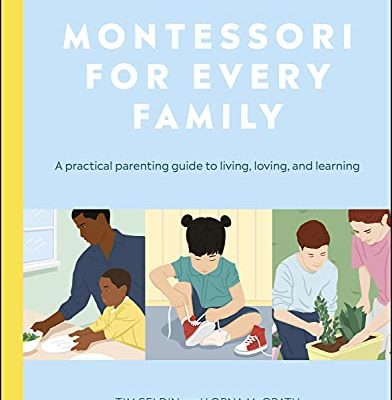
Bulk Order, 30 Copies of Montessori for Every Family: A Practical Parenting Guide To Living, Loving, And Learning
Original price was: $600.00.$510.00Current price is: $510.00.





Products
-
The Montessori Way, Revised and Expanded: An Education for Life; A Comprehensive Guide for Parents and Teachers
$25.00
-
The Montessori Child: A Parent's Guide to Raising Capable Children with Creative Minds and Compassionate Hearts (The Parents' Guide to Montessori)
$20.00
-
The Montessori Toddler: A Parent's Guide to Raising a Curious and Responsible Human Being (The Parents' Guide to Montessori)
$20.00
-
Montessori in Action: Building Resilient Montessori Schools 1st Edition
$29.95
-
Bulk Order, 30 Copies of Montessori for Every Family: A Practical Parenting Guide To Living, Loving, And Learning
Original price was: $600.00.$510.00Current price is: $510.00.