

Educate And Inspire With Maria Montessori The Musical
To continue reading, you will need to choose a subscription plan.
The Curve Of Work: First Year Primary
To continue reading, you will need to choose a subscription plan.
Book Review: Culturally Responsive Teaching The Brain
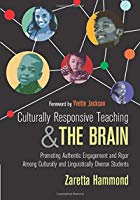
The book, Culturally Responsive Teaching and The Brain, written by Zaretta Hammond, examines the philosophy and implementation of culturally responsive teaching in the context of current research and knowledge of neuropsychology and its impact on student behavior and response.
The book seeks to connect current brain research and culturally responsive teaching with the question “what is needed to activate that wiring for optimal connectivity for students of color?” Understanding the classroom practices that can serve as triggers for engagement of various regions of the brain can help educators adapt their practices in a culturally relevant way that supports students of color.
The book explores this premise in three parts. Part One: Building Awareness and Knowledge; Part Two: Building Learning Partnerships; and Part Three: Building Intellective Capacity. Each section brings together the information of neuropsychology with a study of cultures with the goal of educating teachers to become culturally sensitive and responsive to their students. With practical, concrete examples of teaching strategies and self-reflections, Ms. Hammond leads the reader through the process of developing the skills and understanding needed to offer a culturally responsive classroom environment to all students.
As culturally responsive teaching is more a philosophy, or mindset, rather than a method, Part One: Building Awareness and Knowledge begins to explore the goal of guiding “dependent learners” to become independent thinkers, who are self-motivated and confident in their abilities. With the premise that educators can change the “habits of mind” of the dependent learner, Hammond explores the importance of relationship, creating a classroom that helps students reach their zone of proximal development with just the right challenges and the tools that teachers can use to implement culturally responsive teaching.
The Ready for Rigor Framework includes the components of Awareness, Learning Partnerships, Information Processing, and Community of Learners and Learning Environment. Educators must first understand the role that culture plays in learning and understand the sociopolitical and economic conditions that are the root of the inequities that contribute to the achievement gap for students in marginalized groups. Educators are encouraged to reflect on their own biases, values, and beliefs by looking at layers of culture from the surface to those cultural archetypes that can lead to an understanding of one’s implicit bias.
Increasing knowledge of the regions of the brain and the role each plays in one’s behavior becomes the backdrop for further understanding of those “triggers” that result in certain student behaviors that further reinforce their dependence as learners. practical advice that teachers can use in the classroom to avoid these triggers leads to Part Two: Building Learner Partnerships.
Building partnerships based on affirmations, mutual respect, and validation enables students to develop trust and a sense of safety to take risks in their learning. Starting with rapport, or connection, and developing an alliance leads to the cognitive insights and higher-order thinking skills of independent learners. Ms. Hammond encourages educators to reflect, observe, and collect data on their behaviors and mindset that contributes to a positive alliance with each student. This alliance means becoming a student’s ally by agreeing on a goal, setting high expectations, acknowledging ability, and providing feedback that gives specific information about successes and next steps. With increased motivation and an academic mindset, the student begins to believe in his ability and understand that it is sociopolitical impacts, rather than personal ability, that are the cause of inequity.
Part Three: Building Intellective Capacity provides many concrete teaching techniques to support students of color. Dr. Hammond discusses four components of learning: Ignite, capturing the student’s attention; Chunk, providing specific amounts of information in segments; Chew, giving opportunities to process that information in active ways; and Review, the projects to apply this new information and connect it to previous learning. The techniques shared are in the context of culturally responsive teaching and the brain science presented in parts one and two.
The final strategy for building intellective capacity is preparing a classroom environment for all students to feel a connection and sense of a community that is socially and intellectually safe.
This includes examining the visual look of the classroom, the routines, and rituals—but beyond that, ways to provide each student with meaningful learning in a community of peers.
Ms. Hammond reminds teachers that “embracing conscious incompetence” is an important aspect of growth and development. Being willing to reflect, change behavior, and try new techniques takes time and effort. The goal of equity for all students is worth the struggle.
This book provides a framework for thinking about and acting in a more culturally responsive manner. Developing the knowledge and understanding of the impact of culture on learning enriches our role as a teacher of children and adults. Valuing equity in education is a goal that, on the surface, is easily shared. The format of this book encourages a deeper look at that goal with knowledge, information, and specific tools and techniques for actual practice as a culturally sensitive and responsive educator.
Cultivating an attitude, a culturally responsive mindset, to view a school should be implemented in practice by leaders and teachers in a way that is specific to their school culture. Forming an alliance with each other, with our students and with their families, begins with respect, rapport, and engagement that is specific to each culture.
As Montessori educators, we need to create classrooms and schools that support all marginalized groups. The concepts and ideas presented in this work can be a starting point as we begin to explore a supportive framework for all diverse learners—cultural, racial, ethnic, and those who learn in a unique way. As we develop classrooms of inclusion for all students, we must become more aware of the impact of the relationship, learning techniques, and the classroom community on every student in our classrooms. ′
REFERENCES
Hammond, Z. (2015). Culturally responsive teaching and the brain.Thousand Oaks, CA: Corwin.
ML/ August 2019/ Pg 20

Montessori A Model For Inclusive Education?
To continue reading, you will need to choose a subscription plan.
Webcast: How Montessori Can Help Students Impacted By Trauma
To continue reading, you will need to choose a subscription plan.
Montessori based Multi-Tier System of Support An overview with Christine Lowry, M.Ed
To continue reading, you will need to choose a subscription plan.
Webcast: Discovery Part 2
To continue reading, you will need to choose a subscription plan.
Motivating Adolescent Students: With Practical Life Experiences
 “The chief symptom of adolescence is a state of expectation, a tendency towards creative work and a need for the strengthening of self-confidence.” —Maria Montessori
What motivates adolescents to do their best work? Most would agree that programs that support student interests and provide high challenges and skills, thinking combined with acting, freedom combined with discipline, and positive motivation engage and invite the adolescent to do their best work. Maria Montessori envisioned an adolescent program that would support the development of both the adolescent’s psychological and economic independence. It has also been determined that adolescent students who enjoy what they do and link the importance of what they do to a bright future have a commitment to the work. Interestingly, humor and a sense of joy enhance this commitment to work during adolescence. Other powerful characteristics of a Montessori secondary program that contribute positively to the development of the adolescent student are programs that nurture the adolescent community as a whole; in other words, programs that take seriously the deep and important communal life of the teenager.
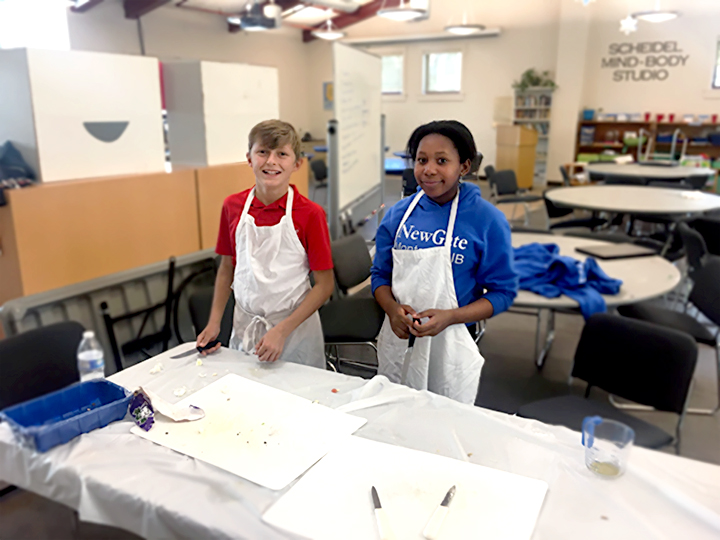
Culinary Nights, a culminating event that happens twice a year at the Montessori Foundation’s Lab School, NewGate Montessori IB School, is one such program that highlights the best of programs for adolescents. It is a night of celebration where the students who participate in culinary classes get to show off their skills to the school community, family members, and friends. The NewGate secondary program encompasses lessons and experiences to develop life skills, including cooking, social skills, community events, and other practical life experiences. This particular evening event allows students to demonstrate their capabilities in cooking, plating, serving, setting tables, and wine pairing a 5-course culinary experience.
In preparation for this event, NewGate secondary students take food preparation classes with Mr. Greg Desvenain, a parent chef at the school, who specializes in French cuisine and French and Italian wines. The course, which is part of the school’s curriculum, teaches basic culinary skills including how to dice an onion, how to use a food blender, even how to make a scrambled egg. Students learn how to prepare meals after investigating and researching balanced diets and a variety of different types of recipes from soups and main courses to desserts.
Mr. Greg teaches all aspects of food preparation and service. He gives lessons on how to hold plates, which side to serve and remove plates, and how to talk politely to guests. Using the commercial grade kitchen on the NewGate secondary campus, students cook various meals and learn how to plate food with a professional flair, arranging each dish in ways that stimulate the palate and excite the diner. Understanding how to tastefully decorate and garnish using herbs, flowers, and sauces are also part of the curriculum. Mr. Greg also gives students who have a personal interest in the culinary arts opportunities to extend their interests by offering an after-school club experience.
In the weeks prior to Culinary Nights, students practice cooking each dish separately. They also practice plating and serving each dish to each other. A theme is picked and the menu is decided upon knowing that the event is the culminating project for the course. The theme tends to have roots in French cuisine but also uses locally grown products. The menu for this year’s event indulged attendees with polenta cakes, gazpacho, fish, stuffed vegetables, and apple crumb cake á la mode.
On the day of the event, in early afternoon, students assemble in the kitchen and begin to cook. Cooking continues throughout the afternoon until guests arrive. Students also arrange and set tables, print menus, organize themselves to receive guests, and have the wine pairing information ready for each table. Conversations in the form of peer-mentoring for each task elevate the excitement of the evening. This culminating event is weeks in the making and gives NewGate students opportunities to market, manage, collaborate, partner, and strengthen communal relationships.
Maria Montessori tells us that it is during this period of adolescence where interest in the construction and function of society forms in the individual consciousness. The culinary arts program at NewGate School is but one program highlighting the best of adolescent experiences that stay true to Montessori principles and give adolescent students opportunities to develop essential skills for the future. ′
Tomorrow’s Child / April 2019 / Pg 27
Using he Montessori method To Build The Whole Child
To continue reading, you will need to choose a subscription plan.

Open Mind Open Heart
To continue reading, you will need to choose a subscription plan.
Webcast: The Opitimal Choice
To continue reading, you will need to choose a subscription plan.
Living Montessori Through Courageous Conversation
To continue reading, you will need to choose a subscription plan.
Ribbon & Straws Help Montessori Students Build Teamwork & Biome Pyramids
To continue reading, you will need to choose a subscription plan.
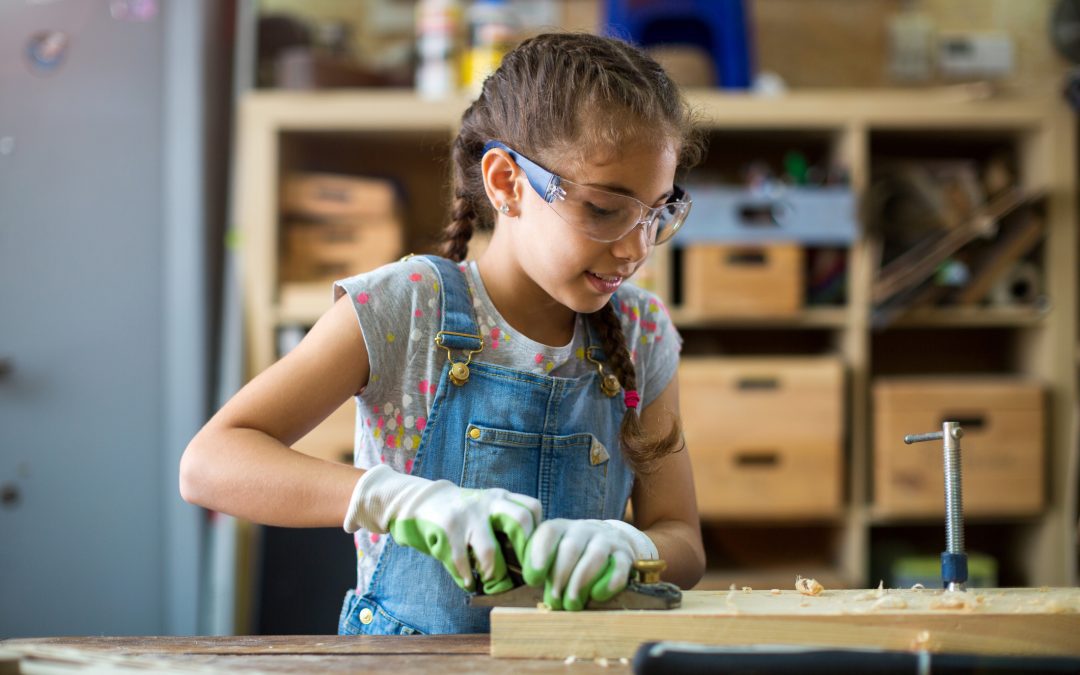
Irresistible Learning: Woodwork in Early Childhood Education
To continue reading, you will need to choose a subscription plan.
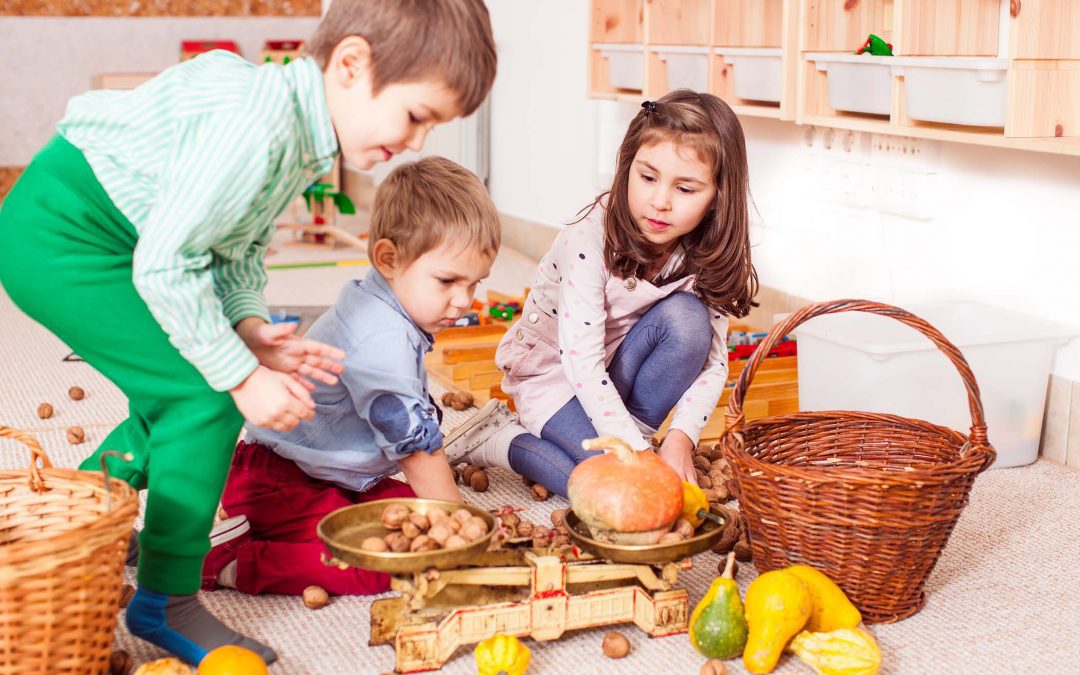
An Education for Life: What Children Really Get Out of Montessori
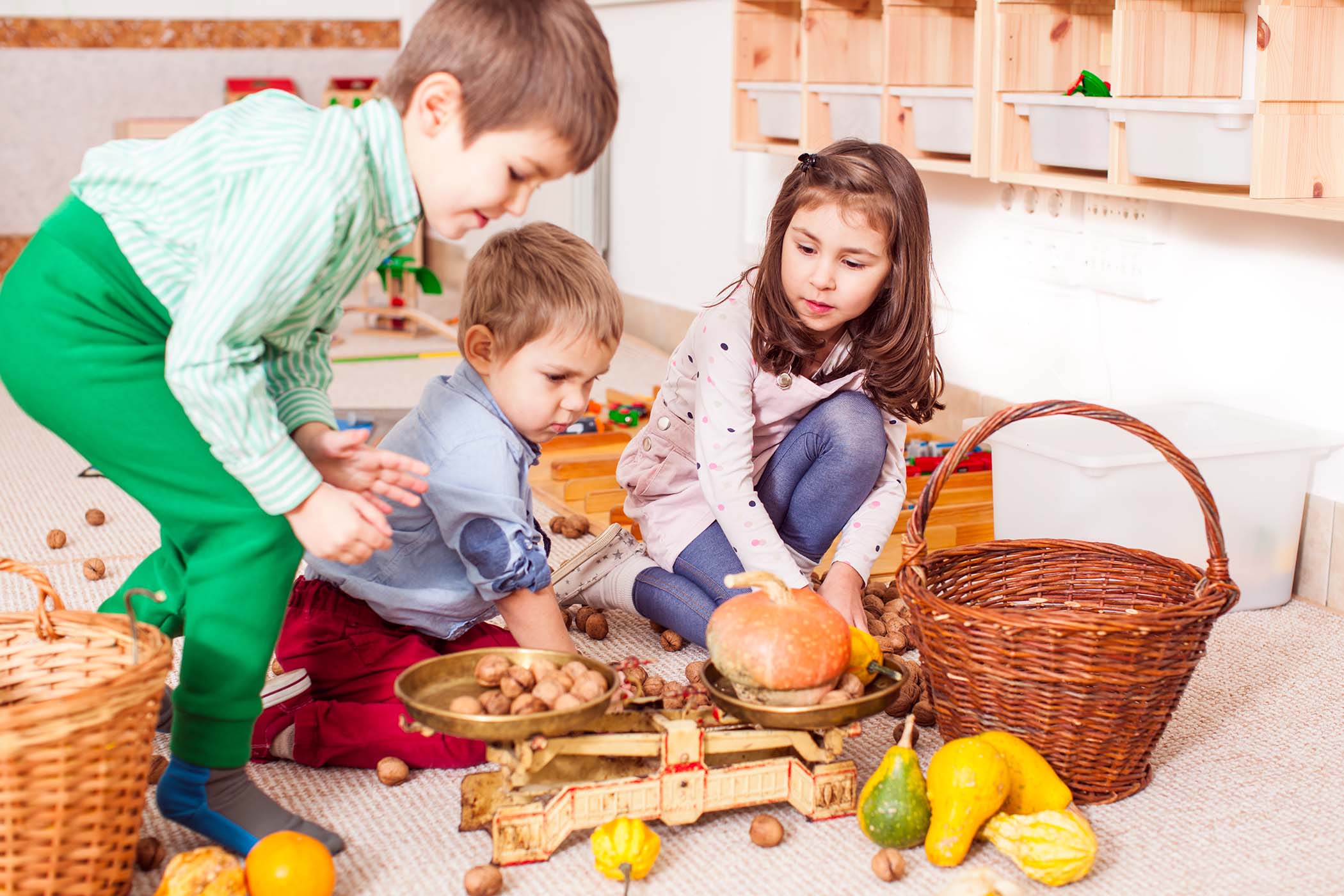
Children in kindergarten playing and exploring the concept of balance using weights
When we try to define what our children really “get” from Montessori, we need to expand our vision to include more than just the basics. Of course they learn to read, do four-digit mathematics, recognize geometric shapes, and identify the parts of a plant and a mollusk. They also learn how to be a contributing member of a community.
A Montessori school is more than a classroom. It is a society in a microcosm, and the skills and lessons they learn in this environment extend well beyond the traditional definition of academic success. They are life lessons that were very much needed at the time when Dr. Montessori developed her teaching methodology, and they are life lessons that remain relevant to our children today.
“The basic nature of our society and the family itself have changed radically, and only an equally radical change in education will suffice.”—John Dewey, School, and Society, 1899
In her book, The Schoolhome: Rethinking Schools for Changing Families (Harvard University Press, 1992, revised 2009), Dr. Judith Rowland Martin writes that she was not very impressed when she first encountered Montessori education. She understood that Montessori schools placed children in multi-age classrooms and used manipulative learning materials, which may have been very unusual during Montessori’s lifetime, but have since been incorporated into most early childhood and many elementary classrooms, thanks to the Open Classroom movement of the 1960s. However, Dr. Martin’s understanding of the value of the Montessori approach became dearer when she came across a statement in Dorothy Canfield Fisher’s book, A Montessori Mother (first published in 1912), in which Fisher disagrees with the universal interpretation given to Montessori’s “Casa dei Bambini” or “Children’s House.”
In A Montessori Mother, Fisher wrote, The phrase, ‘Casa dei Bambini,’ is being translated everywhere nowadays by English-speaking people as “The Children’s House,” whereas its real meaning, both linguistic and spiritual, is “The Children’s Home (or Children’s Community, ed.).” Fisher insisted upon this rendering, which she felt offered a much more accurate and complete insight into the character of the Montessori classroom.
Dr. Martin recognized that “This misreading of the Italian word ‘Casa’ as ‘house’ has effectively cut off two generations of American educators from a new and intriguing vision of what school can and should be. Read ‘casa’ as ‘house’ and your attention is drawn to the child-sized furniture, the Montessori materials, the exercises in practical life, the principle of self-education. But if you read ‘casa’ as ‘home,’ you begin to perceive a moral and social dimension that transforms your understanding of Montessori’s idea of a school.
Once I realized that she thought of school on the model of a home, the elements of her system took on a different configuration. Where before I had seen small children manipulating concrete learning materials, I now recognized a domestic scene with its own special form of social life and education.”
Martin realized that what Montessori had established was not simply a more attractive classroom in which children would be taught to read and write. The Casa dei Bambini represented a social and emotional environment where children would be respected and empowered as individual human beings.
It was an extended family, a community in which children truly belonged and really took care of one another. Montessori described this process of emotional growth as “valorization of the personality,” a strong sense of self-respect and personal identity. Within this safe and empowering community, the young child learned, at the deepest possible level, to believe in herself. In an atmosphere of independence within the community and personal empowerment, she never lost her sense of curiosity and innate ability to learn and discover. Confident in herself, she opened up to the world around her and found that mistakes were not something to be feared, but rather an endless opportunity to learn from experience.
This special relationship that is so common among Montessori children and their teachers and schools is very different from, and much more dramatic than, the experience most children have in school.
Frances Merenda, a 1990 graduate of The Barrie School in Silver Spring, Maryland put it this way:
“I started in Montessori at age two. I’m a product of the entire system. I did well, but still many people wondered if I had been prepared for college and whether I could ‘make it’ in a ‘real’ school? The skepticism was so disconcerting that I never bothered to step back and see what 15 years of trust, respect, teaching, and learning had done for me. When I went off to Northwestern University, I left my support system and community behind and entered a world that was much colder and uncaring.
At first, I deeply missed that sense of belonging. I didn’t realize that Barrie had not only given me a second family, but had also taught me how to build new friendships, support systems, and community wherever I go. I now use my years of experience in community building to cultivate secure relationships with people I have come to know. Barrie did more for me than just prepare me academically for college. It prepared me for anything to which I chose to apply myself.”
To understand how this evolved, it’s helpful to understand the world in which Montessori lived at the time she developed her educational approach.
Montessori was a professor of medicine, specializing in psychiatry. At that time, there was no such thing as Freud’s “talking cure.”
There were basically two approaches to the treatment of disturbed individuals.
The most common and familiar treatment was to confine people who acted strangely to insane asylums.
The second, and almost forgotten, approach was the “Moral Education” movement that spread across Europe and North America during the 1700 and 1800s.
These therapeutic communities were villages set off in the country where chronically despondent or nonviolently dysfunctional individuals lived in group settings with caring individuals.
The fundamental principle of the Moral Education movement was respect and kindness. Instead of treating their patients as prisoners, the staff acted on the belief that within each human being there is a core of goodness and a “sound mind.” The community lived and worked together as an extended family and developed a sense of belonging that is dearly reminiscent of what we see in our children’s classrooms today.
These communities were much like an Israeli Kibbutz, self-sufficient farming communities in which each individual was encouraged to become more independent while contributing to the overall operation of the village. Patients lived in small homes with a couple who served as their mentors. Surviving reports suggest that a great bond developed among those who lived and worked together. The movement recorded success rates that were far more effective than traditional approaches; returning their clients to their home communities as productive, happy citizens after an average stay of eleven months. A sense of close personal community and positive human relationships was proven successful as a means to help bring these disturbed people back to reality.
Montessori was well aware of this movement through her medical research into innovative strategies for treating the intellectually disabled. She used this same model with tremendous success in her own work with mentally disabled and autistic children in Rome and later hypothesized that even more dramatic results might be achieved with “normal” children. Her first “Children’s Community” was made up of 60 inner-city children from dysfunctional families.
In her book, The Montessori Method, Montessori describes the transformation that took place during the first few months of operation, as the children evolved into a “family.” The children had a sense of becoming the owners of their school. They were encouraged to rearrange the furniture, prepare and serve the daily meals, wash the pots and dishes, help the younger children bathe and change their clothes, sweep, clean, and work in the class garden. Through their day-to-day involvement in their classroom community, Montessori saw these children develop a sense of maturity and connectedness that helped them realize a much higher level of their potential as human beings.
While times have changed, the need to feel connected is still as strong as ever. In fact, for today’s children, it is probably even more critical.
Whether it’s an inner-city child or a child from an affluent suburb, the sense of community has all but disappeared from our children’s lives. Families regularly move from house to house, and from town to town. Grandparents usually live in other cities or other states. Both parents work out of necessity, and when they are at home, they are very, very busy. The over-programmed, hurried child has become the norm for this generation.
Many children have the sense that they do not belong to anything or anybody, which is why peer friendships, which give a sense
of belonging, are especially important to children today.
Along with whatever else Montessori gives our children, it definitely gives them the message that they belong-—that their school is like a second family.
Children will normally grow up to be productive, happy and confident individuals if given the right emotional environment. It seems clear that our attitudes about people, the ability to overcome our egocentric tendencies, our willingness to share, to compromise, to resolve conflicts non-violently, and our ability to discover an underlying sense of self-worth are not qualities that human beings develop spontaneously, but rather through years of experience with caring people who convince us that we belong and give us the opportunity to practice and master these skills of everyday living. As in all things, we learn by doing.
One of the greatest strengths in the approach that Montessori developed is the three-year age grouping that you will find in every Montessori school.
By consciously bringing children together in a group that is large enough to allow for two-thirds of the children to return every year, the school environment promotes continuity and the development of a very different level of relationship between children and their peers, as well as children and their teachers. For teachers, this relationship presents itself as a commitment that they make to stay with the children in their class for a prolonged period, rather than jumping from job to job or from classroom to administration. Montessori teachers do more than present curriculum. The secret of any great teacher is helping students open their minds and hearts so they are ready to learn; where motivation is not focused solely on good grades, but a fundamental love of learning.
As parents know their own children’s learning styles and temperaments, teachers, too, develop this sense of each child’s uniqueness by establishing a relationship over a period of years with the child and her parents. Montessori schools give our children not only the sense of belonging to a family but also of how to live with other human beings. By creating a bond of parents, teachers, and children, Montessori sought to build a community where individuals could learn to be empowered, where children could learn to be a part of families, where they could learn to care for younger children, learn from older people, trust one another, and find ways to be appropriately assertive rather than aggressive. To reduce these principles to the most simplistic form, Montessori proposed that we could foster peace by healing the wounds of the human heart and producing a child that is more secure. She envisioned her movement as potentially leading to a reconstruction of society.
Montessori schools are different, but it isn’t just because of the materials that are used in the classrooms. Look beyond the pink towers and golden beads, and you’ll discover that a classroom is a place where children really want to be—because it feels a lot like home.
Tomorrow’s Child/ September 2018/ pg 23

Recycling in the 21st Century
To continue reading, you will need to choose a subscription plan.
NewGate School’s 2018 Commencement Address
To continue reading, you will need to choose a subscription plan.
Featured
-
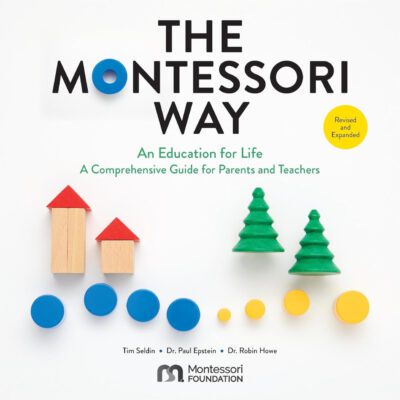
 The Montessori Way, Revised and Expanded: An Education for Life; A Comprehensive Guide for Parents and Teachers
$25.00
The Montessori Way, Revised and Expanded: An Education for Life; A Comprehensive Guide for Parents and Teachers
$25.00
-
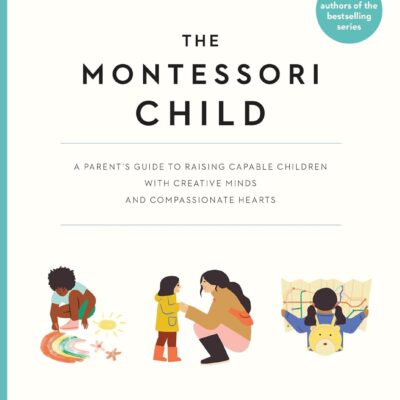
The Montessori Child: A Parent's Guide to Raising Capable Children with Creative Minds and Compassionate Hearts (The Parents' Guide to Montessori)
$20.00
-
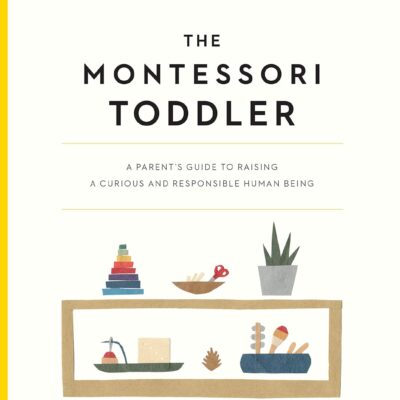
The Montessori Toddler: A Parent's Guide to Raising a Curious and Responsible Human Being (The Parents' Guide to Montessori)
$20.00
-
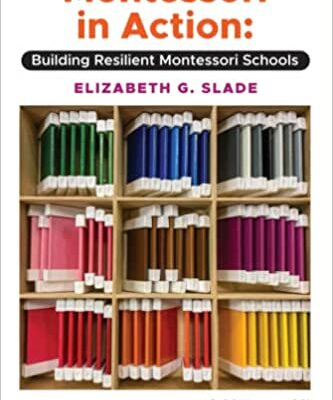
Montessori in Action: Building Resilient Montessori Schools 1st Edition
$29.95
-
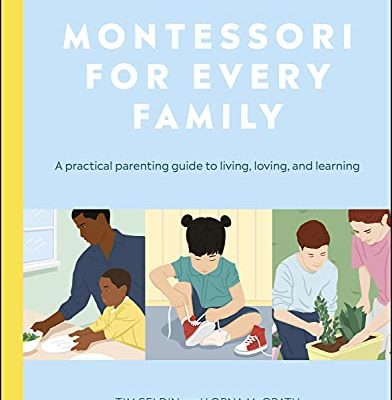
Bulk Order, 30 Copies of Montessori for Every Family: A Practical Parenting Guide To Living, Loving, And Learning
Original price was: $600.00.$510.00Current price is: $510.00.
Products
-
The Montessori Way, Revised and Expanded: An Education for Life; A Comprehensive Guide for Parents and Teachers
$25.00
-
The Montessori Child: A Parent's Guide to Raising Capable Children with Creative Minds and Compassionate Hearts (The Parents' Guide to Montessori)
$20.00
-
The Montessori Toddler: A Parent's Guide to Raising a Curious and Responsible Human Being (The Parents' Guide to Montessori)
$20.00
-
Montessori in Action: Building Resilient Montessori Schools 1st Edition
$29.95
-
Bulk Order, 30 Copies of Montessori for Every Family: A Practical Parenting Guide To Living, Loving, And Learning
Original price was: $600.00.$510.00Current price is: $510.00.