

Clutter and Anxiety Go Hand-in-Hand
I literally cannot get down to work and concentrate when I am surrounded by a desk full of stuff or a room with clothes strewn all over it. It just starts to make me crazy or, at the very least, distracted. And I consider myself to be a relatively low key, easy going type person. What about you? What about your child? What are psychologists finding out about clutter and external disorganization and anxiety? It reminds me that humans have known instinctively for hundreds of years that external order is a source of calming. Feng Shui comes to mind for one. In this session we will take a look at what psychologists have to say about clutter and anxiety and how we can better support our children in the reduction of stress in their lives.
Grace and Courtesy: Building New Skills
To continue reading, you will need to choose a subscription plan.
January Calm: The Comfort of Routine and Consistency
To continue reading, you will need to choose a subscription plan.
Reading Alive!
To continue reading, you will need to choose a subscription plan.
Story Time: the Last 20 Minutes of the Day
To continue reading, you will need to choose a subscription plan.
Talking to Smart Speakers
To continue reading, you will need to choose a subscription plan.

Dealing With Tantrums
I’m going to dive right in to discuss a very tricky area for parents and children alike: tantrums.
I hope you find this article useful so you can start applying Montessori principles in your home too.
Dealing with Tantrums
Tantrums are a pretty normal part of life with children from around one to five years old. Maybe they’ll start a little later than one year and will end earlier, but anything in this range is fairly normal. Your child is learning that things don’t always go their way. And, as parents, we are helping them learn how to deal with these emotions and to make amends.
It can be upsetting for a parent. It’s hard to realize that your child is actually asking for your help. They are overwhelmed by the situation and need your support to calm down. It’s not the time to take it personally.
How to Avoid Tantrums
It can be possible to avoid tantrums before your child loses control. Here are some ideas to ward off tantrums when you see the first signs of your child losing control.
1. Be prepared: take a small bag with some simple games and some favorite snacks if you expect your child to wait patiently in a doctor’s office or a cafe.
2. Label their feelings: “Boy, you really wish you could stay longer”; “You really wanted some orange juice right now!”
3. Redirect them: “I can’t let you hit your brother, but you can hit this drum/pillow.”
4. Get down to their level: “You sound frustrated. Can you tell me why?”
5. If they are struggling, ask them if they would like some help: give them just as much help as they need and then step back.
6. Give them a choice: “Would you like to put on your shoes or your scarf first?”
7. Establish routines: “… and after lunch, we’ll go to the toilet, read a book, and tuck in for a rest.”
8. Let them show their anger creatively, “Show me how angry you are. Here is some paper and a pencil. Wow. They are big circles. You are really mad!”
Triggers
Events can often escalate to a full-blown tantrum. Sometimes it’s from your child’s frustration; other times their anger or rage; sometimes because they want to be in control; their communication may still be limited; or because they are tired, hungry, or overstimulated. They can throw themselves on the floor, push us away, try to hit us, a sibling, another child, or even break something.
It can be useful to note things that cause tantrums in your child: over-scheduling can be common; a new baby; moving to a new house; or certain children may trigger them.
Sometimes the tantrum is even caused by us as we deliver the news that it is time to leave the park, or we serve some food they don’t like for dinner, or that we would like them to get dressed to leave the house.
It’s OK for your child to have a tantrum. You can acknowledge their displeasure at what is going on. You can help them to do the thing that they don’t like. However, when we back down and give in to them, you will find they shout even louder next time.
It’s difficult to be the parent and stay strong. But your hard work will pay off in the long term. They will learn that when you say no, you mean no; and when you say yes, you mean it too.
I like the advice from Positive Discipline for Preschoolers (by Nelsen EdD, Jane, Erwin M.A., Cheryl, et al. Jul 9, 2019). “If you say it, mean it; and if you mean it, follow through with kind and firm action.”
Action may be, for example, leaving the park with a sad toddler, acknowledging that they really wish they could stay longer.
Alternatives to Time Out: How to Help Your Child Calm Down
When your child is having a tantrum, some experts advise putting them into time out. I find this difficult as your child is asking for help to calm down, and you are removing your support and punishing them instead.
When we punish our children, they often get angry at us rather than being sorry for what they have done. Or they try to work out a way to get away with it next time without being caught.
Instead, I look for ways that I can support my child to calm down. I’m not saying that their behavior is OK, but when they are in the middle of the tantrum, it is not the time to teach them anything. They cannot hear you. They have lost control. So let’s help them calm down.
Some children will respond to a cuddle during a tantrum. You can rub their back, cuddle them, and sing to them as they go through all the range of emotions from anger, to intense frustration, to sadness, and sometimes regret. I once held my son for 40 minutes as he refused to get dressed. And I watched him go through all these emotions. In the end, he announced he was ready to get dressed. He told me he loved me. He wasn’t angry with me. He was grateful that I had just been there for him. I know sometimes you have to leave, but in this case, we just changed our plans.
Other children will push you away and don’t want to be touched. In this case, I make sure they are safe and cannot hurt themselves or others. I stand nearby and keep offering my help, “I’m here if you need some help to calm down. Or we can have a cuddle when you are ready.” After the tantrum, I like to offer a cuddle. “That was tough. And now you have calmed yourself down. Would you like a hug?”
If they are throwing toys at their sibling or trying to hit me, I would remove them so that everyone is safe. “I can’t let you hit me. My safety is important to me. Would you like to hit these pillows instead?” If your child is trying to hurt the baby, you can place yourself physically between them to keep the baby safe as you help your older child calm down.
For a child over three years old, you can set up a “calm place,” which they can use when they are upset. It may be a tent with some pillows and favorite things. It may be a corner with some trains. You can ask your child if she would like to go to her calm place.
This is different than ‘time out,’ as the older child is in control; she can come out when she feels calm. If she comes back still in a rage, I would gently tell her that she looks like she still needs to calm down and can come back when she is ready.
Making Amends
Maybe you are thinking that if I support my children while they calm down, I’m saying that their behavior is OK, and I’m encouraging them to get angry. When they are upset, indeed, my objective is to help them calm down.
Once they are calm, I then help them to make amends. If they drew on the walls, I would get them to help me clean up. If they broke their brother’s toy, they can help to fix it. I’ve asked the kids to help scrub their sheets when they used marker pens in bed and made a mess.
In this way, they learn to take responsibility when things go wrong. And when it’s over, it’s over. The good thing about young children is that they can move quickly from deep anger and sadness back to their happy selves. We need to move on too and not let this upset the whole day by referring back to it or keeping on about it. Once they have made amends, it’s OK for everyone to move on. •
TANTRUM FAQs
Shouldn’t we just ignore their tantrum?
I don’t like to ignore children when they are having a tantrum. They may not let me touch them, but I keep offering support and letting them know I am available when they need me. If you were super upset and your partner just left the room for you to get over it, you would likely find them unsupportive. We are showing our kids that, good or bad, we will be there for them.
What do I do if we are out in public when they have a tantrum?
There are basically two options:
First: Go home—if you find it difficult to have people watching you, it’s best to just leave. This may mean parking a full shopping cart and following the above ideas once you are home.
Second: Stay and support them—my preferred option is to hang in there and do what you would do even though you are out of the house. If you have more than one child with you, make sure they are safe. And then offer as much help as you can to help your child calm down. People watching will more likely think about what a lovely, patient parent you are, rather than what a horrible noise your child is making.
I find it difficult to stay calm myself. What can I do?
If your child has triggered you, it is indeed difficult to help them calm down.
• If your partner is available, it can be easiest to get them to step in instead.
• You may want to make sure the kids are safe and go to the bathroom to catch your breath.
• Find a mantra that you can repeat, “I breathe in calm, I breathe out anger.”
• Remember not to take it personally. Perhaps visualize putting on a bullet-proof suit that will resist everything (including words) that your child throws at you.
These tips should help you remain calm and give your child the support they need to regain control.
Learn from Simone Davies, an AMI Montessori teacher with15+ years’ experience working with 0-3-year olds, owner of Jacaranda TreeMontessori in Amsterdam since 2008, mother of two teenagers, and author of the book The Montessori Toddler. Visit her blog at themontessorinotebook.com
This article is from the November 2019 issue of Tomorrow’s Child magazine. Reprinted with the author’s permission.
Linking Science at Home and Science at School
To continue reading, you will need to choose a subscription plan.
How Do You Get Your Child to Read Books?
To continue reading, you will need to choose a subscription plan.
Turning Down the Heat on Power Struggles
To continue reading, you will need to choose a subscription plan.

Webcast: Driven To Abstraction The Impact Of Imposing Academics On Toddlers
To continue reading, you will need to choose a subscription plan.
Summer Ideas for Families
To continue reading, you will need to choose a subscription plan.
Purposeful Work for Toddlers
To continue reading, you will need to choose a subscription plan.
Supporting Your Child with Co-Regulation
To continue reading, you will need to choose a subscription plan.
Reaching for Peace
To continue reading, you will need to choose a subscription plan.
Wonder-filled Year of Change: 2 to 3 Years Old
To continue reading, you will need to choose a subscription plan.
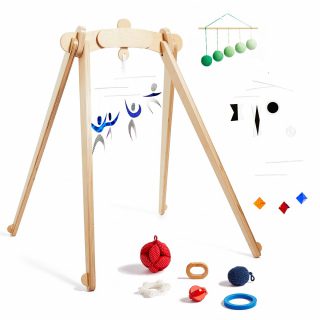
Montessori at Home from Birth to Three: Why and How?
Eighty-Five Percent Of The Brain Is Formed By Age Three
The core structure of the brain is formed in the first three years. By age three, the brain has established a pattern of processing information that will be used throughout life. As such, a child’s early experiences affect the quality of his brain architecture, forming the foundation upon which future development rests. Early experiences also have a greater impact on the developing brain because new experiences are stored in relation to previous ones. Because the architecture of the brain is formed between birth and three, children’s early experiences are ingrained at a deeper level and have lasting effects. Many children do not have access to good Montessori schools at this age. Enhancing the home environment with Montessori materials and guidance can help to fulfill and expand a child’s potential.
Environment Shapes Brain Development
While some say the only toy a baby needs is a cardboard box, numerous research studies show that children who grow up in more stimulating environments do better than those who have fewer opportunities to learn. Brain development is activity-dependent, so everything a child touches, tastes, sees, hears, and smells impacts the brain’s circuitry. The environment directly influences the structure of the brain. Exposing babies to a variety of age-appropriate stimuli, meeting their developmental needs, and providing just enough challenge to stretch their skills will lay the best foundation for the future.
Montessori Builds Better Brains
Motor development and cognitive development are fundamentally intertwined. It is for this reason that researchers emphasize the importance of learning through play and that Montessori activities always involve mind, body, and senses. Babies and toddlers learn most when presented with just the right amount of challenge, not so easy that they are bored and not so difficult that they are frustrated. The Montessori birth-to-three materials are thoughtfully designed and timed so that children are repeatedly entering this ideal zone for learning.
For example, at two weeks old, a baby cannot distinguish colors well but can detect light, movement, contrast, and patterns. The Montessori Munari is the ideal first mobile, having a contrasting black and white pattern that captures a baby’s attention, allowing him to distinguish its shapes, practice visual tracking, and build concentration.
The Munari is also designed according to a mathematical formula so that all its components are in proportion. This mathematical relationship appeals to a baby’s innate number sense. Research shows that the strength of an infant’s number sense predicts performance on math activities in preschool. Montessori recognized this sense and called it the “human tendency of the mathematical mind.” A professor at the Duke Institute of Brain Sciences calls it “the conceptual building block upon which mathematical ability is built.” We can support even the youngest baby’s mathematical potential by offering toys that appeal to this innate number sense.
As children get older, the Montessori materials continue to support physical and cognitive development. When a child plays with the Curved Dowel, she strengthens her wrist preparing her hand for writing, sports, and everyday tasks like dressing independently. As she holds the base of the dowel with one hand and uses the other hand to thread the ring, her arm crosses the midline of her body. Crossing the midline, the ability to move her hands and eyes together, across and to the other side of her body, is important for her development. It helps her integrate sensory feedback across brain hemispheres and enhances bilateral coordination (using the two sides of her body together). Crossing the midline is also a prerequisite for lateralization, or the process of one eye, hand, foot, and ear becoming dominant. Lateralization allows a child to function at her most efficient level.
Guiding Parents
Unfortunately, parents are left guessing how to create a stimulating environment during the formative years of birth to three. Monti KidsTM gives parents access to world-renowned Montessori materials along with simple guidance. We provide customers with recurring home deliveries of Montessori educational toys and an online curriculum for parents, tailored to their child’s stage of development.
Learn more at www.montikids.com
Tomorrow’s Child/Sept 2017
Featured
-
 The Montessori Way, Revised and Expanded: An Education for Life; A Comprehensive Guide for Parents and Teachers
$25.00
The Montessori Way, Revised and Expanded: An Education for Life; A Comprehensive Guide for Parents and Teachers
$25.00
-
The Montessori Child: A Parent's Guide to Raising Capable Children with Creative Minds and Compassionate Hearts (The Parents' Guide to Montessori)
$20.00
-
The Montessori Toddler: A Parent's Guide to Raising a Curious and Responsible Human Being (The Parents' Guide to Montessori)
$20.00
-
Montessori in Action: Building Resilient Montessori Schools 1st Edition
$29.95
-
Bulk Order, 30 Copies of Montessori for Every Family: A Practical Parenting Guide To Living, Loving, And Learning
Original price was: $600.00.$510.00Current price is: $510.00.



Products
-
The Montessori Way, Revised and Expanded: An Education for Life; A Comprehensive Guide for Parents and Teachers
$25.00
-
The Montessori Child: A Parent's Guide to Raising Capable Children with Creative Minds and Compassionate Hearts (The Parents' Guide to Montessori)
$20.00
-
The Montessori Toddler: A Parent's Guide to Raising a Curious and Responsible Human Being (The Parents' Guide to Montessori)
$20.00
-
Montessori in Action: Building Resilient Montessori Schools 1st Edition
$29.95
-
Bulk Order, 30 Copies of Montessori for Every Family: A Practical Parenting Guide To Living, Loving, And Learning
Original price was: $600.00.$510.00Current price is: $510.00.