

Embracing Change – Transitioning to a Traditional Middle School
Note from the Director: This article includes so many tips for helping children and adolescents in the transition from one school to another. It is packed with practical ways to be of support to them whether they are changing schools or levels within schools. Much of the material applies to all ages, but you will need to determine what is age appropriate for your child or adolescent’s stage of development.
Change is a part of life. It is not always easy, but it speaks to the beautiful ebb and flow of our existence. When we trust the transitions, the changing seasons, and all the new roads we choose to take, we can fully celebrate our journey. The ability to gracefully embrace and receive change is a key to living a fulfilled, meaningful life and is a powerful part of our growth. If we can help our children embrace change, they will have the foundation to meet life with the resilience, optimism, fortitude, and joy that it demands.
Just as this age group is learning to cope with the emotional and physical turbulence of early adolescence, along comes the new challenge of transitioning from elementary to middle school; it also comes with new expectations, from academic to social. Changing schools from a Montessori school to a more traditional school or changing levels within a Montessori school is the perfect opportunity to teach about graceful transitions and embracing change.
All children manage change differently, but most Montessori students adapt to their new school environment fairly quickly, making new friends and experiencing success, within the definition of success understood in their new school. This phenomenon is possible because they have the advantage of growing up in Montessori. Montessori programs focus on helping children develop self-motivation, confidence, independence, problem-solving, and coping strategies for new situations, along with a strong sense of respect and responsibility. These skills, along with supportive parents and caregivers to help them embrace the change, will serve them well in any transition they make. What follows are suggestions to help make the school transition smoother for all.
Follow Montessori Principles In The Home
Following Montessori principles at home can be an impactful way of nurturing and maintaining skills and lessons that your tween learned from their experience in the Montessori school. Encouraging independence, love of learning, curiosity, self-motivation, and order are fundamental to the Montessori approach and, if nurtured, will continue to serve your tween as they make this transition.

Model A Positive Attitude About Change
Children are regularly learning how to be adaptable and flexible from their parents/caregivers. When children see you try new things, take risks, and handle change with grace, they are more likely to follow suit.
Talk to your child about change in a positive way. For example, you might say, “I am a bit nervous about starting a new job today, and it’s ok to be nervous. I am going to make myself feel better by listening to some good music. Even though I am nervous, I am also excited about meeting new people and making new friends.”
When your tweens are anxious, help them change the story they are telling themselves about what might happen. Encourage them to imagine all the great things that could happen instead of all the things that could go wrong. By changing the story and the images, anxiety can turn to excitement.
Acknowledge The Uncertainty And Loss
Acknowledging the fear and anxiety regarding the change that both you as a parent/caregiver and your tween is experiencing makes it much easier to talk about and embrace the change together. This is a good opportunity to explain the differences between Montessori and traditional schools, emphasizing the positives of both school systems.
While we want to be positive about the change, change also means that there will be a loss of friends, teachers, familiar routines, etc. Let your tween experience the sadness, and let them know they can speak to you about it or talk it over with friends that are experiencing the same thing.
Offer your tween a sense of agency by involving them in making choices… it can be as simple as letting them select a new backpack.
Practice Mindfulness
Practice mindfulness with your tween; it will help both of you to accept the present moment as it is, without judgment. This mindset can be useful when facing unexpected changes. After acknowledging your anxiety or fear and telling yourself that it’s ok to feel this way at this moment, carry on in a way that purposefully isn’t stuck in the negative mindset.
Show Empathy
Acknowledging your tween’s emotions will help them feel seen and heard. For example, a parent/caregiver could say, “I understand that moving schools is a big fear of yours. There will be new things that you are not used to; I can see how not knowing what to expect can cause anxiety.”
Rephrasing the tween’s emotions can help to increase their self-awareness and emotional intelligence, which will help them identify what they are feeling and can thereby talk about it.
Engage In Open Communication
Talking and listening are key to helping your tween manage change. It is a valuable opportunity for you to sit and talk with your tween about what they think about this upcoming change, what is making them hesitant or nervous about this new opportunity, and what you can do together to make the process easier.
Find The Root Of Anxiety And Fear
Ask questions to help guide your tween to what may be truly bothering them. For example, “What are you feeling right now?” or “What feels scary to you about this?” or “What is the thing you think about most regarding this change?”
Encourage An Open Mind Towards Change
Once you get a handle on what is causing them the most stress or fear, you can try to address it with your child ahead of time to help the change go smoothly. Start by asking them to reflect on what has helped them through other transitions they have had to make in their life and what they would add to that process to support this change. Change can feel overwhelming and scary to tweens because it often signals a loss of control. Offer your tween a sense of agency by involving them in making choices regarding this change, it can be as simple as letting them select a new backpack.
Maintain Routines Yet Add New Ones
If possible, maintain your family’s normal routines. It will provide a sense of normalcy and security for your tween, since they will be experiencing new routines at school. You may also want to consider creating new routines for them to associate with this new phase of their life.
For example, you may decide to have family game nights on Thursdays. Get your tween involved in deciding on a new addition to the family schedule. Connecting as a family provides comfort for tweens who are navigating change, and these new activities can help.
Be Patient

“It will take the time it takes” for your tween to adjust to a new school. Don’t assume either that they will have a hard time adjusting or that they will have an easy time adjusting.
Be patient and let your child know you are there for them. Reassure them that they are going to have a great school year, and, before they know it, they’ll no longer feel like the new kid.
PREPARE FOR LOGISTICAL, SOCIAL, AND ACADEMIC CHANGE
Researchers have found that tweens anticipating the move to middle school worry about these aspects of the change: the logistical, the social, and the academic.
LOGISTICAL
- Accompany your tween on a campus or new-environment tour and orientation. The better you understand the logistics of the school and the program, the more you can support your tween. Invite their friends who are also making the transition.
- Ask for a copy of your tween’s schedule and mark the locations and times of their classes on the school map. Ask for the length of the break between classes. Walk the route between classes with them. Time it out with your tween, so they can see how long it takes to walk from class to class.
- If you have an opportunity, sign your tween up for any summer programs that may be offered by the school for incoming students. Not only will your tween get to know the campus, but they also will have the opportunity to make some friends in a much more relaxed atmosphere.
- Review the rules and requirements in the student handbook. Ask the school staff for any clarification or questions you may have before the beginning of school.
- If the school has lockers, make sure they know how to open the lock. Or, buy your tween a lock with time to practice opening and closing it.
SOCIAL
- Talk to your tweens often and openly about friendship. Equip them with the information and knowledge to make good friendship choices. Talk about how they should treat other people and how they should allow other people to treat them. Encourage them to stay away from gossip and drama. Help them learn how to navigate conflict and how to resolve disagreement. Remind them to be kind and inclusive.
- Emphasize the importance of being who they are. Remind them that it is more important to be yourself than to fit in. Encourage them to spend time with people they like and with whom they are comfortable, but to also look for less obvious connections and be open. Talk about the importance of not compromising their values to gain friends.
- Support your tween’s personal interests. Suggest your tween join sports teams, school clubs, or extracurricular activities.
- Offer them opportunities to spend time with any new friends they have made.
- If they are experiencing loneliness, you could arrange a get together with old friends.
- Encourage your tweens to join conversations or activities. You can role play how to join without interrupting or how to add something interesting or relevant to the conversation in progress.
- Let them see your own positive supportive joyful friendships.
- Get to know the tweens that your tween spends time with, and, if possible, their parents or caregivers.
- Discuss how their bodies are (or will be) changing and the importance of self-care and good hygiene.

ACADEMIC
- Meet with your tween to discuss academic expectations in the new school and at a new level and how the family is going to support them.
- If you have concerns about your child’s academic needs, meet with the middle school’s academic team in the spring (before they begin school) to discuss your concerns.
- Reach out to the teachers to introduce yourself and offer any support. You can give teachers some information about your child regarding their strengths and where they experience challenges. This introduction is a good time to give teachers strategies that have been successful specifically for your child.
- Find out if there is a homework hotline or if there is a tutor service.
- Help your tween with their time management and organizational skills. Work together on a schedule that allows for study time, social time, chore time, etc. Show your tween how to organize binders, set up assignment calendars, and use an academic planner.
- Receiving grades may be new for a Montessori student. Try not to react either way to the grades. Making sure your tween is happy and navigating the expectations of the new system is the most important factor in the first couple of months.
- Stay connected to your tween’s schoolwork by lending support when needed. Know due dates for homework, projects, or other tasks. Periodically check to see if your tween is getting assignments done, yet continue to build independence.
- This should not be a problem for a former Montessori student, but encourage your tween to be their own advocate by discussing problems and solutions with their teachers on their own. Of course, you will be ready to support them if need be.
- If your tween is struggling, meet with the academic team sooner than later.
- Model the behavior you want to encourage in your tween. Are you arriving at places on time? Are you keeping appointments? Do you use a calendar to keep your schedule?
As your child crosses this bridge on the path towards a new school experience, they don’t disappear, they transform, and you get to witness this marvelous show of becoming. Change will be their constant ally, leading them through unexplored places and presenting opportunities for growth and self-discovery. Their willingness to adapt and evolve will be essential in shaping who they become. If they learn to embrace the change, the challenges, the unpredictability, and the disconcertment, they will truly uncover the unlimited potential that lies within them.
Teach them how to embrace change, and watch them emerge… stronger, peaceful, and wiser.

Cassi Mackey, M.Ed. is passionate about helping communities create identity-safe spaces where people are encouraged to make changes to improve relationships. Cassi has witnessed the transformational power of communities that engage in…Courageous Conversation, Collaborative Coaching, and Diversity, Equity, Inclusion, Justice, and belonging practices. It is a promise of more meaningful relationships, greater depth of experience, and a broader, more compassionate view of oneself and the world. These practices are essential in order to serve our children and the future of humanity.
Cassi has been in the Montessori field for 30 years as a teacher and school leader. She is currently an American Montessori Society (AMS) School Accreditation Commissioner, Instructional Guide for CGMS Leadership Certification and a trainer for the AMI Administrator certification course. She is certified as an Association Montessori Internationale (AMI) School Administrator and has completed the AMS Anti-bias Anti-racist certification course. She consults with and provides advice to Montessori communities that are intent on generating positive and lasting change.
Montessori for the Elementary Years

Less Talk – More Respect
Do you feel like you talk too much about your child’s behavior? Are you constantly repeating your requests and explaining things your children already understand? Joe Newman, the author of “Raising Lions” will talk about how replacing our explanations and lectures with action boundaries, will get better behavior from our kids and will raise those kids into adults who are both confident about themselves and connected to other’s feelings and needs.
Backpack Scientists and Their Journals
To continue reading, you will need to choose a subscription plan.
2020 NewGate School Seniors Interview
DEAR CATHIE: A CONCERNED PARENT
DEAR CATHIE—
I have visited a number of Montessori schools as we consider a placement for our 3 and 4 year old children next year. I see the children all busy on different projects, and it all looks great. But can it really work? How can one teacher, even with an assistant, really keep track of who did what and be sure that each child is progressing and getting what she or he needs? All those children—all those needs. I can see it more for younger children, but I really get concerned in the Elementary grades. Does this method really work?
— A CONCERNED PARENT
Dear Concerned Parent,
I am so glad you are looking at Montessori schools for your children and that you have started the search so early. Many schools have rolling admissions and are open to admission at times other than the start of the school year or semester.
The Montessori Method works, as it is truly an individualized approach to education. Each child spends his or her school days in a carefully prepared environment with a group of multi-aged learners and a guide. A child chooses activities that call to her from within that environment while her guide watches her interests and offers lessons. From there, she develops a set of skills upon which to build. She practices the lessons she has learned and asks for new lessons as soon as those are comfortably mastered.
Children in the Montessori prepared environment also have the opportunity to watch others work and are often enticed by the work of those older children, aspiring to do what they do. This leads to more and more advanced work within the classroom as a whole and by your child individually. No child needs to wait for another child to have mastered a skill to move on! She has a new lesson as soon as she is able. Children also assist others younger than themselves, often teaching lessons they have already mastered. The child teaching lessons is one of the best ways to ensure mastery and confidence about something they have learned. It also leads to a kind and caring community.
Children have a say in what parts of the curriculum with which they engage and when they do so—always with awareness and support from the guide and other adults in the room.
Guides spend time observing the class to see which children are working at the mastery level on certain skills and are ready for a new lesson, which children need re-presentation, and which children need social
encouragement. They carefully chart these observations on paper or on the many computer programs that are now available and used in schools. While the classroom may look free flowing and easy going, it is actually a skill and data-driven environment, even though students do follow their own interests and work on projects and activities of their choosing. Their connection with their guide—often for three
years—enhances this relationship and connection and allows for learning to happen more easily from year to year. They offer carefully timed lessons to children as they are ready. These lessons are often one on one, but can be executed with the whole class or small groups. It is often hard to find the guide in the classroom as she is working with only a few children at a time.
In answer to your question, yes, the Method can and does work!
Children have a say in what parts of the curriculum with which they engage and when they do so— always with awareness and support from the guide and other adults in the room. Children learn initiative, self-control, and discipline while mastering basic skills. This method truly parallels the expectations and skills needed as a child grows and faces more adult challenges.
Enjoy your journey looking at schools! Montessori schools truly are unparalleled! •
Cathie Perolmanis a reading specialist, elementary educator, author, consultant, and creator of educational materials for primary and elementary students. Check out her new downloadable materials on her website cathieperolman.com.
For more than three decades she has dedicated her energies to improving reading for all youngsters.
She is the author of Practical Special Needs for the Montessori Method: A Handbook for 3-6Teachers and Homeschoolers published by the Montessori Foundation (available throughmontessori.org.) She is a regular contributor to Tomorrow’s Child and Montessori Leadership magazines.
Cathie Perolman holds a BS in Early Childhood Education and a MEd in Elementary Education with a concentration in reading. She is credentialed as a Montessori teacher. She is married and has two adult children and two adorable granddaughters. Cathie lives in Ellicott City, Maryland with her husband.
TOMORROW’S CHILD © • NOVEMBER 2019 • WWW.MONTESSORI.ORG

Sample Discipline Policy – Damariscotta Montessori School (based on positive discipline)
Damariscotta Montessori School uses positive discipline, which is implemented in a developmentally and age-appropriate fashion to meet the needs of the individual child. Our focus is on how to help children resolve problems and empower them to have a successful experience in the classroom and school community. The goal of our discipline policy is to provide an environment that promotes respect and safety for each person as well as the space we share.
The need for discipline within a Montessori classroom is greatly reduced by the prepared environment. The teachers make a point of keeping engaging activities available for the children so there is never a lack of something interesting for each student to do. The teacher may also redesign the work areas, jobs available, number of children allowed in a work area, etc., in response to classroom behavior.
For younger children, the primary method in a Montessori classroom is redirection – moving the child from a disruptive activity and engaging him or her in something more productive. Emphasis is put on directing a child to what they may do (making appropriate choices) rather than telling them what they may not do. For elementary-aged children, the primary method used in a Montessori classroom is involving the child in making respectful and constructive choices. This may be done using mini-conferences, reflective listening and questioning, giving limited choices, making agreements, class meetings, helping to resolve conflict, etc.
The classrooms also utilize a peace area. This is a comfortable area in which the child may relax and calm down, or to try to resolve conflict with another child. The child may choose to go to the peace area her- or himself or may be requested to visit the area by a teacher, or, in the case of conflict resolution, by another child. On occasion, in the event of unsafe physical or verbal behavior, or a persistent problem, a child may be removed from the classroom for a period of time to collect him or herself and to give the staff an opportunity to help resolve the situation.
Parents will be notified of significant or persistent disciplinary problems at school in a timely manner. If it is necessary to involve parents in the resolution of a problem at school, it will be done with a spirit of cooperation and with the aim of helping the child. Parental support during that time is very much appreciated. Through conferences, goals will be mutually agreed upon. If the goals are not able to be met within an allotted time, further professional help or other school placement will be considered for the child. Parents or faculty may call upon the Head of School to act as a facilitator at any time. Should it become apparent that a family cannot be supportive of the school’s missions or goals, it may be necessary for the Head of School to consider whether it is in the best interest of the school to keep the child enrolled at DMS.
In order to provide an environment that is physically and emotionally safe for all children, suspension or expulsion procedures may be executed in the event of serious and/or persistent behavior problems. Such behavior includes but is not limited to: defacing or damaging property (school or other), profanity (verbal or written), triggering a fire alarm, violence, threats of violence, blatant disrespect, disorderly conduct, and endangering the safety of self or others. This kind of disciplinary action will be determined by the Head of School upon consultation with the faculty. The Board of Directors will be notified in the event that such disciplinary action is taken.
—
44 Deer Meadow Lane
Jefferson, ME 04348
207-380-3465
Uniting Your Student Community Through Play
To continue reading, you will need to choose a subscription plan.
Recommended Montessori Materials for ages 6 to 12
To continue reading, you will need to choose a subscription plan.
Towards best Practice: Lunch
To continue reading, you will need to choose a subscription plan.
Towards best Practice: The Educational Program Lunchtime
To continue reading, you will need to choose a subscription plan.

Montessori Curriculum Theory Workshop
To continue reading, you will need to choose a subscription plan.
Montessori Curriculum Scope and Sequence
To continue reading, you will need to choose a subscription plan.
Peacemaking Circles
To continue reading, you will need to choose a subscription plan.
Workbooks – Is there a place for them in Authentic Montessori
To continue reading, you will need to choose a subscription plan.
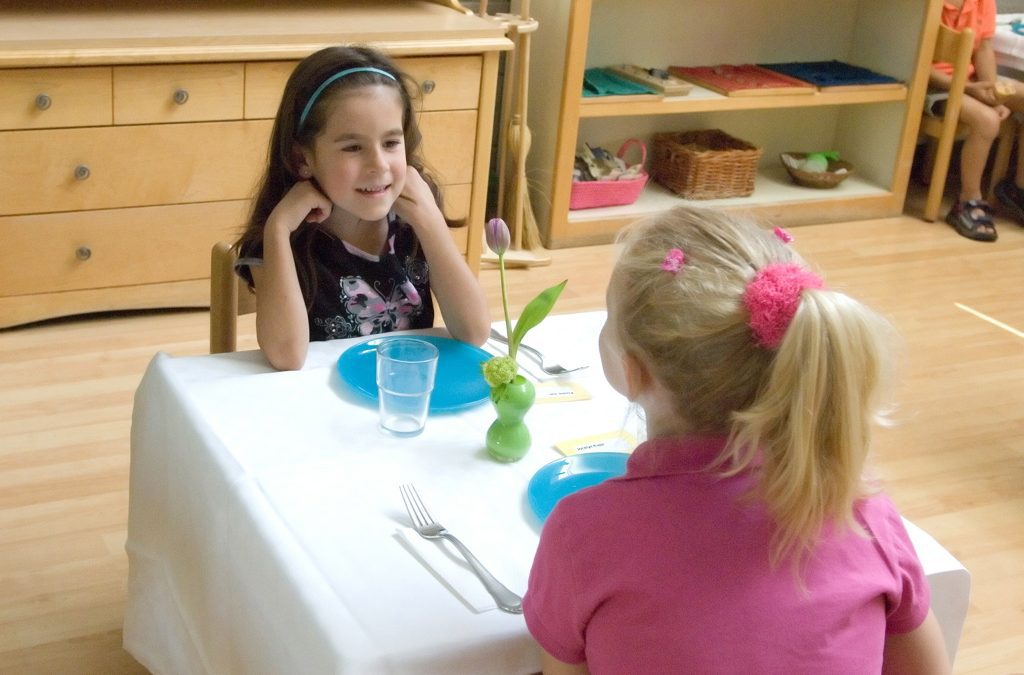
Toward Best Practice: The Exercises of Practical Life
To continue reading, you will need to choose a subscription plan.
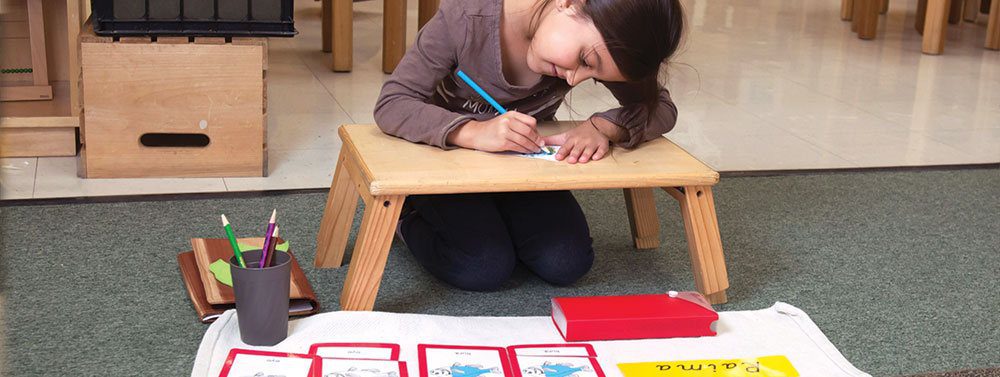
Understanding the Three-Hour Work Cycle
To continue reading, you will need to choose a subscription plan.
Featured
-
 Montessori Family Alliance School Group Membership (Print & Digital 2026 1/2 year pricing)
Original price was: $30.00.$15.00Current price is: $15.00.
Montessori Family Alliance School Group Membership (Print & Digital 2026 1/2 year pricing)
Original price was: $30.00.$15.00Current price is: $15.00.
-
The Montessori Way, Revised and Expanded: An Education for Life; A Comprehensive Guide for Parents and Teachers
$25.00
-
The Montessori Child: A Parent's Guide to Raising Capable Children with Creative Minds and Compassionate Hearts (The Parents' Guide to Montessori)
$20.00
-
The Montessori Toddler: A Parent's Guide to Raising a Curious and Responsible Human Being (The Parents' Guide to Montessori)
$20.00
-
Montessori in Action: Building Resilient Montessori Schools 1st Edition
$29.95