

Looking at Gender Bias – Part 4

Part 2 – Navigating the Deep Sea of Social Media with Our Children: The Montessori Way
To continue reading, you will need to choose a subscription plan.

Five Crucial Reasons Why Schools Should Teach Entrepreneurship
To continue reading, you will need to choose a subscription plan.
Rising Innovator: Inspiration, Education, Support
To continue reading, you will need to choose a subscription plan.
Part 1: Navigating the Deep Sea of Social Media with Our Children, The Montessori Way
To continue reading, you will need to choose a subscription plan.
Learning From Nature: A Real Life Testimonial
To continue reading, you will need to choose a subscription plan.
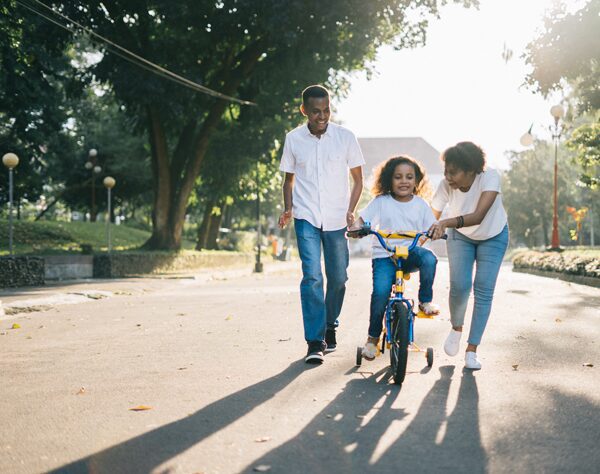
Building a Great Relationship with Your Child
As our infants grow into toddlers and do less nuzzling and more ‘NO-ing,’ how do we maintain a strong connection while setting the necessary limits?
Can we keep the relationship close as our child starts daycare or preschool, and we teach her to problem-solve and navigate her own path?
As our kids move into the school years and out into the world, how do we stay connected so they WANT to follow our expectations?
And as our kids evolve into teenagers (when we get fired as the ‘boss’), how can we make sure we have the necessary trust and intimacy with them so that we get rehired as consultants?
Want to be a great parent? Want to raise a happy, healthy, well-behaved kid? Want to live in a home where discipline becomes unnecessary? The secret is to create a closer connection with your child.
It isn’t enough that we tell our children we love them. We need to put our love into action every day for them to feel it.
“But what does that mean, putting our love into action?”
Mostly, it means making that connection with our child our highest priority. Love in action means paying thoughtful attention to what goes on between us, seeing things from our child’s point of view and always remembering that this child (who sometimes may drive us crazy) is still that precious baby we welcomed into our arms with such hope.
Kids form their view of themselves and the world every day. They need your encouragement to see themselves as good people who are capable of good things. And they need to know you’re on their side.
“Doesn’t that take a lot of energy?”
It takes a lot of effort to fully attend to another human being, but when we are really present with our child, we often find that it energizes us and makes us feel more alive, as being fully present with anyone does.
Being close to another human takes work. But 90 percent of people on their deathbed say that their biggest regret is that they didn’t get closer to the people in their lives. And almost all parents whose children are grown say they wish they had spent more time with their kids.
“Being fully present? How can I do that when I’m just trying to get dinner on the table and keep from tripping over the toys?”
Being present just means paying attention. Like a marriage or a friendship, your relationship with your child needs positive attention to thrive. Attention = Love. Like your garden, your car, or your work, what you attend to flourishes. And, of course, that kind of attentiveness takes time. You can multi-task at it while you’re making dinner, but the secret of a great relationship is some focused time every day attending only to that child.
“This is all too vague for me. What am I supposed to actually DO?”
1. Start right for a firm foundation.
The closeness of the parent-child connection throughout life results from how much parents connect with their babies, right from the beginning. For instance, research has shown that fathers who take a week or more off work when their babies are born have a closer relationship with their child at every stage, including as teens and college students. Is this cause and effect? The bonding theorists say that if a man bonds with his newborn, he will stay closer to her throughout life. But you don’t have to believe that bonding with a newborn is crucial to note that the kind of man who treasures his newborn and nurtures his new family is likely to continue doing so in ways that bring them closer throughout her childhood.
2. Remember that all relationships take work.
Good parent-child connections don’t spring out of nowhere, any more than good marriages do. Biology gives us a head start. If we weren’t biologically programmed to love our infants, the human race would have died out long ago. As kids get older, we need to build on that natural bond, or the challenges of modern life can erode it. Luckily, children automatically love their parents. As long as we don’t blow that, we can keep the connection strong.
3. Prioritize time with your child.
Assume that you’ll need to put in a significant amount of time creating a good relationship with your child. Quality time is a myth, because there’s no switch to turn on closeness. Imagine that you work all the time, and have set aside an evening with your husband, whom you’ve barely seen in the past six months. Does he immediately start baring his soul? Not likely.
In relationships, without quantity, there’s no quality. You can’t expect a good relationship with your daughter if you spend all your time at work and she spends all her time with her friends. So as hard as it is with the pressures of job and daily life, if we want a better relationship with our kids, we have to free up the time to make that happen.
4. Start with trust, the foundation of every good relationship.
Trust begins in infancy, when your baby learns whether she can depend on you to pick her up when she needs you. By the time babies are a year old, researchers can assess whether babies are “securely attached” to their parents, which basically means the baby trusts that his parents can be depended on to meet his emotional and physical needs.
Over time, we earn our children’s trust in other ways: following through on the promise we make to play a game with them later; not breaking a confidence; picking them up on time.
At the same time, we extend our trust to them by expecting the best from them and believing in their fundamental goodness and potential. We trust in the power of human development to help our child grow, learn, and mature. We trust that although our child may act like a child today, he or she is always developing into a more mature person, just as (we hope) we are. We trust that no matter what he or she does, there is always the potential for positive change.
Trust does not mean blindly believing what your teenager tells you. Trust means not giving up on your child, no matter what he or she does. Trust means never walking away from the relationship in frustration, because you trust that she needs you and that you will find a way to work things out.
5. Encourage, encourage, encourage.
Think of your child as a plant that is programmed by nature to grow and blossom. If you see the plant has brown leaves, you consider if it needs more light, more water, more fertilizer. You don’t criticize it and yell at it to straighten up and grow right.
Kids form their view of themselves and the world every day. They need your encouragement to see themselves as good people who are capable of good things. And they need to know you’re on their side. If most of what comes out of your mouth is correction or criticism, they won’t feel good about themselves, and they won’t feel like you’re their ally. You lose your only leverage with them, and they lose something every kid needs: to know they have an adult who thinks the world of them.
6. Remember that respect must be mutual.
Pretty obvious, right? But we forget this with our kids, because we know we’re supposed to be the boss. You can still set limits (and you must), but if you do it respectfully and with empathy, your child will learn both to treat others with respect and to expect to be treated respectfully himself.
Once, when I became impatient with my then three-year-old, he turned to me and said “I don’t like it when you talk to me that way.” A friend who was with us said, “If he’s starting this early, you’re going to have big problems when he’s a teenager!” In fact, rather than challenging my authority, my toddler was simply asking to be treated with the dignity he had come to expect. Now a teenager, he continues to treat himself, me, and others respectfully. And he chooses peers who treat him respectfully. Isn’t that what we all want for our kids?
7. Think of relationships as the slow accretion of daily interactions.
You don’t have to do anything special to build a relationship with your child. The good (and bad) news is that every interaction creates a relationship. Grocery shopping, carpooling, and bath time matter as much as that big talk you have when there’s a problem. He doesn’t want to share his toy, or go to bed, or do his homework? How you handle it is one brick in the foundation of your permanent relationship, as well as his ideas about all relationships.
That’s one reason it’s worth thinking through any recurring interactions that get on your nerves to see how you might handle them differently. Interactions that happen more than once tend to initiate a pattern. Nagging and criticizing are no basis for a relationship with someone you love. And, besides, your life is too short for you to spend it in a state of annoyance.
8. Communication habits start early.
Do you listen when she prattles on interminably about her friends at preschool, even when you have more important things to think about? Then she’s more likely to tell you about her interactions with boys when she’s fourteen.
It’s hard to pay attention when you’re rushing to pick up food for dinner and get home, but if you aren’t really listening, two things happen: you miss an opportunity to learn about and teach your child; and she learns that you don’t really listen, so there’s not much point in talking.
9. Don’t take it personally.
Your teenager slams the door to her bedroom. Your ten-year-old huffs, “Mom, you never understand!” Your four-year-old screams, “I hate you, Daddy!” What’s the most important thing to remember? DON’T TAKE IT PERSONALLY! This isn’t primarily about you; it’s about them: their tangled-up feelings; their difficulty controlling themselves; their immature ability to understand and express their emotions. Taking it personally wounds you, which means you do what we all do when hurt: either close off, lash out, or both. These reactions just worsens a tough situation for all concerned.
Remembering not to take it personally means you:
- Take a deep breath.
- Let the hurt go.
- Remind yourself that your child does, in fact, love you but can’t get in touch with it at the moment.
- Consciously lower your voice.
- Try hard to remember what it
feels like to be a kid who is upset and over-reacting. - Think through how to respond calmly and constructively.
You can still set limits, but you do it from as calm a place as you can muster. Your child will be deeply grateful, even if she can’t acknowledge it at the moment. I’m not for a minute suggesting that you let your child treat you disrespectfully. I’m suggesting you act out of love, rather than anger, as you set limits. And if you’re too angry to get in touch with your love at the moment, then wait.
10. Resist the impulse to be punitive.
How would you feel about someone who hurt, threatened, or humiliated you, “for your own good”? Kids do need our guidance, but punishing your child always erodes your relationship, which makes your child misbehave more.
11. Don’t let little rifts build up.
If something’s wrong between you, find a way to bring it up and work it through positively. Choosing to withdraw (except temporarily, strategically) when your child seems intent on driving you away is ALWAYS a mistake. Every difficulty is an opportunity to get closer or create distance.
12. Re-connect after every separation.
Parents naturally provide an anchor, or compass, for kids to attach to and stay oriented around. When they’re apart from us they need a substitute, so they orient themselves around teachers, coaches, electronics, or peers. When we rejoin each other physically, we need to also rejoin emotionally.
13. Stay available.
Most kids don’t keep an agenda and bring things up at a scheduled meeting. Nothing makes them clam up faster than pressing them to talk. Kids talk when something is up for them, particularly if you’ve proven yourself to be a good listener, but not overly attached to their opening up to you.
Being on hand when they come home is a sure-fire way to hear the highlights of the day with younger kids, and even, often, with older ones. With older kids, simply being in the same room doing something can create the opportunity for interaction. If you’re cooking dinner and she’s doing homework, for instance, or the two of you are in the car alone, there’s often an opening. Of course, if one of you is hunched over the computer, the interaction is likely to be more limited. Find ways to be in proximity where you’re both potentially available, without it seeming like a demand.
This may seem obvious, but stating your availability is helpful, even with teens.
“I’ll be in the kitchen making dinner if you want me.”
“I have to run to the grocery store, but don’t hesitate to call my cell phone if you need me.”
The most important part of staying available is a state of mind. Your child will sense your emotional availability. Parents who have close relationships with their teens often say that as their child has gotten older, they’ve made it a practice to drop everything else if their teen signals a desire to talk. This can be difficult if you’re also handling a demanding job and other responsibilities, of course. But kids who feel that other things are more important to their parents, often look elsewhere when they’re emotionally needy. And that’s our loss, as much as theirs.

Montessori Through High School: A Dad’s Perspective
To continue reading, you will need to choose a subscription plan.

Webcast What does Montessori Middle School Look Like?
Join us this week as Jocelyn Swanson, CGMS Director of Secondary Teacher Education, as the panel discusses best practice in Montessori middle school programs. If you have or are considering adding a middle school program this webcast is for you! Bring your questions and consider the possibilities for your program.
For more information, visit: http://cgms.edu

Montessori: The Science — Part 7: Social Education is Effective
Dr. Angeline Lillard presents Maria Montessori’s key insights about childhood education, the subsequent educational research that has validated her approach, and how these ideas are implemented in a modern Montessori classroom.
From Montessori: The Science Behind the Genius
For more information, visit: http://montessori-science.org

Montessori: The Science — Part 8: Meaningful Contexts Assist Learning
Dr. Angeline Lillard presents Maria Montessori’s key insights about childhood education, the subsequent educational research that has validated her approach, and how these ideas are implemented in a modern Montessori classroom.
From Montessori: The Science Behind the Genius
For more information, visit: http://montessori-science.org
What to Say Instead of “Be Careful”
To continue reading, you will need to choose a subscription plan.

The Erdkinder and the Functions of the University by Maria Montessori
Here is a link to the digital archive of Dr. Maria Montessori’s essays, The Erdkinder and the Functions of the University. In this work Maria Montessori considers the needs and issues of needed educational reform for adolescents and university students. She looks at each level and seeks the optimum method for facilitating growth.
Click the cover image to read it online.
January Calm: The Comfort of Routine and Consistency
To continue reading, you will need to choose a subscription plan.
How Do You Get Your Child to Read Books?
To continue reading, you will need to choose a subscription plan.
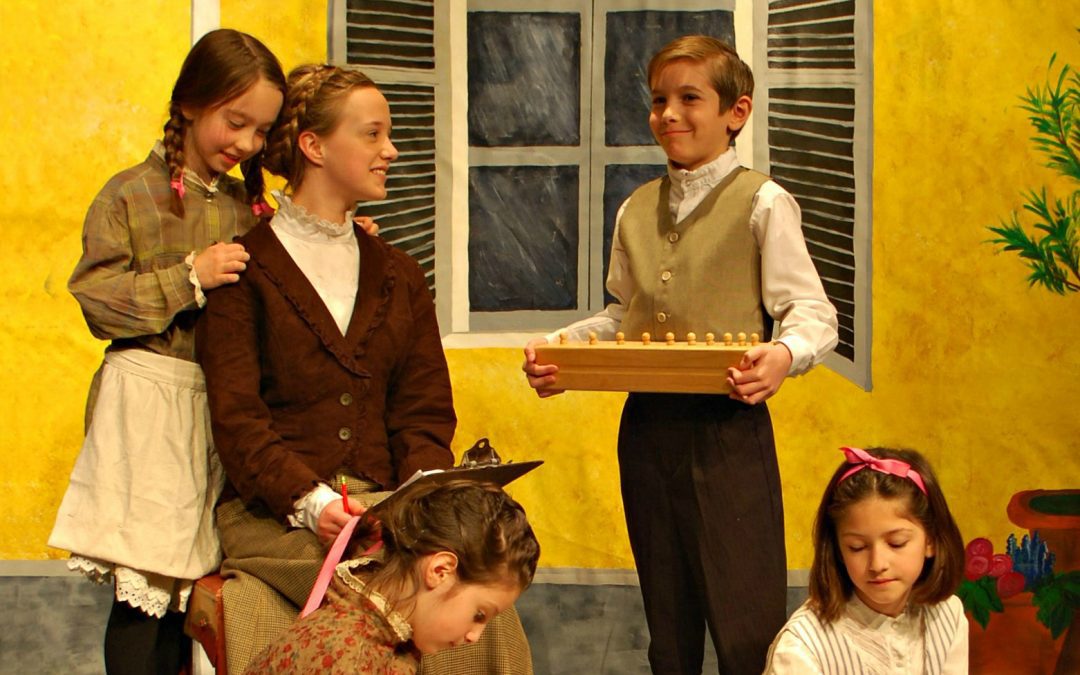
Educate And Inspire With Maria Montessori The Musical
To continue reading, you will need to choose a subscription plan.
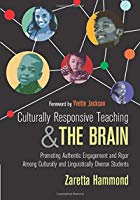
Book Review: Culturally Responsive Teaching The Brain
The book, Culturally Responsive Teaching and The Brain, written by Zaretta Hammond, examines the philosophy and implementation of culturally responsive teaching in the context of current research and knowledge of neuropsychology and its impact on student behavior and response.
The book seeks to connect current brain research and culturally responsive teaching with the question “what is needed to activate that wiring for optimal connectivity for students of color?” Understanding the classroom practices that can serve as triggers for engagement of various regions of the brain can help educators adapt their practices in a culturally relevant way that supports students of color.
The book explores this premise in three parts. Part One: Building Awareness and Knowledge; Part Two: Building Learning Partnerships; and Part Three: Building Intellective Capacity. Each section brings together the information of neuropsychology with a study of cultures with the goal of educating teachers to become culturally sensitive and responsive to their students. With practical, concrete examples of teaching strategies and self-reflections, Ms. Hammond leads the reader through the process of developing the skills and understanding needed to offer a culturally responsive classroom environment to all students.
As culturally responsive teaching is more a philosophy, or mindset, rather than a method, Part One: Building Awareness and Knowledge begins to explore the goal of guiding “dependent learners” to become independent thinkers, who are self-motivated and confident in their abilities. With the premise that educators can change the “habits of mind” of the dependent learner, Hammond explores the importance of relationship, creating a classroom that helps students reach their zone of proximal development with just the right challenges and the tools that teachers can use to implement culturally responsive teaching.
The Ready for Rigor Framework includes the components of Awareness, Learning Partnerships, Information Processing, and Community of Learners and Learning Environment. Educators must first understand the role that culture plays in learning and understand the sociopolitical and economic conditions that are the root of the inequities that contribute to the achievement gap for students in marginalized groups. Educators are encouraged to reflect on their own biases, values, and beliefs by looking at layers of culture from the surface to those cultural archetypes that can lead to an understanding of one’s implicit bias.
Increasing knowledge of the regions of the brain and the role each plays in one’s behavior becomes the backdrop for further understanding of those “triggers” that result in certain student behaviors that further reinforce their dependence as learners. practical advice that teachers can use in the classroom to avoid these triggers leads to Part Two: Building Learner Partnerships.
Building partnerships based on affirmations, mutual respect, and validation enables students to develop trust and a sense of safety to take risks in their learning. Starting with rapport, or connection, and developing an alliance leads to the cognitive insights and higher-order thinking skills of independent learners. Ms. Hammond encourages educators to reflect, observe, and collect data on their behaviors and mindset that contributes to a positive alliance with each student. This alliance means becoming a student’s ally by agreeing on a goal, setting high expectations, acknowledging ability, and providing feedback that gives specific information about successes and next steps. With increased motivation and an academic mindset, the student begins to believe in his ability and understand that it is sociopolitical impacts, rather than personal ability, that are the cause of inequity.
Part Three: Building Intellective Capacity provides many concrete teaching techniques to support students of color. Dr. Hammond discusses four components of learning: Ignite, capturing the student’s attention; Chunk, providing specific amounts of information in segments; Chew, giving opportunities to process that information in active ways; and Review, the projects to apply this new information and connect it to previous learning. The techniques shared are in the context of culturally responsive teaching and the brain science presented in parts one and two.
The final strategy for building intellective capacity is preparing a classroom environment for all students to feel a connection and sense of a community that is socially and intellectually safe.
This includes examining the visual look of the classroom, the routines, and rituals—but beyond that, ways to provide each student with meaningful learning in a community of peers.
Ms. Hammond reminds teachers that “embracing conscious incompetence” is an important aspect of growth and development. Being willing to reflect, change behavior, and try new techniques takes time and effort. The goal of equity for all students is worth the struggle.
This book provides a framework for thinking about and acting in a more culturally responsive manner. Developing the knowledge and understanding of the impact of culture on learning enriches our role as a teacher of children and adults. Valuing equity in education is a goal that, on the surface, is easily shared. The format of this book encourages a deeper look at that goal with knowledge, information, and specific tools and techniques for actual practice as a culturally sensitive and responsive educator.
Cultivating an attitude, a culturally responsive mindset, to view a school should be implemented in practice by leaders and teachers in a way that is specific to their school culture. Forming an alliance with each other, with our students and with their families, begins with respect, rapport, and engagement that is specific to each culture.
As Montessori educators, we need to create classrooms and schools that support all marginalized groups. The concepts and ideas presented in this work can be a starting point as we begin to explore a supportive framework for all diverse learners—cultural, racial, ethnic, and those who learn in a unique way. As we develop classrooms of inclusion for all students, we must become more aware of the impact of the relationship, learning techniques, and the classroom community on every student in our classrooms. ′
REFERENCES
Hammond, Z. (2015). Culturally responsive teaching and the brain.Thousand Oaks, CA: Corwin.
ML/ August 2019/ Pg 20
Featured
-
 Montessori Family Alliance School Group Membership (Print & Digital 2026 1/2 year pricing)
Original price was: $30.00.$15.00Current price is: $15.00.
Montessori Family Alliance School Group Membership (Print & Digital 2026 1/2 year pricing)
Original price was: $30.00.$15.00Current price is: $15.00.
-
The Montessori Way, Revised and Expanded: An Education for Life; A Comprehensive Guide for Parents and Teachers
$25.00
-
The Montessori Child: A Parent's Guide to Raising Capable Children with Creative Minds and Compassionate Hearts (The Parents' Guide to Montessori)
$20.00
-
The Montessori Toddler: A Parent's Guide to Raising a Curious and Responsible Human Being (The Parents' Guide to Montessori)
$20.00
-
Montessori in Action: Building Resilient Montessori Schools 1st Edition
$29.95