
Montessori based Multi-Tier System of Support An overview with Christine Lowry, M.Ed
To continue reading, you will need to choose a subscription plan.
Special Education 2.0 Impact on Montessori
To continue reading, you will need to choose a subscription plan.

Open Mind Open Heart
To continue reading, you will need to choose a subscription plan.

Emotional Behavioral Disorders In Toddlers & How These Children Can Be Supported In A Montessori Toddler Classroom
To continue reading, you will need to choose a subscription plan.

Webinar: Addressing Challenging Behaviors – Part 2
To continue reading, you will need to choose a subscription plan.

Creating an Inclusive Community for Students with Challenges
To continue reading, you will need to choose a subscription plan.
My Childs Teacher Has Concerns
To continue reading, you will need to choose a subscription plan.
Webcast: Helping Montessori Schools Understand Autism and Executive Functionin
To continue reading, you will need to choose a subscription plan.
Webcast: A Montessori-Based Multi-Tiered System of Support: for Challenging Behaviors and Learning – Part 3 of 3
To continue reading, you will need to choose a subscription plan.
Webcast: Supporting our Students with Challenges in Behavior and Learning Part 1
To continue reading, you will need to choose a subscription plan.
Can Montessori Classrooms Accommodate Children with Special Needs?
To continue reading, you will need to choose a subscription plan.
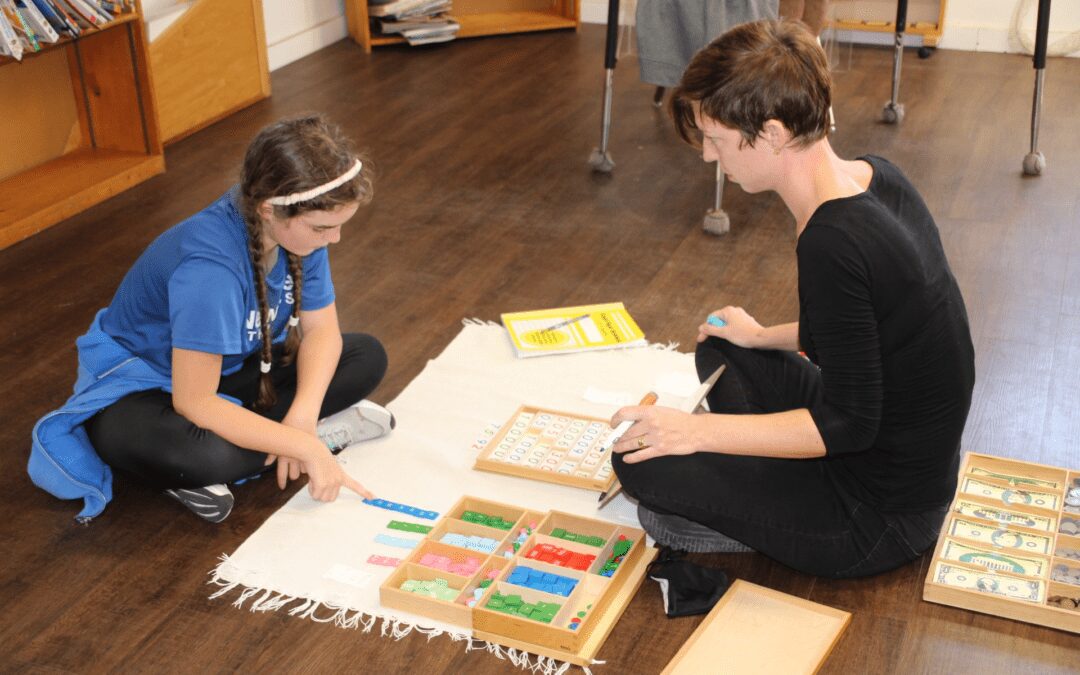
Elementary Years
To inspire academic excellence; nurture curiosity, creativity, and imagination; and awaken the human spirit
As children near the end of their kindergarten year in Montessori, many parents struggle with the question of whether or not to keep their children in Montessori for the elementary program.
On the one hand, the typical Montessori five-year-old’s self-confidence and love of learning lead many families to ask: Why tamper with something that is clearly working?
Other parents feel that, since their kindergarten graduate will be moving on to another class one way or the other, next year might be the logical time to make the transition from Montessori.
A major consideration for many families will be the opportunity to save the cost of private school tuition by taking advantage of the local public schools. Some will wonder if a more highly structured and competitive independent school will give their child a better preparation for college.
If you are facing this choice, I encourage you to take a good look at your school’s elementary program. Although you will, of course, want to gain an impression of the teachers, focus your attention on the students themselves. Elementary students are often the best spokespeople for the value of a Montessori education!
There are four aspects of the elementary program:
Academic Excellence
Universal Values
Global Understanding
Service
Inspiring Children To Work Hard and AchieveAcademic Excellence
Let’s begin by being very clear. Montessori is one of the most sophisticated pre-collegiate programs available anywhere in North America. It has been described as the ultimate gifted-and-talented program that is offered to a very wide range of students. However, this doesn’t tell the whole story. What makes Montessori special is its ability to nurture talent without needless competition and stress. In a nutshell, Montessori children never lose the joy of learning.
Montessori is, first and foremost, concerned with a child’s character and emotional development, rather than academics for grades and test scores alone. We inspire children toward academic excellence and nurture the curiosity, creativity, and imagination hidden within every human being.
Many Parents Worry That Montessori Will Not Prepare Their Children For The ‘Real World.’
Hearing that we do not give children letter grades (at least until high school), assign hours of nightly homework, give children weekly tests, or expect students to compete for the highest rank in the class, some parents wonder if we’ve lost our minds! After all, who wants to run the risk that Montessori, which was so charmingly right when they were young, doesn’t work in the elementary years or prepare children for the Real World?
Montessori Elementary Education Is Distinctly Different
First, let’s talk about highly selective programs for ‘gifted’ children.
Montessori demonstrated that intelligence is common among human beings. Most schools assume that giftedness is statistically rare and that, given half a chance, children will accomplish little without external structure, extrinsic rewards, and the fear of being embarrassed.
Many of us attended challenging elementary schools. Do you remember what happened in your highly disciplined classrooms when your teacher left the room? In many cases, it was disorder. What use is it to earn high grades, keep your notebook neat, pass every test, and hate your schoolwork? Many children in many good schools are bored, apathetic, or overwhelmed. They do only what must be done to get along. That is not a sound foundation for a real education. In truly wonderful schools, classrooms are filled with students who retain a sense of wonder, curiosity, and eagerness to learn. Those qualities are the almost universal description of elementary Montessori children.
I find the difference between the way many of us think about gifted children in this country and the attitudes we find abroad quite interesting. Americans unconsciously assume that intellectual ability and scholastic success is inborn, i.e. a child is born with special talents and abilities. Many parents in other countries assume that success is more the result of hard work, self-discipline, and high personal motivation.
In writing this, I don’t mean to suggest that truly gifted children (and adults) can’t be found. They are simply uncommon. What we focus on is the human potential hidden within young children.
Montessori demonstrated that intelligence has many forms and that children learn in different ways at different paces. Anyone who has worked with children knows this is true, but traditional schools normally follow a pre-established curriculum.
Montessori felt it was illogical to dismiss a child who finds it difficult to memorize facts without understanding or to remember what the teacher covers in a lecture. She also understood the powerful connection between a child’s inner emotional life, self-confidence, self-esteem, and the ability to learn.
A Montessori elementary program is based on warmth, kindness, and respect. There is a strong sense of community among the children. The classes are more like little villages, with powerful friendships and a clear sense of group identity. Teachers are normally seen as mentors and friends.
Building Character and Teaching Universal Values
There is an old saying that if you abandon a garden, the weeds will run wild. Abandon a child’s moral and spiritual education, and the weeds of confusion, materialism, self-centeredness, and spiritual emptiness will take hold.
Dr. Montessori observed that the elementary years are a sensitive period for moral reasoning. The elementary program integrates character development and family involvement throughout the curriculum.
The teaching of kindness and courtesy, self-discipline and self-respect, and fundamental values is crucial in a child’s moral development, sense of dignity, and academic success. With proper guidance from parents and educators, children can and will excel.
Montessori Schools Strive to Create Global Understanding
They tend to attract teachers from all over the world.
It is normal to find an international student body in a Montessori school anywhere in the world.
Montessori schools generally teach at least one foreign language and often offer programs in several.
World geography, international cultural studies, and world history are central to the elementary Montessori curriculum.
Elementary Montessori students begin to understand the global economy.
As more Montessori schools develop strong upper elementary and middle school programs, many are beginning to sponsor travel-study programs. Some participate in the Montessori Model United Nations and foreign exchange programs.
Service
Children must be inspired to contribute to the betterment of the world. They often begin with projects that care for the environment: planting trees and flowers; composting garbage; controlling erosion around the campus; recycling; and cleaning up litter and debris in the local community. It is quite common for elementary classes to adopt an acre of rainforest in Costa Rica or work to support an environmental organization, such as the Wildlife Federation.
They will normally progress to projects that provide direct help to the needy. Younger children commonly collect canned goods, clothing, and toys for the homeless or needy families. As they are ready, most Montessori schools will take children out into the community.
As they reach the upper elementary class, Montessori children become quite concerned about issues of social justice and human rights. The rights of the poor, homeless, and hungry are of real concern. Some children will begin to explore the possibilities of supporting causes that are meaningful to them.
Elementary Classes Are Multi-Age Group Communities
Elementary Montessori classes continue to bring children of different age levels together. Classes span three age/grade levels, with the common divisions being ages 6 to 9 (grades 1-3) and ages 9 to 12 (grades 4-6). Some schools may follow a somewhat different scheme of grouping their children.
Elementary Montessori Educators Serve As Mentors, Guides, and Friends
The best elementary Montessori teachers tend to be renaissance men and women; individuals who are equally interested in mathematics, the sciences, the arts, architecture, literature, poetry, psychology, economics, technology, and philosophy. Elementary Montessori teachers are generalists rather than a single subject-matter instructor. They provide a blend of structure to ensure that the ‘basics’ are mastered while encouraging and guiding children to explore topics and ideas that capture their imagination.
The elementary Montessori curriculum is very demanding, and requires teachers to have a broad and thorough education of their own. With lessons that range from the history of mathematics to the physics of flight, mineralogy, chemistry, algebra, geometry, linguistics, and literature, to name just a few, the average teacher would be lost.
But beyond this, elementary Montessori educators need patience, understanding, respect, enthusiasm, and a profound ability to inspire a sense of wonder and imagination. Such teachers are very rare but absolutely magical!
Becoming an elementary Montessori teacher requires almost two years of graduate study and student teaching, and many hours of hard work to gather or create the curriculum materials that constitute a fully authentic elementary Montessori environment.
The Montessori Materials And The Passage To Abstraction
At the elementary level, learning continues to be a hands-on experience, as students learn by trial, error, and discovery.
The advanced elementary Montessori materials move on to more complex and abstract concepts in mathematics, geometry, and pre-algebra. The goal is to lead students away from a dependency on concrete models that visually represent abstract concepts towards the ability to solve problems with pen and paper alone.
Part of this is made possible by the growing child’s brain’s ability to grasp abstractions, but it has been greatly enhanced over the years by countless hours of work with the concrete materials that made the abstract real, and helped him visualize the abstraction.
Similar hands-on Montessori materials help students understand grammar, sentence analysis, geographical facts, and concepts in science.
Three Elements Of The Elementary Montessori Curriculum
1. Mastery of Fundamental Skills and Basic Core Knowledge
Montessori’s international curriculum evolved out of a tradition of academic excellence and offers a rigorous course of study even in the elementary years. Elementary Montessori students explore the realm of mathematics; science and technology; the world of myth; great literature; history; world geography; civics; economics; anthropology; and the basic organization of human societies. Their studies also cover the basics found in the traditional curriculum: the memorization of math facts; spelling lessons; the study of vocabulary, grammar, sentence analysis, creative and expository writing; and research skills.
2. Montessori’s Great Lessons
The Great Lessons are five key areas of interconnected studies traditionally presented to all elementary Montessori students in the form of inspiring stories, related experiences, and research projects.
The Great Lessons include the story of how the world came to be: the development of life on Earth; the story of humankind; the development of language and writing; and the development of mathematics. They are intended to give children a ‘cosmic’ perspective of the Earth and humanity’s (and their own) place within the cosmos.
3. Individually Chosen Research
Elementary students are encouraged to explore topics that capture their imagination. Most former Montessori students look back on this aspect of the elementary program with particular fondness in later years.
Montessori curriculum guides students to become proficient at research and inquiry. Elementary Montessori students rarely use textbooks. The approach is largely based on library research, with children gathering information, assembling reports, teaching what they have learned to their fellows, and assembling portfolios and handmade books of their own. Students are taught how to use reference materials, libraries, and the Internet to gather information and uncover the facts. Their oral presentations and written research reports tend to grow in sophistication and complexity every year.
Is Montessori Opposed To Competition?
No. Dr. Montessori simply observed that competition is an ineffective tool to motivate children to learn and work hard in school.
Traditionally, schools challenge students to compete with each other for grades, class rankings, and special awards. In Montessori schools, students learn to collaborate rather than mindlessly compete. In an atmosphere in which children learn at their own pace and compete only against themselves, they learn to not be afraid of making mistakes. They quickly find that few things in life come easily, and they can try again without fear of embarrassment.
Dr. Montessori, herself an extraordinary student and a very high achiever, was never opposed to competition on principle. Her objection was to using competition to create an artificial motivation to get students to achieve.
Homework, Tests, And Grades
Many parents have heard that Montessori schools do not believe in homework, grades, and tests. This is a misunderstanding. Because Montessori believes in individually paced academic progress and encourages children to explore their interests, rather than simply complete work assigned by their teachers, we don’t assign grades or rank students within each class according to their achievement.
Whenever students voluntarily decide to learn something, they tend to engage in their work with a passion and attention that few students will ever invest in tasks that have been assigned.
Providing Structure: Setting High, But Individually Tailored, Expectations
Montessori children normally work with a written study plan for the day or week. It lists the basic tasks that they need to complete while allowing them to decide how long to spend on each and what order they would like to follow. Beyond these basic individually tailored assignments, children explore topics that capture their interest and imagination, and share them with their classmates.
Montessori children usually don’t think of our assessment techniques as tests so much as challenges. Most elementary teachers will give their students informal, individual oral exams or have the children demonstrate what they have learned by either teaching a lesson to another child or by giving a formal presentation.
Standardized Tests
Montessori educators frequently argue that standardized testing is inaccurate, misleading, and stressful for children. Many feel that standardized tests are unnecessary, since any good teacher who works with the same children for three years and carefully observes their work, knows far more about their progress than a typical paper and pencil test reveals.
However, in our culture, test-taking skills are just another practical life lesson that children need to master. Most Montessori schools regularly give students quizzes on the concepts and skills that they have been studying, and many schools use standardized tests of one sort or another, with students over first grade. Often these may be formative tests that measure each student’s progress over the course of each year, and these will be only part of a comprehensive system of monitoring and documenting learning within the school.
When tests (formal and informal) are used as a feedback loop, at times indicating that a student needs a new lesson and more practice, instead of a mark of shame and failure, then they can be quite useful. Children will face tests throughout their education, and they certainly need to develop good test-taking skills.
Homework
Homework in an elementary Montessori class rarely involves busywork assignments; instead, they are extensions and enrichment of the curriculum. Some classes will allow the children to freely pursue projects that interest them at home, while others prefer to give children a number of optional assignments or challenges. In either case, the Montessori version of homework will rarely be boring and will normally challenge students to think, explore, and pursue tangible projects that give them a sense of satisfaction.
An Integrated Curriculum
Literature, art, music, dance, drama, history, social issues, political science, economics, architecture, science, and the study of technology all complement one another in the elementary curriculum. This integrated approach is one of the elementary Montessori program’s great strengths.
An Exceptional Curriculum In Language Arts And The Humanities
The elementary Montessori language arts program places great stress on the development of strong skills in composition and creative writing. Students are asked to write continuously, emphasizing, at first, the development of an enjoyment of the writing process, rather than the strict use of correct grammar and spelling. However, formal grammar, spelling, and sentence analysis are systematically taught.
Elementary children are normally very interested in words and sentences. They like to parse and analyze; for, in this way, they are clarifying their understanding of the structure of language that they absorbed unconsciously in the primary class. Montessori takes advantage of children’s natural interest and gives them a rich assembly of learning material; for while they study the theory of grammar, spelling, and sentence analysis, they are also perfecting their knowledge of written language.
Creative writing continues to be equally important, and students are encouraged to write and share with others their stories, plays, poetry, and class newspapers.
Finally, and most importantly, the key to the elementary language arts curriculum is the quality of the material Montessori gives children to read. They are introduced, from an early age to first-rate children’s books and fascinating works on science, history, geography, and the arts. Many elementary classes follow the Junior Great Books program, with formal literary studies continuing every year through graduation. By introducing students to the very best literature available for young people, Montessori cultivates a deep love for the world of books.
Unified Mathematics
Montessori math is based on the European “Unified Math” model, which introduces elementary students to the study of the fundamentals of algebra, geometry, logic, and statistics, along with the principles of arithmetic.
Montessori students learn to recognize complex geometric shapes and figures. They learn to define, calculate, and draw all sorts of geometric relationships: angles; polygons; circumference; area; volume; squares and square root, cubes of polynomials, to name just a few. In Montessori, arithmetic, algebra, and geometry are interrelated.
Elementary Montessori students gain hands-on experience by applying math in a wide range of projects, activities, and challenges, such as graphing the daily temperature and computing the average for each month or adjusting the quantities called for in a recipe for a larger number of people. Because children love to work outdoors, we try to prepare tasks that use the school grounds whenever possible.
History And Culture Come Alive In The Elementary Class
One of Montessori’s key objectives is to develop a global perspective, and the study of history and world cultures forms the cornerstone of the curriculum.
Physical geography begins in the elementary program with the study of the formation of the Earth, the emergence of the oceans and atmosphere, and the evolution of life. Students learn about the world’s rivers, lakes, deserts, mountain ranges, and natural resources. Elementary students study the customs, housing, diet, government, industry, arts, history, and dress of countries around the world. They also study the emergence of the first civilizations and the universal needs of humankind. In the upper elementary class, the focus is usually placed on early man, ancient civilizations, and American history.
International studies continue throughout the elementary years, integrating art, music, dance, drama, cooking, geography, literature, and science. The children learn to prepare and enjoy dishes from all over the world. They learn the traditional folk songs and dances in music and explore traditional folk crafts in art. They read traditional folk tales, literature, and reference materials about the cultures under study and prepare reports about them. Units often culminate in marvelous international festivals.
Montessori’s Hands-On Approach to Science
The Montessori science curriculum is focused on the study of life, the laws and structure of the universe, and how humanity has struggled throughout history to put our understanding to practical use.
Much of Montessori science takes place out of doors. Classes grow flowers and vegetables in small gardens. They often raise class pets and sometimes even small farm animals.
Students are encouraged to learn to recognize and name local trees, flowers, birds, and animals.
Older children begin to keep journals of their observations of classroom animals and write poems and stories that attempt to capture the sense of wonder and beauty all around us. Back in the classroom, they pursue their investigations using a wide variety of charts and displays, research materials, and reference books.
More formal elements of biology are taught as well, particularly at the upper elementary levels. Dr. Montessori found that systematic knowledge allows one to discriminate details among species, literally to see on a whole new level; therefore, we introduce the student to the classification of the plant and animal kingdom. The study of the internal and external anatomy of plants and animals likewise gives children a new level of awareness and sensitivity in their observation and study of life. They compare different anatomical systems among species, such as the eyes, teeth, hooves, and claws of various animals.
Elementary students also learn a wide range of important basic concepts of physics and chemistry, such as: the structure of atoms and molecules; the difference between elements and compounds; the chemical composition of familiar compounds; the three states of matter; and chemical and physical change. Students also enjoy doing research about the elements and have a first exposure to the Table of Elements.
Elementary children love to work with scientific apparatus and delight in seeing mixtures change color, testing liquids with litmus paper, experimenting with small electrical circuits, or building models of atomic compounds. Students learn to observe and record what takes place during their experiment. The goal is to teach both the scientific method and techniques for safely working with science equipment.
Foreign Languages
As part of the international studies program, most Montessori schools offer a second language. The primary goal in a foreign language program is to develop conversational skills, vocabulary, the ability to understand basic written information in the second language, and an appreciation for the culture of the countries where the language is spoken.
The Arts Are Integrated Into Every Subject
In Montessori schools, the arts are normally integrated into the rest of the curriculum. They are modes of exploring and expanding lessons that have been introduced in science, history, geography, language arts, and mathematics. For example, students might make a replica of a Grecian vase; study calligraphy and decorative writing; sculpt dinosaurs for science; create dioramas for history; construct geometric designs and solids for math; and express their feelings about a musical composition through painting.
Students participate in singing, dancing, and creative movement with teachers and music specialists. Students’ dramatic productions make other times and cultures come alive.
The ideal elementary Montessori health and physical education program challenges students to develop a personal program of lifelong exercise, recreation, and health management.
The Montessori approach to health and fitness helps children to understand and appreciate how their bodies work and the care and feeding of a healthy human body.
Field trips are often an integral part of elementary Montessori programs. Students take all sorts of trips over the years to planetariums, art galleries, the zoo, museums, and many other destinations. They visit the centers of local government, colleges, hospitals, veterinary clinics, wildlife refuges, libraries, laboratories, factories, and businesses.
Social Skills, Character, And Community Service
The elementary classroom is not only a community of close friends, it is a source of countless life lessons in social skills, everyday courtesy, and ethics. Montessori noted that elementary children not only enjoy each other’s company, they naturally form little social groups of friends, each with its own internal hierarchy and rules of conduct.
The elementary classroom takes advantage of this tendency by operating as a small social community in which children learn to work together, resolve conflicts peacefully, encourage and acknowledge each other, and work as committees to complete complex tasks. Dr. Montessori also noted that the elementary years are a time when children are developing their sense of justice and moral reasoning.
Most classes go beyond simple lessons in grace and courtesy to begin a serious exploration of moral philosophy. It is common to find elementary Montessori students discussing questions, such as: Why are some things considered a sin? What happens to us when we die? Why is it important for the fortunate to lend a hand to the poor? If kindness is so important, what can I do when I am feeling angry?
During the elementary years, Montessori children begin to seriously address the question of aid to the elderly, handicapped, critically ill, and economically disadvantaged. They explore international issues from the perspective of building bridges toward world peace. They study ecology, wildlife preservation, and conservation of natural resources.
Through these and many other efforts, we begin to introduce Montessori children to moral questions in personal relationships to encourage the awakening of their social conscience. n
Tomorrow’s Child/ November 2017/ Pg 18
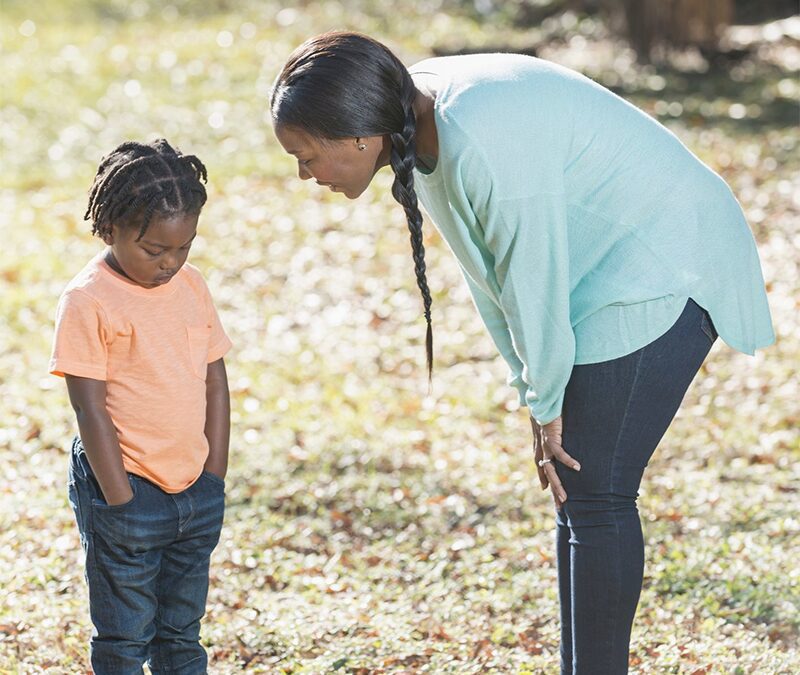
Setting Limits It’s Not too Late! The Hows & Whys to Setting Limits
What Are Limits?
Limits tell your family under what condition you are willing or unwilling to do something. They tell your family where you “draw the line.” They tell what you will or will not tolerate. Their purpose is to take care of you. Limits are not designed to control or manipulate someone else’s behavior. Here are three examples:
Example 1. A mother was playing basketball with her two teenage sons. The boys were getting competitive and soon the game wasn’t fun. Mother announced, “It is not fun for me when you two fight. When you are ready to make it fun again, come and get me. I’d love to play again.”
Example 2. Children need you to set limits so that they can recognize and respect other people’s limits. I was holding hands roller-skating with my daughter. She said in a very demanding tone of voice, “Skate faster!” This wasn’t the first time I had noticed that she was being demanded, so I said, “I am unwilling to have you talk like that to me. It makes me feel like not cooperating with you, and if you continue, I will skate by myself.”
Example 3. A daughter asked her mother to take her to the video store and rent a movie. Her daughter had already spent her allowance that week. Mom said, “I’d be willing to take you to the video store, but I am unwilling to rent a movie for you.” Limits give others important information about you to help them know what they can or cannot expect from you. They are about you, not about criticizing someone else’s behavior or about trying to make them act in a certain way.
Why Do Children Need Limits?
Children need you to set limits so that they can recognize and respect other people’s limits.
Limits provide a sense of security. When children don’t know your limits, they feel lost in an abyss. They feel confused and sometimes literally bounce around trying to find some.
Limits make children feel that we care about them. Children that are raised without limits often feel abandoned.
Children need limits to learn how to deal with conflict. What happens when someone tells me I have overstepped their limits? What happens when someone disrespects mine?
Children need limits to help them define themselves. Limits set by parents help children clarify their own limits because they have seen your model.
Limits help them to learn what is socially acceptable and what is not.
Children need to learn that if they go past a certain point, there will be consequences. Some of
them may be serious.
What Issues Need Limits?
You may want to set limits on the use of your belongings, TV watching, bedtime, your time, the use of profanity, mealtime, chores, care of pets. This is not a conclusive list. Make a list of your important issues.
How Do We Know When Our Limits Are Being Violated?
The best clue to determine whether or not your limits are being violated is by being in touch with your feelings.
If any of the following feelings sound familiar, you know that your limits are being dishonored or that you are not being clear about them:
I feel anger, resentment, imposed upon, smothered, taken advantage of, and/or abused.
I feel as if I am pulling more than my fair share of the weight.
I feel unappreciated.
I feel as if I am being divided between two people I love.
I feel taken for granted.
I feel like a taxi cab driver.
What about me?
Why Do We Have A Difficult Time Setting Limits?
Our ability to set and follow through with limit setting will be largely determined by how we were parented as a child. Setting limits may be difficult for you if you were in any of the following situations:
Not having any limits as a child, being unsupervised.
Being given messages, such as: Don’t make waves; Children are to be seen and not heard; You are being selfish.
If you were told it wasn’t “nice” to assert yourself.
If there was abuse in the home or at work that was mental, physical, emotional, sexual, drug or alcohol related.
If there was someone in your family that you had to give up your needs for because they were sick or disabled.
If self-sacrifice was modeled and expected of you.
If intimidation was used to motivate you.
If you don’t set limits because you don’t feel you deserve them.
If you feel guilty about your own actions such as, working too much or getting a divorce.
What We Do Instead Of Setting Limits?
Because we are afraid of creating conflict, we often choose one of the following behaviors rather than setting limits We are afraid the other person will get angry, leave us, or reject us. We may even feel that what we say or do will not make a difference anyway. Instead of directly setting limits, we sometimes indirectly handle these situations by:
Deny it (act or pretend as though it didn’t happen).
Ignore it and hope it’ll go away.
Talk yourself out of how you are feeling (I shouldn’t feel that way because of … ).
Make excuses for the other person’s behavior (he only said that because he was tired).
Ruminate about the issue (Going over and over the event in your mind, trying to make sense of it).
Blame someone else.
Blame yourself (if I had only done … he wouldn’t act this way).
Get even.
Hide behind righteousness (I’m above having those feelings).
Pretend that you don’t care.
Withhold your love or your communication.
What Can We Expect When We Start Setting Limits?
When you first start setting limits, you can expect that your children’s behavior will get worse. They will test you. They will try everything in their power to get you to go back to the way you used to be. So, make sure your seatbelt is fastened. You may be going for a ride!
Steps For Setting Limits
1. Honor your feelings. Remember, feelings are neither right nor wrong.
They just are.
2. Get clear about what you want. What you are and are not willing to do.
3. Present the information to your family member using an “I” statement. For example, “I am unwilling to wash clothes that are not in the hamper.” There should be no blame, shame, guilt, exaggerations, or complaining. Do this step as soon as possible to prevent an unnecessary build-up of resentment.
4. Be ready to ‘stick to your guns.’ Be consistent and follow through.
Tomorrow’s Child/ November 2017
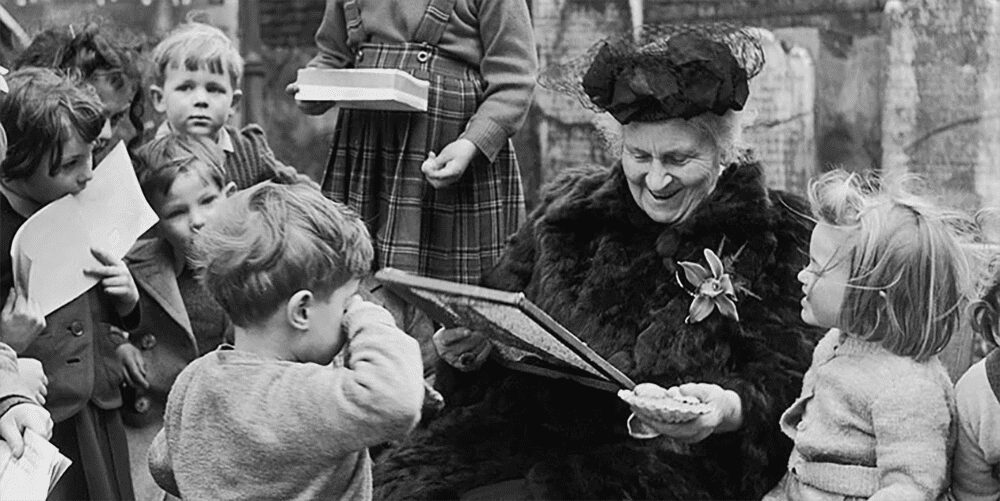
Montessori’s Gentle Approach To Discipline
Many parents believe that the word discipline means to punish. In reality, it means to teach.
In a Montessori-inspired home, parents are empathetic, caring, and respect children as real and separate human beings. However, children also need to develop a sense of empathy for others and must learn the rules of courteous everyday behavior.
To accomplish this, we need to help them develop a sense of self-respect with both compassion and respect for others. Since we cannot always be with them, we need to teach them to act with honor and integrity whether or not someone is watching. Since we can’t prepare them for every situation that they will face over the years, we need to teach them how to apply general rules of kind behavior to new situations.
Babies and Toddlers
Infants and toddlers don’t respond to discipline, rules, and punishments, but they do respond to unconditional love. They are not yet at a stage where they know right from wrong. They live in the moment, when they want something, they want it right now!
One secret to living happily with very young children is to go out of your way to attempt to understand what they are trying to communicate when they cry. Certainly, don’t take it personally! Even though, in the heat of the moment, it may feel as if your baby is being deliberately defiant, crying is one of the very few ways that young children can use to communicate. It can mean that they are hungry or that they need to be burped, they may be in an uncomfortable position, or they may need a diaper change.
Remember, babies are people too! They can become frightened. They may be bored or lonely. They may have had a bad dream. Watch and listen carefully. If you pay attention to your children, even when they are very young, ultimately, you will be able to determine what they are trying to tell you. Just as most parents learn to recognize the sound of their baby’s cry, we can learn to recognize the way they cry to communicate different emotions.
At this stage, their behavior is impulse-driven, with a limited ability to make the choice to follow ground rules. While you always want to model good behavior and explain why a given behavior is okay or not okay, don’t be surprised when your words go in one ear and out the other.
In a climate of love and respect, toddlers slowly develop the ability to understand our words and will begin consciously to respond to them. Eventually, they begin to imitate our actions when we model polite behavior and will begin to cooperate, in part, to make us happy. Most toddlers have good days when they are cooperative and angelic, and days when they seem to be testing us constantly.
We want to take our children beyond simple obedience, where they do what we ask in hope of a reward or to avoid something unpleasant. We want to help them to develop an internalized sense of right and wrong and courteous behavior. This requires that they eventually develop a social conscience and a sense of self-discipline. This develops slowly as children mature. For better or worse, all parents are moral educators. Our goal is to teach our children the values that we hold dear and teach them in such a way that our children live by them.
Children that achieve this goal develop a high level of self-respect. They also tend to find it much easier to establish strong friendships. They tend to respect the rights of others and are generally pleasant to be around.
Don’t Punish, Teach!
As children get older, do not take it for granted that they will automatically know how to handle a new situation. It’s always better to teach them the right way to act rather than to wait for them to misbehave and then scold, threaten, or punish. If your children do act inappropriately, stop their misbehavior calmly, but firmly, and show them how to handle the situation in a socially acceptable way.
Children have the same emotions as adults, but they don’t instinctively know how to express frustration and anger appropriately, nor do they automatically know how to solve conflicts. As parents, we have to teach our children how to get along with other people.
Montessori teachers call these the ‘Lessons in Grace and Courtesy.’ These lessons set a tone of respect and kindness. We teach our children how to shake hands, greet a friend, and say goodbye. We teach them how to ask politely to join other friends who are playing and how to respond if they are rejected.
We teach them how to interrupt someone who is busy and how to tell someone ‘no thank you’ politely. We teach them how to speak indoors, so their shouts don’t hurt our ears, and how to play without damaging anything or hurting someone. We show them how to offer a sincere apology and how to resolve conflicts peacefully.
To teach a lesson in grace and courtesy we explain a situation in simple terms and demonstrate the right way to handle it. Then we have our children practice with us, role-playing the sequence of events. Most children enjoy these lessons if they are kept short and sweet, and if they have not been embarrassed or threatened because they made a mistake.
For example, if your children tend to yell at the top of their lungs inside the house, you obviously need to give them a lesson in how to keep the indoor noise to a level that does not disturb other people.
First, as it is happening, instead of scolding, instruct them firmly, but politely, to please speak softly in the house.
Wait for a moment when the situation is not emotionally charged and neither you nor the children are upset about the behavior. Then, give them the lesson on the right way to speak indoors.
Rather than giving them a lecture, speak to them in very simple language and show them what you mean. For example, you might say:
“I want to talk to you about indoor voices. When we are outdoors, it’s so big, and sometimes we need to yell so we can hear each other when we’re far away. Outdoors, it does not hurt our ears when someone talks loudly, unless they do it right in our ear. That hurts! So outdoors, we can use our outdoor voices.
But when we are indoors, it hurts our ears and bothers the neighbors, too, if we talk too loudly. Indoors, we use our indoor voices.”
Now show them what you mean. Talk very loudly, and ask, “Was I using my indoor voice or my outdoor voice?” Talk normally. “What do you think? Was I using my indoor or my outdoor voice? Indoors, we use our indoor voices. Outdoors, we use our outdoor voices.”
You can teach all sorts of lessons this way, such as saying “please” and “thank you” or closing doors without slamming.
Practice with each other. Some families have the ‘manner of the week’. They introduce a new rule of everyday courtesy and practice it with one another over meals and around the house.
Other Children and Adults Are Role Models, Too
To teach your children good manners, they need to see that their parents, older siblings, and friends follow them consistently as well. The example that we set through our own behavior is more powerful than anything we say. Especially when they are very young, children are absorbing everything they see us do, and soon they begin to talk and act just like us. We are their role models.
Their brothers and sisters, grandparents, friends and playmates, babysitters, and preschool teachers play a similar and very powerful role as well. Knowing that your children will be influenced profoundly by the people around them, choose wisely the children and adults with whom your children will spend time.
Especially with children under age six, avoid loud, chaotic situations where large groups of children are over-stimulated and generally behave rudely, such as indoor children’s amusement parks with lots of expensive and noisy games and rides.
Choose your child’s play-dates thoughtfully. If your children spend time with a family that allows them to create havoc in their home, tearing up the living room, knocking over lamps, and shoving one another around in rough-and-tumble play, don’t be surprised when your children bring that behavior home with them. Pay attention to the way prospective play-date parents supervise their children. Do they ignore them or talk on the phone amidst chaos? It is not your place to judge other families, but it is your obligation to make good choices for your children.
Positive Discipline: Establishing a Climate of Love
Children are actually so sensitive and impressionable that we should monitor everything we say and do, for everything we say and do will be engraved in their memories forever.
Our children love us with a profound affection. When they go to bed, they want us to stay with them as they go to sleep. When we work in the kitchen, they often want to help. When we sit down to dinner, they want to join us. We may worry that we’ll spoil them if we listen to their pleas, but we shouldn’t. They only want us to pay attention to them. They want to be part of the group.
Children are extremely sensitive to the emotional climate within the family. They love us and basically want us to be pleased with them. This doesn’t mean that they will always behave.
Why Children Test Our Limits
Every child will test the rules to some degree. In fact, most acts of testing parents are a normal part of the child’s process of growing up.
When children test adults, it is often their way of expressing feelings that they don’t understand, and from our responses, they gradually learn how to handle their emotions appropriately. By testing the limits, they learn that we really care about certain ground rules of grace and courtesy in our relationship. In acting out, they are taking their first tentative steps toward independence, attempting to demonstrate that we don’t control them completely.
Agree on your family ground rules and get them written down, where both parents can refer to them. Teach your children how to do the right thing rather than focusing on their infractions.
Family Ground Rules
In the Montessori-inspired home, there are normally just a few basic ground rules:
Be kind and gentle.
Treat everyone with respect.
If you use something, put it back correctly when you are done.
If you break something, clean it up.
Tell the truth and don’t be afraid to admit when you make a mistake.
You should be absolutely clear in your mind about your family ground rules.
Explain your family ground rules positively, rather than as prohibitions. Instead of saying, “Don’t do that!” ground rules should tell children what should be done.
Teach your children how to follow the family ground rules as if you were teaching any lesson in everyday living skills and grace and courtesy.
Model the same behaviors that you are trying to encourage in your children.
Consciously try to catch your children doing something right—reinforce and acknowledge even small steps in the right direction. Don’t wait until they have mastered every new skill. Encourage them along the way.
When your child is breaking a ground rule, there are several things you can do other than scold, threaten, or punish.
You can redirect them by suggesting a more appropriate choice.
You can remind them of the ground rule and politely, but firmly, ask them to stop.
If the event is not emotionally charged, you can calmly re-teach the basic lesson about how to handle such situations.
Be consistent!
If you can’t bring yourself to reinforce a rule again and again, it shouldn’t be a ground rule at your house.
A few good rules are much better than dozens of rules that are often ignored.
Why We Don’t Use Threats or Punishments
Threats and punishments are not good tools to get children to behave. While they tend to produce immediate results, they are rarely long-lasting. They only work as long as the person being threatened cares. Many children who respond to threats and are shaken by punishments are anxious to please us and win back our love. On the other hand, when children are angry or are asserting their independence, they often act out and don’t care if they are punished. Punishment is simply not as effective as people tend to believe.
Teach children to do things correctly and emphasize the positive rather than using insults and anger. It’s not always easy. Above all else, try never to ask your children unanswerable questions, such as, “How many times do I have to tell you … ?” to which the appropriate response would be, “I don’t know, Dad! How many times do you have to tell me?” If you ask a silly question, you’re likely to get a silly answer.
Children can correct their own mistakes
Many parents and teachers believe that they can shape a child’s personality and future through strict discipline, but children carry within themselves the key to their own development. Their early attempts to express their individuality are hesitant and tentative. Our children think that adults are all-wise and all-powerful. They are easily overwhelmed by our best intentions. Our efforts to protect children from mistakes that seem so obvious from our perspective tend to frustrate children about the process of learning for themselves about life.
Our goal should be to help children become mature, independent, and responsible. Unfortunately, as parents, we sometimes tend to overprotect our children, not realizing that they can only learn about life through experience, just as we did.
We want to help our children learn to live in peace and harmony with themselves, with all people, and with the environment. We work to create a home in which our children can learn to function as independent, thinking people. To succeed, we need to treat them with respect as full and complete human beings, who happen to be in our care. Our children need to feel that it is okay to be themselves.
Children must feel our respect; it is not simply enough to say the words. If children believe that they are not living up to their parents’ expectations, that their parents are disappointed in the people that they are becoming, there is a very good chance that their lives will be emotionally scarred.
Cutting down on the word “no”
Sooner or later, every child will stubbornly say No, I don’t want to! This is the classic power struggle that starts in the toddler years and, in many cases, continues through adolescence. Many people call the toddler stage the ‘terrible twos,’ but they don’t have to be—not with two-year-olds nor with older children.
Power struggles start in situations where parents and children are each determined to get their own way and are not willing to back down. Underneath, each feels frustrated and threatened. Parents feel that their children are directly challenging their authority. Children, on the other hand, in situations like this, are feeling generally powerless and are attempting to assert their autonomy and establish more of a balance of power in their relationship.
Here are some strategies that may work for you to reduce the number of power struggles and the word No! in your relationships with your children.
Give your children choices. Children desperately long to feel powerful and resent feeling powerless. Whenever you can, look for ways to let your children make a choice between two equally acceptable alternatives. Would you like water or apple juice with dinner tonight?
Teach your children to say no politely. Mom, I really do not feel like doing
that now.
Remember that the secret is to speak to them firmly and kindly.
Remember Robert Heinlein’s golden rule of family life: “Kindness and courtesy are even more important between husbands and wives, and parents and children, than between total strangers.”
Look for ways that allow you to back down gracefully from a power struggle without simply giving in. Often, through compromise, both you and your children can get most, if not all, of what you want. “Mom, I have so much homework and an essay to write. Do I have to help with the dishes?” Mom responds, “Yes darling, we all have to help clean up, but working together, it will only take a few minutes. Would you like my help in planning the outline of your essay before you begin?”
Many power struggles seen in some homes are cut down to a minimum simply by teaching your children how to be more independent and giving them meaningful levels of independence and responsibility. This tends to make children feel powerful and grown-up.
Preventing some of the stress in children’s lives
Do not over-schedule your children
Many families try to do too much. Sometimes it is unavoidable, but think long and hard before you sign your child up for dance lessons, baby gym, or any other prescheduled classes for young children. Racing from one scheduled activity to another raises everyone’s stress level and sets the stage for temper tantrums. Allow enough time so that you will not have to race to meet a deadline.
Look for patterns in your children’s behavior
Often there are patterns in family life. If your child tends to have a tantrum when you go shopping, why not leave her with her other parent, a grandparent, or a babysitter?
Talk things through in advance
Children do best when they know their limits in advance. For example, if you are going to the store and your children want to buy a toy, tell them in advance what you will agree to and stick with it.
Resolving Conflicts
In Montessori classrooms, the Peace Table is a child-sized table, a plant, a bell, an artificial rose, and possibly a candle. Two children who are having a disagreement decide to retreat to the Peace Table to solve their problem. This can take place at home as well.
Sometimes, children may not remember, and the suggestion might come from the parent or an older brother or sister who, observing the disagreement, might bring them a peace rose (an artificial long-stemmed rose) with the suggestion that they solve their problem at the Peace Table.
Once arrived at the table, a certain procedure ensues. The one who feels wronged places her hand on the table, indicating that she wants to have her say uninterruptedly. The other hand she places on her heart, indicating that she speaks the truth. She then looks her classmate in the eye, speaks her name, and proceeds to explain how she feels, “Sarah, I felt very angry because…” and continues to state why she feels that way, e.g., “because you didn’t let me play with you!”
She then proceeds to state what she wants to see happen to resolve the conflict: “And I don’t want you to do that ever again if you want to be my friend!”
Now that she has stated her case and opened the door for further discussion, she withdraws her hand from the table and from her heart and gives the other child a chance to respond.
The second child proceeds that same way, placing her hands on table and heart, looking the first in the eye, and responds:
“Emily, I feel unhappy that you are angry. I did not mean to hurt your feelings.”
With that, she is finished and withdraws her hands. Now it is the first child’s turn to agree or disagree, in any case, to continue the dialogue until they reach some kind of agreement, even if that means that they disagree. At least they are talking, without yelling, screaming, and blaming. They want to solve the problem. When they have reached an agreement, they ring the bell to let the rest of the class or family know.
In case they cannot come to a positive conclusion, they may ask for a mediator. This may be an older sibling/classmate or a parent/teacher, who has to remain impartial and to listen well.
However, if the problem or conflict is too involved, then one of them may ask for a class or family council, where the entire class or family sit down in a circle, listens to first one, then the other person’s side of the story contributes what they can to it either as facts of what they have seen or heard, or as ethics, right and wrong, or in perspective to rules upon which all have agreed upon previously.
The core experience the children gain from these procedures is that it is necessary to resolve disturbances honestly and with goodwill to maintain an authentically harmonious and cooperative atmosphere. n
Tomorrow’s Child/ November 2017
Book Review: Ido in Autismland / Climbing Out of Autism’s Silent Person
To continue reading, you will need to choose a subscription plan.
BOOK REVIEWS
My Daughters are Smart!
Written by Anita B. Adhikary
Illustrated by Blythe Russo
This book is an interesting alphabet book full of empowering words for boys and girls but is focused on girls —young and old, culturally diverse, interacting with each other and with men and boys, able-bodied and differently-abled. It pictures girls in situations from friendship to studying to camping to zip lining. Some of the words include: witty, sincere, tenacious, empathetic, confident, and fit.
Here are words of the author, Anita Adhikary, explaining her rationale for writing this children’s book.
“My purpose for writing this book is to empower women. I have witnessed firsthand the unfair treatment of girls in many Eastern cultures. Sons are often considered prized possessions but not daughters. The irony is, women are basically the pillars of the house, society, and community. Similarly, in the West, I have seen too many options for girls that only emphasize princess-culture: pretty, pink, and glittery objects that don’t encourage a lot of substance.”
While we know that one children’s book will not change a worldwide culture of inequality, it can help chip away at the stereotypes that many girls and women have grown up with. It is a book worth having in your school or home library.
Grace, Under Pressure
A Girl with Asperger’s and Her Marathon Mom
by Sophie Walker
There are so many books that one can choose from to read about children and families affected by autism. I have many in my library. I remember the first one that I read in the 1980s called Dibbs: In Search of Self. Back then, we didn’t even call what Dibbs suffered from by a name. I was a Montessori teacher and didn’t even know anything about the spectrum or ADD or OCD or ODD, but I knew that I had children in my classrooms that didn’t behave in ways that most children did. And I searched for ways to help them to be a part of our classroom and school community.
Then came my own children—both of them beautiful and smart and quirky in their own ways. As they grew and developed, we did our best to figure out the ways to support each of them. Their uniqueness’ caused joy, pride, heartache, and confusion at times.
When I began to read this book, Grace, Under Pressure, I realized that Sophie’s marathon was not the London Marathon but the agonizing struggle to find what is right for her child, for herself, and for her family. If you have a child on the spectrum, if you teach a child on the spectrum, if you love a child on the spectrum, you will be moved and inspired by this mom’s determination to find answers and support. This book gave me insight into the frustration of not knowing, into how alone parents feel as they deal with the everyday struggles of life with a child with special needs, and into what it means to take on the system for your child.
I highly recommend this book for parents and teachers of all children. You will not be able to put it down!
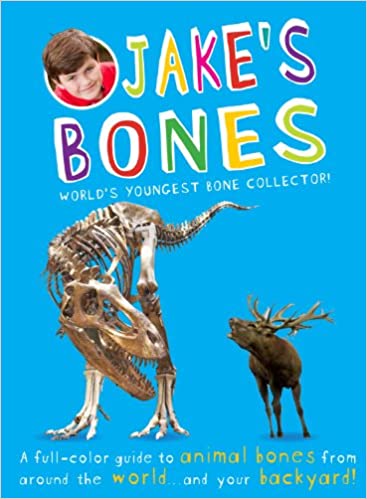
Jake’s Bones
Written by Jake McGowan-Lowe
Jake’s Bones is a fascinating children’s book that takes you around the world and even in your own backyard to
see the most amazing bones on the planet. Jake, an elementary-age author, captures the reader’s mind by telling everything from the biggest bones to the smallest bones and taking you back in time to look at dinosaur bones. Jake’s book is full of fun, and amazing facts about amazing animals. He’ll even help you make your own bone collection!
I highly recommend Jake’s captivating book for the elementary levels. If you don’t want to read about Jake’s python snake skull, you can read about Vulpy, his fox skeleton. Jake’s book is full of fascinating information discovered and written by a kid for kids! Jake’s fully colored guide to animal bones is sure to please any child’s mind.
— Reviewed by Teagan Allen
(12 years old), student in Upper Elementary, NewGate School, Sarasota, FL
Nuts for Coconuts
Written by
Christinia Cheung & Han Tran
Illustrated by Tong Wu
The authors have created a book that extols the virtues of the coconut tree in rhyme. They bring in not only the many uses for all parts of the tree but also the parts of the world where these plants thrive. The book is filled with facts and information about coconuts and the tree itself.
Rhyming can be fun. However, I do find that in a book such as this, it seems very contrived and sometimes difficult to concentrate on the ideas that are being presented. Children will most likely enjoy the rhyming. I do suggest that the reader practice a few times reading the book out loud before reading it to children so that it can be read smoothly without losing the context of the words.
The illustrator uses rich colors and wonderful detail in the pages of this children’s book. The illustrations help children to see the products, the landscapes, and the cultures within which the coconut is grown and used.
Cousins
by Linda Chalmer Zemel
The author describes in a very simple way the family relationship of cousins: who they are in relation to you, your parents, and your grandparents. She beautifully explains the ‘specialness’ of cousins. This will be a great start for future genealogists!
Part of the charm of this children’s book is that the illustrations are classic pieces of art. On the left-hand page of the book is the author’s text, and on the right-hand page is a print of artwork. For example: Girl with Watering Can by Auguste Renoir; The Artist’s Garden at Argenteuil by Claude Monet, or American 19th Century Schooner. I found it a little difficult to make the association between the artwork and the text. However, I can see that discussion could be generated around the text and art regarding the people or places depicted in the illustrations.
Over the years, I’ve noticed that young children have a sensitive period for trying to figure out family
relationships. Their sense of belonging and community is part of their social/emotional development. This book, in an easily understood way, will help children sort out at least one aspect of family relationships.
Tomorrow’s Child/ April 2014
How to Address Challenging Behaviors in the Montessori Classroom
To continue reading, you will need to choose a subscription plan.
Featured
-
 Montessori Family Alliance School Group Membership (Print & Digital 2026 1/2 year pricing)
Original price was: $30.00.$15.00Current price is: $15.00.
Montessori Family Alliance School Group Membership (Print & Digital 2026 1/2 year pricing)
Original price was: $30.00.$15.00Current price is: $15.00.
-
The Montessori Way, Revised and Expanded: An Education for Life; A Comprehensive Guide for Parents and Teachers
$25.00
-
The Montessori Child: A Parent's Guide to Raising Capable Children with Creative Minds and Compassionate Hearts (The Parents' Guide to Montessori)
$20.00
-
The Montessori Toddler: A Parent's Guide to Raising a Curious and Responsible Human Being (The Parents' Guide to Montessori)
$20.00
-
Montessori in Action: Building Resilient Montessori Schools 1st Edition
$29.95