


How Important Are the Exercises of Practical Life
To continue reading, you will need to choose a subscription plan.

The Child’s Power of Love
To continue reading, you will need to choose a subscription plan.

Practical Life in Elementary and Beyond!
To continue reading, you will need to choose a subscription plan.
Chores, Allowances, and Paid Work – Part 1
To continue reading, you will need to choose a subscription plan.
Practical Life for Elementary and Beyond
To continue reading, you will need to choose a subscription plan.
Summer Ideas
To continue reading, you will need to choose a subscription plan.
2018 An Interview with Four Montessori Seniors
To continue reading, you will need to choose a subscription plan.

The Child’s Power of Love
To continue reading, you will need to choose a subscription plan.

School’s Out, Now What?
 By the time you are reading this issue of Tomorrow’s Child magazine, schools in the US and elsewhere will be winding down for the year. So what’s on tap for you this summer? Many of us have to work, even during the break, so that doesn’t always allow for lots of free time. Some schools even go year round and don’t get this time off, so what can you do as a family that is fun and engaging?
Here are some suggestions for summer activities:
Have just a day here and there to spend together?
Why not open up a map of your area and let your children either point to a location or choose where they might want to go and then research, together, what might be fun to do and see.
It can be as low key as going to a beach or a national park, hiking, or having a picnic on the banks of a river and fishing. It can be exploring caverns or even seeing if there’s a local history house to learn more about the community in which you live.
Camp out in your own backyard.
Build a tree house or fort together. Plan a pass-a-dish neighborhood day. Have some lawn games planned and maybe a great family movie or campfire with a sing-along? It might sound a bit old-fashioned, but make it fun by involving your children. Let them help with invites, food planning, movie selection, and setting up the games. Let them learn early on how to be great hosts and hostesses. Then make sure they understand the cleaning-up process is as important as it is in their classrooms.
Have a full weekend to spare?
Expand your map search and stay overnight. Every state has activities, festivals, nature preserves, camping grounds, or historical locations to explore.
For vacations that are longer in duration.
Once again, provide your children with the opportunity to have a say so in the planning process. Let them work out the budget with you. Let them see how you decide how much a hotel will cost, along with gas, airfare, entrance to events, food, and souvenirs.
Many of us went camping for the summer. Some of us were fortunate enough (depending on how you viewed it) to even go to sleep-away camps, where we learned all kinds of wilderness skills, appreciation for nature, art, music, theatre, athletics—and even how to get along.
Need to stay closer to home?
Day camps that run from a week to longer are other options. Search in your area for programs through your museums for more artistic-related camps, the local YMCA, or even your local library.
The point is to actively engage with your children by spending quality time together. If, in the process, you all happen to learn something that broadens your world, great.
Tomorrow’s Child/ April 2018/ Pg 37

RESILIENCY Our Journey after Two Cat-5 Hurricanes
To continue reading, you will need to choose a subscription plan.
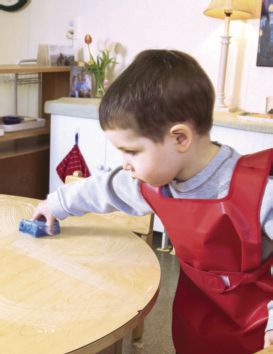
A Tour of a Montessori Classroom: Lessons in Practical Life Skills
To continue reading, you will need to choose a subscription plan.

Adolescents:Secondary Internship Program
Why Have An Internship Program?
Maria Montessori’s wisdom about the adolescent revolved around her observation of their need for meaningful work. She encouraged educators to get students outside the classroom and into appropriate adult experiences as much as possible during adolescence. As one way to put her wisdom into practice, all students in the Secondary Program at NewGate experience an internship for one week every year.
The faculty at NewGate School works to guide each student to choose a meaningful internship that presents him/her with an opportunity to take advantage of local community resources and a chance to work with positive role models and community experts. As a form of independent study, students enjoy the opportunity to engage in a learning experience that enhances classroom learning and extends beyond the traditional four walls of the classroom.
An internship is an excellent tool for testing out a career interest and giving students first-hand knowledge of a particular professional field. Adolescents gain real-world experience while learning how to conduct themselves in a professional workplace environment. They observe firsthand how skills related to decision-making, problem-solving, teamwork, and technology are employed on the job. Students report that an internship helps them to value themselves and their abilities, gain confidence, and reflect more on their future. Moreover, an internship experience can help when the time comes to:
Apply to colleges or technical school —students can detail their experiences in their application essays. select a college major—the opportunity to investigate a possible career choice permits more informed decisions.
Seek an interesting job—an internship can help one secure references for future jobs and may open up opportunities for stimulating summer work. By the time students graduate from NewGate, they have participated in six different internships. The internship experiences grow more sophisticated as a student matures from a young adolescent of 12 to a young adult of 18. Overall, the internship experience is a highlight and a hallmark of our Secondary Program.
What Is Involved In The Secondary Internship Program?
Pre-Internship Week:
Finding and Securing a Placement
NewGate provides students and their families with a list of area organizations that NewGate students have worked with successfully in past years, in addition to other organizations in the area that may take students for internships. Students and parents review the list to generate ideas for organizations that would be a good fit for them.
If a student has a desire to work somewhere that is not already on the list, he/she gets approval from the faculty to pursue placement at the given organization. Middle school students pursue their internships locally, while high school students who want to travel outside the city or state for their internships can develop a proposal in writing to gain faculty approval.
Students develop a list of their top choices for placement and detail why they are interested in the organization and what they hope to get out of the experience. The faculty, student, and parents then begin working to find a host for the student at the chosen organizations.
Preparation Workshops
Students continue to prepare for their placement by spending time in workshops with faculty and visiting professionals for resume writing, business letters, interviewing, thank-you letters, and professional etiquette while on the job.
During Internship Week:
Parents and/or student drivers are responsible for the transportation arrangements to and from the host organization.
Students complete all appropriate tasks as requested at the placement.
Students write a personal reflection about their work each day.
A NewGate faculty member visits each student at his/her host organization at least one time throughout the week.
Post-Internship Week
Students write and send thank-you cards to their host organizations.
Students write a review of their internship experiences for the Internship binder. These reviews are a resource for students the following year during the placement search.
Students prepare a portfolio of their internship experience that includes all the work from before, during, and after the internship experience: placement ideas; resume; interviewing notes; business letters; thank-you notes; daily reflections; pictures of the work experience; the review, etc.
Students share their experiences and new knowledge in oral presentations to the rest of the school community.
Tomorrow’s Child/ November 2017/ Pg 30

Harvard University’s Top 10 Home Energy Saving Tips
The Sustainable Community Leaders Program provides a unique opportunity for residents living in Harvard University Housing to have a direct and meaningful impact on the University’s greenhouse gas reduction goal and sustainability efforts. You don’t have to go to Harvard to implement these ten simple ways to help our planet (and your budget).
1. Swap CFLs for LEDs
Swaps out all incandescent and CFL bulbs for LEDs in table, desk, and floor lamps. They are 90 percent more efficient, contain no harmful gases, and can last up to 20 years!
2. Change laundry settings
Wait until you have a full load and then do your laundry on cold wash (BRIGHT COLOR SETTING). It not only extends the lifespan and vibrancy of clothing, it also saves 90 percent of the energy that would have been used to heat the water.
3. Clear vents
Have you ever felt that the temperature in your house doesn’t match your thermostat? Take a look around. You may be blocking your air registers! It may help to move some furniture and large items so the air can circulate more freely. This action may improve your heating and air conditioning system efficiency by 25 percent.
4. Unplug devices
Do a routine check to make sure chargers, adapters, and small appliances are all unplugged before you leave your home. Phantom energy is the electricity that electronics pull from the outlet while plugged in, even when the device is off. It can waste as much as 10 percent of your home’s energy.
5. Adjust temperature settings
Adjust your thermostat for when you are away from home versus when you are at home. Keep the fan setting to LOW. This creates a space for optimal comfort, health, and productivity.
6. Turn it off
Turn off EVERYTHING before heading out the door: lights; bathroom vents; computer; coffee maker; TV.
7. Make it easy
Plug in all your electronic equipment into a central power strip and then just hit the switch!
8. Manage power settings
Make sure your computer isn’t wasting any unnecessary energy. Set your power management settings to Energy Saver Mode and get rid of the screen saver. This cuts energy consumption and prolongs the computer’s
battery life!
9. Use your blinds and shades
Use daylight wisely, by keeping drapes open during the day to let in the warm rays or closed to keep out the sun if you are in a hot climate.
10. Take the stairs
Take the stairs instead of the elevator. Good for your health and a good way to save some kilowatts!
Retrieved from:
https://green.harvard.edu/tools-resources/green-tip/top-10-home-energy-saving-tips
Tomorrow’s Child/ November 2017/ Pg 27
Webinar: Understanding Your Child: Sensitivities Birth to Six Years Old
To continue reading, you will need to choose a subscription plan.
Understanding Your Child: Helping Her be the Best that She Can Be
To continue reading, you will need to choose a subscription plan.
Webinar: How to Teach Your Child a New Skill
To continue reading, you will need to choose a subscription plan.
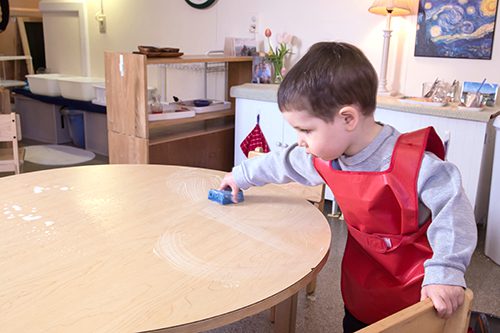
DEAR CATHIE: Why Is Scrubbing The Table Important?
To continue reading, you will need to choose a subscription plan.
Featured
-
 The Montessori Way, Revised and Expanded: An Education for Life; A Comprehensive Guide for Parents and Teachers
$25.00
The Montessori Way, Revised and Expanded: An Education for Life; A Comprehensive Guide for Parents and Teachers
$25.00
-
The Montessori Child: A Parent's Guide to Raising Capable Children with Creative Minds and Compassionate Hearts (The Parents' Guide to Montessori)
$20.00
-
The Montessori Toddler: A Parent's Guide to Raising a Curious and Responsible Human Being (The Parents' Guide to Montessori)
$20.00
-
Montessori in Action: Building Resilient Montessori Schools 1st Edition
$29.95
-
Bulk Order, 30 Copies of Montessori for Every Family: A Practical Parenting Guide To Living, Loving, And Learning
Original price was: $600.00.$510.00Current price is: $510.00.


Products
-
The Montessori Way, Revised and Expanded: An Education for Life; A Comprehensive Guide for Parents and Teachers
$25.00
-
The Montessori Child: A Parent's Guide to Raising Capable Children with Creative Minds and Compassionate Hearts (The Parents' Guide to Montessori)
$20.00
-
The Montessori Toddler: A Parent's Guide to Raising a Curious and Responsible Human Being (The Parents' Guide to Montessori)
$20.00
-
Montessori in Action: Building Resilient Montessori Schools 1st Edition
$29.95
-
Bulk Order, 30 Copies of Montessori for Every Family: A Practical Parenting Guide To Living, Loving, And Learning
Original price was: $600.00.$510.00Current price is: $510.00.