

The Child’s Power of Love
To continue reading, you will need to choose a subscription plan.

Reflections On Community
To continue reading, you will need to choose a subscription plan.
Dear Cathie
To continue reading, you will need to choose a subscription plan.

As We Send Ben Bogard On His Way
To continue reading, you will need to choose a subscription plan.

10 Practical Life Skills To Teach Your Child By Age 10
To continue reading, you will need to choose a subscription plan.
Webinar: Empowering Choices
To continue reading, you will need to choose a subscription plan.
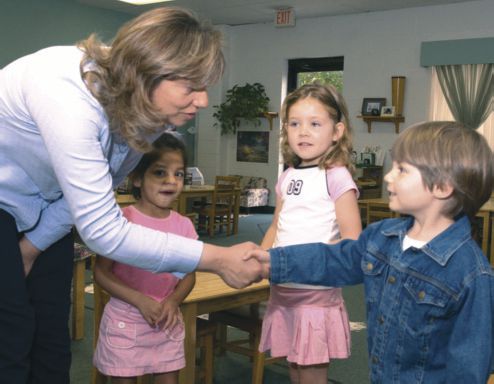
A Tour of a Montessori Classroom: Lessons in Grace, Courtesy, & Community Service
To continue reading, you will need to choose a subscription plan.

Adolescents:Secondary Internship Program
Why Have An Internship Program?
Maria Montessori’s wisdom about the adolescent revolved around her observation of their need for meaningful work. She encouraged educators to get students outside the classroom and into appropriate adult experiences as much as possible during adolescence. As one way to put her wisdom into practice, all students in the Secondary Program at NewGate experience an internship for one week every year.
The faculty at NewGate School works to guide each student to choose a meaningful internship that presents him/her with an opportunity to take advantage of local community resources and a chance to work with positive role models and community experts. As a form of independent study, students enjoy the opportunity to engage in a learning experience that enhances classroom learning and extends beyond the traditional four walls of the classroom.
An internship is an excellent tool for testing out a career interest and giving students first-hand knowledge of a particular professional field. Adolescents gain real-world experience while learning how to conduct themselves in a professional workplace environment. They observe firsthand how skills related to decision-making, problem-solving, teamwork, and technology are employed on the job. Students report that an internship helps them to value themselves and their abilities, gain confidence, and reflect more on their future. Moreover, an internship experience can help when the time comes to:
Apply to colleges or technical school —students can detail their experiences in their application essays. select a college major—the opportunity to investigate a possible career choice permits more informed decisions.
Seek an interesting job—an internship can help one secure references for future jobs and may open up opportunities for stimulating summer work. By the time students graduate from NewGate, they have participated in six different internships. The internship experiences grow more sophisticated as a student matures from a young adolescent of 12 to a young adult of 18. Overall, the internship experience is a highlight and a hallmark of our Secondary Program.
What Is Involved In The Secondary Internship Program?
Pre-Internship Week:
Finding and Securing a Placement
NewGate provides students and their families with a list of area organizations that NewGate students have worked with successfully in past years, in addition to other organizations in the area that may take students for internships. Students and parents review the list to generate ideas for organizations that would be a good fit for them.
If a student has a desire to work somewhere that is not already on the list, he/she gets approval from the faculty to pursue placement at the given organization. Middle school students pursue their internships locally, while high school students who want to travel outside the city or state for their internships can develop a proposal in writing to gain faculty approval.
Students develop a list of their top choices for placement and detail why they are interested in the organization and what they hope to get out of the experience. The faculty, student, and parents then begin working to find a host for the student at the chosen organizations.
Preparation Workshops
Students continue to prepare for their placement by spending time in workshops with faculty and visiting professionals for resume writing, business letters, interviewing, thank-you letters, and professional etiquette while on the job.
During Internship Week:
Parents and/or student drivers are responsible for the transportation arrangements to and from the host organization.
Students complete all appropriate tasks as requested at the placement.
Students write a personal reflection about their work each day.
A NewGate faculty member visits each student at his/her host organization at least one time throughout the week.
Post-Internship Week
Students write and send thank-you cards to their host organizations.
Students write a review of their internship experiences for the Internship binder. These reviews are a resource for students the following year during the placement search.
Students prepare a portfolio of their internship experience that includes all the work from before, during, and after the internship experience: placement ideas; resume; interviewing notes; business letters; thank-you notes; daily reflections; pictures of the work experience; the review, etc.
Students share their experiences and new knowledge in oral presentations to the rest of the school community.
Tomorrow’s Child/ November 2017/ Pg 30

Harvard University’s Top 10 Home Energy Saving Tips
The Sustainable Community Leaders Program provides a unique opportunity for residents living in Harvard University Housing to have a direct and meaningful impact on the University’s greenhouse gas reduction goal and sustainability efforts. You don’t have to go to Harvard to implement these ten simple ways to help our planet (and your budget).
1. Swap CFLs for LEDs
Swaps out all incandescent and CFL bulbs for LEDs in table, desk, and floor lamps. They are 90 percent more efficient, contain no harmful gases, and can last up to 20 years!
2. Change laundry settings
Wait until you have a full load and then do your laundry on cold wash (BRIGHT COLOR SETTING). It not only extends the lifespan and vibrancy of clothing, it also saves 90 percent of the energy that would have been used to heat the water.
3. Clear vents
Have you ever felt that the temperature in your house doesn’t match your thermostat? Take a look around. You may be blocking your air registers! It may help to move some furniture and large items so the air can circulate more freely. This action may improve your heating and air conditioning system efficiency by 25 percent.
4. Unplug devices
Do a routine check to make sure chargers, adapters, and small appliances are all unplugged before you leave your home. Phantom energy is the electricity that electronics pull from the outlet while plugged in, even when the device is off. It can waste as much as 10 percent of your home’s energy.
5. Adjust temperature settings
Adjust your thermostat for when you are away from home versus when you are at home. Keep the fan setting to LOW. This creates a space for optimal comfort, health, and productivity.
6. Turn it off
Turn off EVERYTHING before heading out the door: lights; bathroom vents; computer; coffee maker; TV.
7. Make it easy
Plug in all your electronic equipment into a central power strip and then just hit the switch!
8. Manage power settings
Make sure your computer isn’t wasting any unnecessary energy. Set your power management settings to Energy Saver Mode and get rid of the screen saver. This cuts energy consumption and prolongs the computer’s
battery life!
9. Use your blinds and shades
Use daylight wisely, by keeping drapes open during the day to let in the warm rays or closed to keep out the sun if you are in a hot climate.
10. Take the stairs
Take the stairs instead of the elevator. Good for your health and a good way to save some kilowatts!
Retrieved from:
https://green.harvard.edu/tools-resources/green-tip/top-10-home-energy-saving-tips
Tomorrow’s Child/ November 2017/ Pg 27
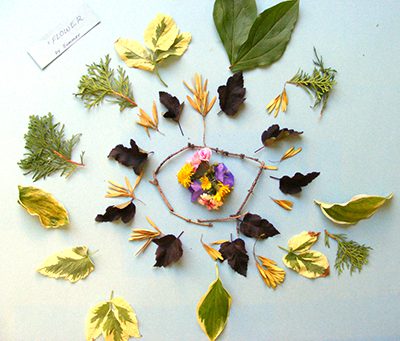
Sustainability: 12 Ways to Live More Sustainably
Every day we make choices in our lives that affect the environment, the climate, and other species. Here’s how you can ‘choose wild’ and reduce your environmental footprint to leave more room for wild animals and plants.
1. Think twice when shopping. Before you buy something new, ask yourself if you really need it. If so, consider buying gently used and look for minimal packaging.
2. Boycott products that endanger wildlife. Avoid places that sell products from threatened species, such as sushi restaurants that sell bluefin tuna, and look for products made from sustainable materials that don’t endanger the habitat.
3. Take extinction off your plate. You have three chances a day to reduce your environmental footprint by eating less or no meat. Eating locally sourced fruits and vegetables also lowers the amount of fossil fuel used to transport food over long distances.
4. Pay attention to labels. Choose Fair Trade certified goods and buy organic food whenever possible. If you’re a coffee drinker, look for “shade-grown” coffee.
5. Make sure big purchases have big environmental benefits. Look for the Energy Star label on home appliances and look for more fuel-efficient car models.
6. Be water-wise. Skip the bottled water. Conserve water by taking shorter showers, fixing leaky toilets, and choosing low-flow or low-water appliances.
7. Ditch the plastic. Cut down on plastic waste by shopping with reusable bags, ditching one-time-use water bottles, and avoiding products made from, or packaged in, plastic.
8. Drive less, drive green. Walk, bike, carpool, or use public transportation whenever possible. Combine errands to make fewer trips and keep your car in shape with regular tune-ups and tire inflations.
9. Choose a smaller family. With more than 7 billion people in the world, we’re not leaving much room for wildlife. We need to talk about human rights, overconsumption, and choosing a better future for wildlife, the planet—and us.
10. Green your home. Improve your home’s energy efficiency with adequate insulation, energy-saving windows, and a programmable thermostat. Call your energy provider to see if it offers free energy audits and efficiency incentives or knows of a company that does.
11. Choose renewable energy. If your state allows you to pick your electricity supplier, use a Green-e certified company. Explore the options—and tax credits—for installing solar in your home.
12. Use your voice and your vote. Vote for candidates with strong environmental platforms and urge them to pass policies that protect the environment and wildlife. Sign and share action alerts, and talk to your friends about endangered species protection and the need to address human population growth and overconsumption.
Learn more:
www.biologicaldiversity.org/population_sustainability
Facebook: Facebook.com/PopulationSustainability
Twitter: @choosewild
Instagram: @CrowdedPlanet
Retrieved from http://www.biologicaldiversity.org/programs/population_and_sustainability/sustainability/pdfs/12WaysToLiveMoreSustainably_factsheet.pdf
Tomorrow’s Child/ November 2017/ Pg 26
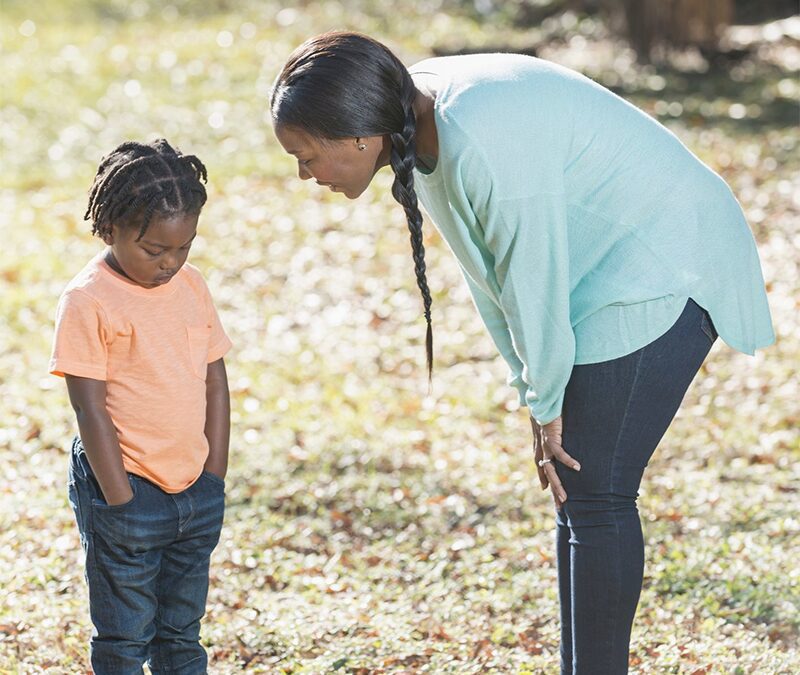
Setting Limits It’s Not too Late! The Hows & Whys to Setting Limits
What Are Limits?
Limits tell your family under what condition you are willing or unwilling to do something. They tell your family where you “draw the line.” They tell what you will or will not tolerate. Their purpose is to take care of you. Limits are not designed to control or manipulate someone else’s behavior. Here are three examples:
Example 1. A mother was playing basketball with her two teenage sons. The boys were getting competitive and soon the game wasn’t fun. Mother announced, “It is not fun for me when you two fight. When you are ready to make it fun again, come and get me. I’d love to play again.”
Example 2. Children need you to set limits so that they can recognize and respect other people’s limits. I was holding hands roller-skating with my daughter. She said in a very demanding tone of voice, “Skate faster!” This wasn’t the first time I had noticed that she was being demanded, so I said, “I am unwilling to have you talk like that to me. It makes me feel like not cooperating with you, and if you continue, I will skate by myself.”
Example 3. A daughter asked her mother to take her to the video store and rent a movie. Her daughter had already spent her allowance that week. Mom said, “I’d be willing to take you to the video store, but I am unwilling to rent a movie for you.” Limits give others important information about you to help them know what they can or cannot expect from you. They are about you, not about criticizing someone else’s behavior or about trying to make them act in a certain way.
Why Do Children Need Limits?
Children need you to set limits so that they can recognize and respect other people’s limits.
Limits provide a sense of security. When children don’t know your limits, they feel lost in an abyss. They feel confused and sometimes literally bounce around trying to find some.
Limits make children feel that we care about them. Children that are raised without limits often feel abandoned.
Children need limits to learn how to deal with conflict. What happens when someone tells me I have overstepped their limits? What happens when someone disrespects mine?
Children need limits to help them define themselves. Limits set by parents help children clarify their own limits because they have seen your model.
Limits help them to learn what is socially acceptable and what is not.
Children need to learn that if they go past a certain point, there will be consequences. Some of
them may be serious.
What Issues Need Limits?
You may want to set limits on the use of your belongings, TV watching, bedtime, your time, the use of profanity, mealtime, chores, care of pets. This is not a conclusive list. Make a list of your important issues.
How Do We Know When Our Limits Are Being Violated?
The best clue to determine whether or not your limits are being violated is by being in touch with your feelings.
If any of the following feelings sound familiar, you know that your limits are being dishonored or that you are not being clear about them:
I feel anger, resentment, imposed upon, smothered, taken advantage of, and/or abused.
I feel as if I am pulling more than my fair share of the weight.
I feel unappreciated.
I feel as if I am being divided between two people I love.
I feel taken for granted.
I feel like a taxi cab driver.
What about me?
Why Do We Have A Difficult Time Setting Limits?
Our ability to set and follow through with limit setting will be largely determined by how we were parented as a child. Setting limits may be difficult for you if you were in any of the following situations:
Not having any limits as a child, being unsupervised.
Being given messages, such as: Don’t make waves; Children are to be seen and not heard; You are being selfish.
If you were told it wasn’t “nice” to assert yourself.
If there was abuse in the home or at work that was mental, physical, emotional, sexual, drug or alcohol related.
If there was someone in your family that you had to give up your needs for because they were sick or disabled.
If self-sacrifice was modeled and expected of you.
If intimidation was used to motivate you.
If you don’t set limits because you don’t feel you deserve them.
If you feel guilty about your own actions such as, working too much or getting a divorce.
What We Do Instead Of Setting Limits?
Because we are afraid of creating conflict, we often choose one of the following behaviors rather than setting limits We are afraid the other person will get angry, leave us, or reject us. We may even feel that what we say or do will not make a difference anyway. Instead of directly setting limits, we sometimes indirectly handle these situations by:
Deny it (act or pretend as though it didn’t happen).
Ignore it and hope it’ll go away.
Talk yourself out of how you are feeling (I shouldn’t feel that way because of … ).
Make excuses for the other person’s behavior (he only said that because he was tired).
Ruminate about the issue (Going over and over the event in your mind, trying to make sense of it).
Blame someone else.
Blame yourself (if I had only done … he wouldn’t act this way).
Get even.
Hide behind righteousness (I’m above having those feelings).
Pretend that you don’t care.
Withhold your love or your communication.
What Can We Expect When We Start Setting Limits?
When you first start setting limits, you can expect that your children’s behavior will get worse. They will test you. They will try everything in their power to get you to go back to the way you used to be. So, make sure your seatbelt is fastened. You may be going for a ride!
Steps For Setting Limits
1. Honor your feelings. Remember, feelings are neither right nor wrong.
They just are.
2. Get clear about what you want. What you are and are not willing to do.
3. Present the information to your family member using an “I” statement. For example, “I am unwilling to wash clothes that are not in the hamper.” There should be no blame, shame, guilt, exaggerations, or complaining. Do this step as soon as possible to prevent an unnecessary build-up of resentment.
4. Be ready to ‘stick to your guns.’ Be consistent and follow through.
Tomorrow’s Child/ November 2017
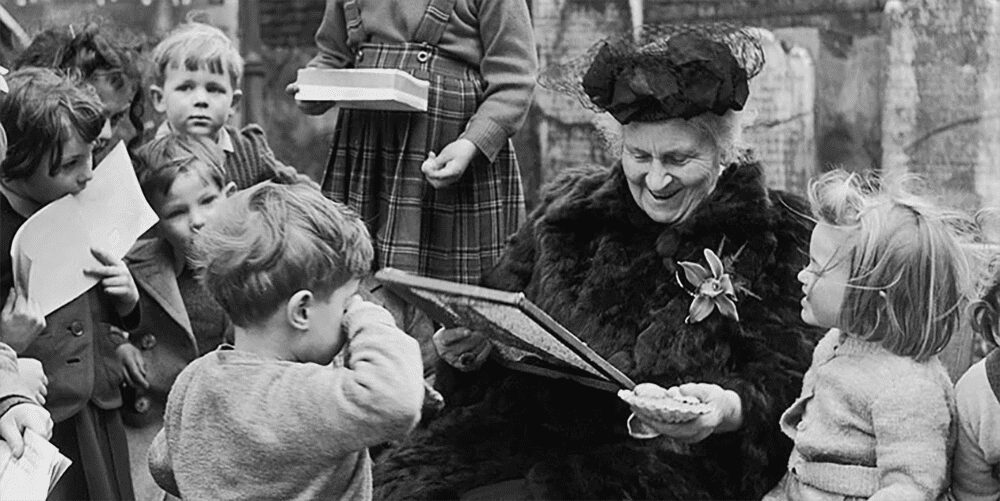
Montessori’s Gentle Approach To Discipline
Many parents believe that the word discipline means to punish. In reality, it means to teach.
In a Montessori-inspired home, parents are empathetic, caring, and respect children as real and separate human beings. However, children also need to develop a sense of empathy for others and must learn the rules of courteous everyday behavior.
To accomplish this, we need to help them develop a sense of self-respect with both compassion and respect for others. Since we cannot always be with them, we need to teach them to act with honor and integrity whether or not someone is watching. Since we can’t prepare them for every situation that they will face over the years, we need to teach them how to apply general rules of kind behavior to new situations.
Babies and Toddlers
Infants and toddlers don’t respond to discipline, rules, and punishments, but they do respond to unconditional love. They are not yet at a stage where they know right from wrong. They live in the moment, when they want something, they want it right now!
One secret to living happily with very young children is to go out of your way to attempt to understand what they are trying to communicate when they cry. Certainly, don’t take it personally! Even though, in the heat of the moment, it may feel as if your baby is being deliberately defiant, crying is one of the very few ways that young children can use to communicate. It can mean that they are hungry or that they need to be burped, they may be in an uncomfortable position, or they may need a diaper change.
Remember, babies are people too! They can become frightened. They may be bored or lonely. They may have had a bad dream. Watch and listen carefully. If you pay attention to your children, even when they are very young, ultimately, you will be able to determine what they are trying to tell you. Just as most parents learn to recognize the sound of their baby’s cry, we can learn to recognize the way they cry to communicate different emotions.
At this stage, their behavior is impulse-driven, with a limited ability to make the choice to follow ground rules. While you always want to model good behavior and explain why a given behavior is okay or not okay, don’t be surprised when your words go in one ear and out the other.
In a climate of love and respect, toddlers slowly develop the ability to understand our words and will begin consciously to respond to them. Eventually, they begin to imitate our actions when we model polite behavior and will begin to cooperate, in part, to make us happy. Most toddlers have good days when they are cooperative and angelic, and days when they seem to be testing us constantly.
We want to take our children beyond simple obedience, where they do what we ask in hope of a reward or to avoid something unpleasant. We want to help them to develop an internalized sense of right and wrong and courteous behavior. This requires that they eventually develop a social conscience and a sense of self-discipline. This develops slowly as children mature. For better or worse, all parents are moral educators. Our goal is to teach our children the values that we hold dear and teach them in such a way that our children live by them.
Children that achieve this goal develop a high level of self-respect. They also tend to find it much easier to establish strong friendships. They tend to respect the rights of others and are generally pleasant to be around.
Don’t Punish, Teach!
As children get older, do not take it for granted that they will automatically know how to handle a new situation. It’s always better to teach them the right way to act rather than to wait for them to misbehave and then scold, threaten, or punish. If your children do act inappropriately, stop their misbehavior calmly, but firmly, and show them how to handle the situation in a socially acceptable way.
Children have the same emotions as adults, but they don’t instinctively know how to express frustration and anger appropriately, nor do they automatically know how to solve conflicts. As parents, we have to teach our children how to get along with other people.
Montessori teachers call these the ‘Lessons in Grace and Courtesy.’ These lessons set a tone of respect and kindness. We teach our children how to shake hands, greet a friend, and say goodbye. We teach them how to ask politely to join other friends who are playing and how to respond if they are rejected.
We teach them how to interrupt someone who is busy and how to tell someone ‘no thank you’ politely. We teach them how to speak indoors, so their shouts don’t hurt our ears, and how to play without damaging anything or hurting someone. We show them how to offer a sincere apology and how to resolve conflicts peacefully.
To teach a lesson in grace and courtesy we explain a situation in simple terms and demonstrate the right way to handle it. Then we have our children practice with us, role-playing the sequence of events. Most children enjoy these lessons if they are kept short and sweet, and if they have not been embarrassed or threatened because they made a mistake.
For example, if your children tend to yell at the top of their lungs inside the house, you obviously need to give them a lesson in how to keep the indoor noise to a level that does not disturb other people.
First, as it is happening, instead of scolding, instruct them firmly, but politely, to please speak softly in the house.
Wait for a moment when the situation is not emotionally charged and neither you nor the children are upset about the behavior. Then, give them the lesson on the right way to speak indoors.
Rather than giving them a lecture, speak to them in very simple language and show them what you mean. For example, you might say:
“I want to talk to you about indoor voices. When we are outdoors, it’s so big, and sometimes we need to yell so we can hear each other when we’re far away. Outdoors, it does not hurt our ears when someone talks loudly, unless they do it right in our ear. That hurts! So outdoors, we can use our outdoor voices.
But when we are indoors, it hurts our ears and bothers the neighbors, too, if we talk too loudly. Indoors, we use our indoor voices.”
Now show them what you mean. Talk very loudly, and ask, “Was I using my indoor voice or my outdoor voice?” Talk normally. “What do you think? Was I using my indoor or my outdoor voice? Indoors, we use our indoor voices. Outdoors, we use our outdoor voices.”
You can teach all sorts of lessons this way, such as saying “please” and “thank you” or closing doors without slamming.
Practice with each other. Some families have the ‘manner of the week’. They introduce a new rule of everyday courtesy and practice it with one another over meals and around the house.
Other Children and Adults Are Role Models, Too
To teach your children good manners, they need to see that their parents, older siblings, and friends follow them consistently as well. The example that we set through our own behavior is more powerful than anything we say. Especially when they are very young, children are absorbing everything they see us do, and soon they begin to talk and act just like us. We are their role models.
Their brothers and sisters, grandparents, friends and playmates, babysitters, and preschool teachers play a similar and very powerful role as well. Knowing that your children will be influenced profoundly by the people around them, choose wisely the children and adults with whom your children will spend time.
Especially with children under age six, avoid loud, chaotic situations where large groups of children are over-stimulated and generally behave rudely, such as indoor children’s amusement parks with lots of expensive and noisy games and rides.
Choose your child’s play-dates thoughtfully. If your children spend time with a family that allows them to create havoc in their home, tearing up the living room, knocking over lamps, and shoving one another around in rough-and-tumble play, don’t be surprised when your children bring that behavior home with them. Pay attention to the way prospective play-date parents supervise their children. Do they ignore them or talk on the phone amidst chaos? It is not your place to judge other families, but it is your obligation to make good choices for your children.
Positive Discipline: Establishing a Climate of Love
Children are actually so sensitive and impressionable that we should monitor everything we say and do, for everything we say and do will be engraved in their memories forever.
Our children love us with a profound affection. When they go to bed, they want us to stay with them as they go to sleep. When we work in the kitchen, they often want to help. When we sit down to dinner, they want to join us. We may worry that we’ll spoil them if we listen to their pleas, but we shouldn’t. They only want us to pay attention to them. They want to be part of the group.
Children are extremely sensitive to the emotional climate within the family. They love us and basically want us to be pleased with them. This doesn’t mean that they will always behave.
Why Children Test Our Limits
Every child will test the rules to some degree. In fact, most acts of testing parents are a normal part of the child’s process of growing up.
When children test adults, it is often their way of expressing feelings that they don’t understand, and from our responses, they gradually learn how to handle their emotions appropriately. By testing the limits, they learn that we really care about certain ground rules of grace and courtesy in our relationship. In acting out, they are taking their first tentative steps toward independence, attempting to demonstrate that we don’t control them completely.
Agree on your family ground rules and get them written down, where both parents can refer to them. Teach your children how to do the right thing rather than focusing on their infractions.
Family Ground Rules
In the Montessori-inspired home, there are normally just a few basic ground rules:
Be kind and gentle.
Treat everyone with respect.
If you use something, put it back correctly when you are done.
If you break something, clean it up.
Tell the truth and don’t be afraid to admit when you make a mistake.
You should be absolutely clear in your mind about your family ground rules.
Explain your family ground rules positively, rather than as prohibitions. Instead of saying, “Don’t do that!” ground rules should tell children what should be done.
Teach your children how to follow the family ground rules as if you were teaching any lesson in everyday living skills and grace and courtesy.
Model the same behaviors that you are trying to encourage in your children.
Consciously try to catch your children doing something right—reinforce and acknowledge even small steps in the right direction. Don’t wait until they have mastered every new skill. Encourage them along the way.
When your child is breaking a ground rule, there are several things you can do other than scold, threaten, or punish.
You can redirect them by suggesting a more appropriate choice.
You can remind them of the ground rule and politely, but firmly, ask them to stop.
If the event is not emotionally charged, you can calmly re-teach the basic lesson about how to handle such situations.
Be consistent!
If you can’t bring yourself to reinforce a rule again and again, it shouldn’t be a ground rule at your house.
A few good rules are much better than dozens of rules that are often ignored.
Why We Don’t Use Threats or Punishments
Threats and punishments are not good tools to get children to behave. While they tend to produce immediate results, they are rarely long-lasting. They only work as long as the person being threatened cares. Many children who respond to threats and are shaken by punishments are anxious to please us and win back our love. On the other hand, when children are angry or are asserting their independence, they often act out and don’t care if they are punished. Punishment is simply not as effective as people tend to believe.
Teach children to do things correctly and emphasize the positive rather than using insults and anger. It’s not always easy. Above all else, try never to ask your children unanswerable questions, such as, “How many times do I have to tell you … ?” to which the appropriate response would be, “I don’t know, Dad! How many times do you have to tell me?” If you ask a silly question, you’re likely to get a silly answer.
Children can correct their own mistakes
Many parents and teachers believe that they can shape a child’s personality and future through strict discipline, but children carry within themselves the key to their own development. Their early attempts to express their individuality are hesitant and tentative. Our children think that adults are all-wise and all-powerful. They are easily overwhelmed by our best intentions. Our efforts to protect children from mistakes that seem so obvious from our perspective tend to frustrate children about the process of learning for themselves about life.
Our goal should be to help children become mature, independent, and responsible. Unfortunately, as parents, we sometimes tend to overprotect our children, not realizing that they can only learn about life through experience, just as we did.
We want to help our children learn to live in peace and harmony with themselves, with all people, and with the environment. We work to create a home in which our children can learn to function as independent, thinking people. To succeed, we need to treat them with respect as full and complete human beings, who happen to be in our care. Our children need to feel that it is okay to be themselves.
Children must feel our respect; it is not simply enough to say the words. If children believe that they are not living up to their parents’ expectations, that their parents are disappointed in the people that they are becoming, there is a very good chance that their lives will be emotionally scarred.
Cutting down on the word “no”
Sooner or later, every child will stubbornly say No, I don’t want to! This is the classic power struggle that starts in the toddler years and, in many cases, continues through adolescence. Many people call the toddler stage the ‘terrible twos,’ but they don’t have to be—not with two-year-olds nor with older children.
Power struggles start in situations where parents and children are each determined to get their own way and are not willing to back down. Underneath, each feels frustrated and threatened. Parents feel that their children are directly challenging their authority. Children, on the other hand, in situations like this, are feeling generally powerless and are attempting to assert their autonomy and establish more of a balance of power in their relationship.
Here are some strategies that may work for you to reduce the number of power struggles and the word No! in your relationships with your children.
Give your children choices. Children desperately long to feel powerful and resent feeling powerless. Whenever you can, look for ways to let your children make a choice between two equally acceptable alternatives. Would you like water or apple juice with dinner tonight?
Teach your children to say no politely. Mom, I really do not feel like doing
that now.
Remember that the secret is to speak to them firmly and kindly.
Remember Robert Heinlein’s golden rule of family life: “Kindness and courtesy are even more important between husbands and wives, and parents and children, than between total strangers.”
Look for ways that allow you to back down gracefully from a power struggle without simply giving in. Often, through compromise, both you and your children can get most, if not all, of what you want. “Mom, I have so much homework and an essay to write. Do I have to help with the dishes?” Mom responds, “Yes darling, we all have to help clean up, but working together, it will only take a few minutes. Would you like my help in planning the outline of your essay before you begin?”
Many power struggles seen in some homes are cut down to a minimum simply by teaching your children how to be more independent and giving them meaningful levels of independence and responsibility. This tends to make children feel powerful and grown-up.
Preventing some of the stress in children’s lives
Do not over-schedule your children
Many families try to do too much. Sometimes it is unavoidable, but think long and hard before you sign your child up for dance lessons, baby gym, or any other prescheduled classes for young children. Racing from one scheduled activity to another raises everyone’s stress level and sets the stage for temper tantrums. Allow enough time so that you will not have to race to meet a deadline.
Look for patterns in your children’s behavior
Often there are patterns in family life. If your child tends to have a tantrum when you go shopping, why not leave her with her other parent, a grandparent, or a babysitter?
Talk things through in advance
Children do best when they know their limits in advance. For example, if you are going to the store and your children want to buy a toy, tell them in advance what you will agree to and stick with it.
Resolving Conflicts
In Montessori classrooms, the Peace Table is a child-sized table, a plant, a bell, an artificial rose, and possibly a candle. Two children who are having a disagreement decide to retreat to the Peace Table to solve their problem. This can take place at home as well.
Sometimes, children may not remember, and the suggestion might come from the parent or an older brother or sister who, observing the disagreement, might bring them a peace rose (an artificial long-stemmed rose) with the suggestion that they solve their problem at the Peace Table.
Once arrived at the table, a certain procedure ensues. The one who feels wronged places her hand on the table, indicating that she wants to have her say uninterruptedly. The other hand she places on her heart, indicating that she speaks the truth. She then looks her classmate in the eye, speaks her name, and proceeds to explain how she feels, “Sarah, I felt very angry because…” and continues to state why she feels that way, e.g., “because you didn’t let me play with you!”
She then proceeds to state what she wants to see happen to resolve the conflict: “And I don’t want you to do that ever again if you want to be my friend!”
Now that she has stated her case and opened the door for further discussion, she withdraws her hand from the table and from her heart and gives the other child a chance to respond.
The second child proceeds that same way, placing her hands on table and heart, looking the first in the eye, and responds:
“Emily, I feel unhappy that you are angry. I did not mean to hurt your feelings.”
With that, she is finished and withdraws her hands. Now it is the first child’s turn to agree or disagree, in any case, to continue the dialogue until they reach some kind of agreement, even if that means that they disagree. At least they are talking, without yelling, screaming, and blaming. They want to solve the problem. When they have reached an agreement, they ring the bell to let the rest of the class or family know.
In case they cannot come to a positive conclusion, they may ask for a mediator. This may be an older sibling/classmate or a parent/teacher, who has to remain impartial and to listen well.
However, if the problem or conflict is too involved, then one of them may ask for a class or family council, where the entire class or family sit down in a circle, listens to first one, then the other person’s side of the story contributes what they can to it either as facts of what they have seen or heard, or as ethics, right and wrong, or in perspective to rules upon which all have agreed upon previously.
The core experience the children gain from these procedures is that it is necessary to resolve disturbances honestly and with goodwill to maintain an authentically harmonious and cooperative atmosphere. n
Tomorrow’s Child/ November 2017

Letter from the Editor
It has been a long, challenging few months for many of us in the Americas and around the world. Along with an unusually active and violent hurricane season, earthquakes, wildfires, and flooding, we have watched in horror as gun violence, terrorism, and the threat of nuclear war have taken a very disturbing uptick.
In this issue, we have included some information on helping children cope with the aftermath of disasters, natural and human-made. We have also included some information on environmental sustainability because we all need to pay attention, even if it no longer seems to be a priority project for all leaders of the world.
The voices and efforts of Montessori parents, teachers, and students are more important now than ever. Without action, the words to victims and survivors, that they “are in our thoughts and prayers” are empty. This strung-together expression of condolence no longer provides comfort; instead, in my opinion, it has become an over-used excuse for the inability or unwillingness to take personal and governing responsibility.
What we do and say matters to the children in our lives.
Be their voice.
Peace,
Joyce St. Giermaine, Editor
PS: For those of us living in the US, should you want to know where to start, here’s a link to the people who represent you at the state and national level: https://www.usa.gov/elected-officials.
PPS: For many years, we’ve provided a free print subscription to every school in our database within the US and Canada. To help with saving some trees, we are discontinuing this practice and encourage those schools that wish to continue reading our magazine to consider ordering a membership.
Tomorrow’s Child/ November 2017

Book Review: Ido in Autismland / Climbing Out of Autism’s Silent Person
To continue reading, you will need to choose a subscription plan.
Understanding Your Child: Helping Her be the Best that She Can Be
To continue reading, you will need to choose a subscription plan.
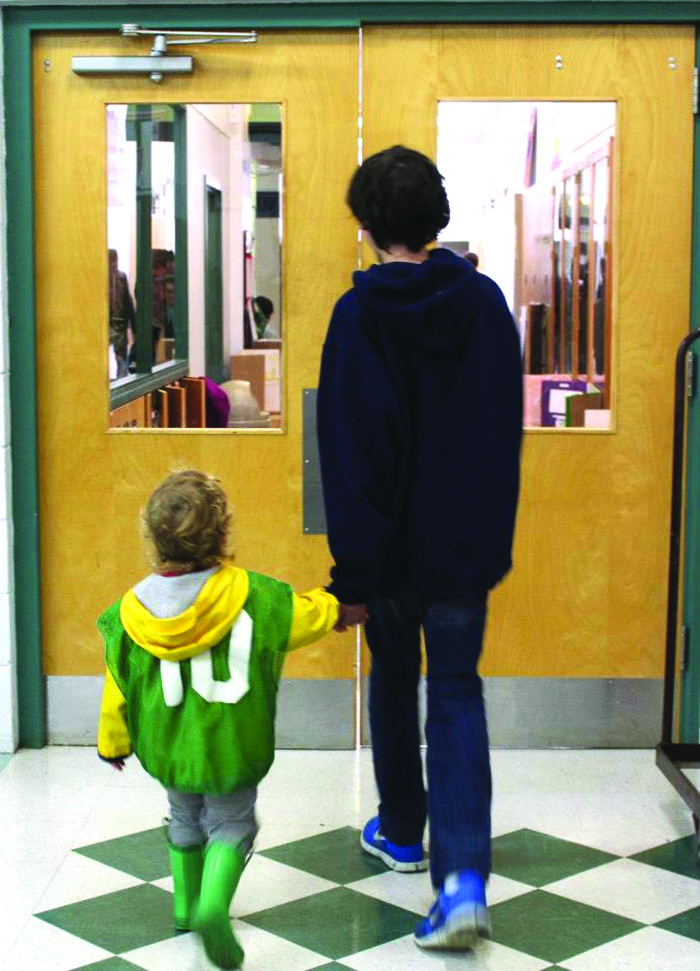
Montessori Journey: Our First Day
I remember clearly the crunch of the gravel under the tires as I pulled into the NewGate parking lot for the first time. Dylan was eighteen months old and I was in the middle of a divorce. We had never spent a day apart, and I was starting a new job. I didn’t know it then, but walking into Ms. Lauren’s classroom that day would unfurl a thread that would weave itself so indelibly into the tapestry of our lives that, nine years later, I’m still hearing the same gravel crunch under my tires every day.
It was rough leaving him. He reached for me from Ms. Lauren’s arms, his face smeared with tears. She was calm and authoritative, urging me to go. It will be better for him, she said. For the first time ever, I ignored his pleas. I put my faith in her and Montessori, and I left my crying child in her arms and walked away. It was hard, but it was probably the best decision I ever made for him.
I’m not going to lie, drop-off was tough for a while; we both had difficulty adjusting to being apart. I can’t tell you how many times during the day I had to suppress the urge to call the school to make sure he was alive. But day-by-day, soothed by Lauren’s calm authority, Dylan and I settled into this new routine and began to thrive in our new environments.
Before long, Dylan was dismissing me with a quick kiss and hug and disappearing into the fold of his classroom each morning. To this day, I am captivated by the sight of a smoothly running Montessori classroom—
everything so tiny and orderly—small children working with a focus most adults don’t often display.
I learned that, while from the outside a Montessori classroom may seem to lack the structure you’d expect to see in a traditional classroom, the structure of a Montessori classroom is in the planned environment. Each classroom is carefully crafted and structured so that the children can follow their interests and foster their own independence. I began to see my ‘helpless child’ become capable in ways previously unimaginable. In his classroom, he would prepare a snack for himself and his friends, then carefully wipe the table and dishes. He could select a lesson from among the dozens on the tiny shelves and then work quietly at it for long stretches of time.
Lauren taught me ways to be more Montessori at home. I put his cereal, snacks, and dishes in low cabinets at home, and watched, amazed, as he poured his own cereal the next morning. I organized his toys onto shelves so that he could see and reach everything. We had fewer meltdowns, we had more peace.
Montessori made its way into our home in other ways, too. For instance, Dylan started to tell me sternly, No, thank you! (in a tone remarkably similar to Ms. Lauren’s) anytime my suggestions or behavior deviated from what he found to be acceptable. “Dylan, stop jumping on the couch,” “No thank you, Mommy!” “Dylan, please put on your pajamas” “No thank you, Mommy!” Lauren laughed when I asked if she knew the origin of this charming new phrase. She did, of course, because it originated with her.
One day at drop-off, Lauren told me that Dylan had begun to express interest when other children used the toilet. She told me to send him to school with four clean pairs of underwear and shorts. By the end of the week, my child was completely out of diapers. It was a painless transition for us at home, I joke with my friends that this alone was worth the tuition that year.
Dylan and I walked into NewGate that first day alone and scared; we only had each other. By the end of the year, we had a community—a family. Some people send their children to school to receive an education, and that is enough for them. When I send my child to school, he’s receiving an education, but he’s also receiving love, support, and guidance. In fact, both of us are, and we are better people because of it.
Katrina Costedio is a graphic designer on the staff of the Montessori Foundation. She has a son, Dylan, who is an upper elementary student at NewGate school in Sarasota, Florida. She has been a Montessori parent for 9 years. Katrina received a BA in Liberal Arts from St. John’s College, Santa Fe, New Mexico.
Tomorrow’s Child/Sept 2016
Webinar: How to Teach Your Child a New Skill
To continue reading, you will need to choose a subscription plan.
Featured
-
 The Montessori Way, Revised and Expanded: An Education for Life; A Comprehensive Guide for Parents and Teachers
$25.00
The Montessori Way, Revised and Expanded: An Education for Life; A Comprehensive Guide for Parents and Teachers
$25.00
-
The Montessori Child: A Parent's Guide to Raising Capable Children with Creative Minds and Compassionate Hearts (The Parents' Guide to Montessori)
$20.00
-
The Montessori Toddler: A Parent's Guide to Raising a Curious and Responsible Human Being (The Parents' Guide to Montessori)
$20.00
-
Montessori in Action: Building Resilient Montessori Schools 1st Edition
$29.95
-
Bulk Order, 30 Copies of Montessori for Every Family: A Practical Parenting Guide To Living, Loving, And Learning
Original price was: $600.00.$510.00Current price is: $510.00.